




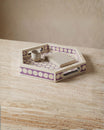
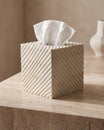
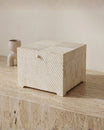
A tray is a small object with an outsized job, gathering loose items into a single, movable surface that makes a coffee table, vanity, or console look instantly more composed. A mother of pearl tray takes that everyday function and adds genuine shimmer to it, its iridescent edges catching light every time it shifts position across a room. Because a tray this size touches so many different surfaces in a home, from a bedside vanity to a formal coffee table vignette, understanding how to style and care for it properly matters more than its modest scale might suggest.
What Is a Mother of Pearl Tray?
A mother of pearl tray combines a wood or resin base inlaid with hand-cut shell segments along its edges or across its full surface, producing the same light-reactive shimmer found in larger mother of pearl furniture at a far more compact scale. Because each shell segment is individually cut and placed by hand, no two trays carry an identical pattern, and small natural variations in shape and iridescence are a sign of genuine craftsmanship rather than a flaw. Many mother of pearl trays also incorporate a secondary material into the design, most commonly a tempered glass center panel bordered by inlaid sides, combining the practicality of a durable, easy-to-clean surface with the decorative detail of hand-set shell along the edges.
Glass-Center Vs Fully Inlaid MOP Trays
An MOP tray generally falls into one of two construction styles, each suited to slightly different uses. A glass-center tray, like Tabeer Homes' Ella Tray , frames a panel of tempered glass with mother of pearl inlaid sides, giving the piece a durable, easy-to-wipe serving surface while still carrying genuine shell detail around its border. This construction suits a tray intended for regular serving duty, since the glass center handles direct contact with drinks and food far more easily than a fully inlaid surface would. A fully inlaid tray, covering its entire surface in shell segments rather than just the edges, offers a more consistently shimmering appearance across the whole piece, better suited to a tray used primarily for display or for holding dry decorative objects rather than direct food and drink contact. The choice between the two ultimately comes down to how the tray will spend most of its time: a household that entertains frequently and needs a genuinely functional serving piece benefits more from the glass-center construction, while a buyer prioritizing maximum visual impact for a styled vignette that rarely encounters food or drink may prefer the fuller shimmer of an entirely inlaid surface, accepting the slightly more careful handling that construction requires in exchange for its more dramatic, uninterrupted pattern.
Common Sizes and Shapes for a Mother of Pearl Tray
Mother of pearl trays typically run slightly larger than their bone inlay counterparts, particularly in the glass-center category, since the format's serving-focused design often calls for a more generous surface area. Tabeer Homes' Ella Tray , available in both pink and blue mother of pearl, measures 57 x 36 x 2 cm, a rectangular format sized comfortably for carrying a full set of drinks or a grouped breakfast tray. Smaller decorative trays and boxes in the same material family, like the Iris Box in pink mother of pearl at 35 x 23 x 10 cm, offer a more compact option suited to holding jewelry, small trinkets, or a single decorative object rather than serving multiple items at once. Round and square formats also appear in this category, though rectangular remains the most common shape for genuinely functional serving use, since a rectangular tray carries drinks and plates more stably than a rounded alternative. The height difference between these formats also matters for storage: the Ella Tray's shallow 2 cm profile stores easily flat in a cabinet or drawer between uses, while the taller, boxier Iris Box at 10 cm functions more as a standalone display piece that stays out on a surface rather than tucked away when not in active use.
Using a Mother of Pearl Tray as a Decorative Serving Tray
A decorative serving tray in mother of pearl earns its place through genuine dual function, handling actual serving duty while adding a shimmering visual element that a plain tray cannot match. For breakfast in bed, a glass-center tray like the Ella Tray offers a stable, easy-to-clean surface for a coffee cup and plate while still framing the setup in shimmering shell detail. For entertaining, a mother of pearl tray carrying a set of drinks or a grouped appetizer spread doubles as a genuine table decoration the moment it is set down, rather than disappearing into the background the way a plain serving tray typically does. Because the glass center resists staining and heat better than a fully inlaid surface, this construction style suits a household that plans to use the tray regularly rather than reserving it purely for special occasions.
Styling Ideas: Coffee Table, Ottoman, Vanity, Console
A mother of pearl tray adapts to nearly every surface in a home, with styling approach shifting slightly depending on where it lands.
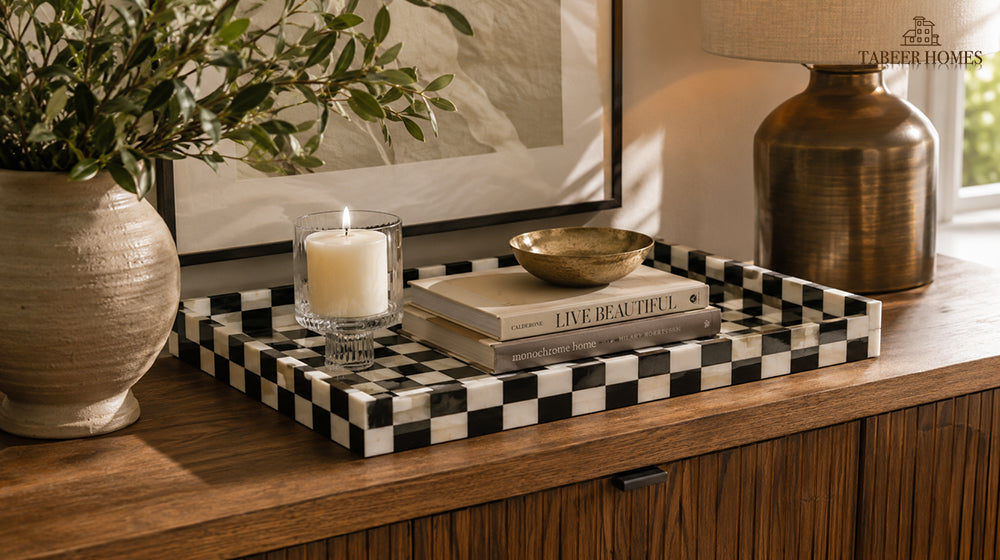
- On a coffee table , position the tray toward one side rather than dead center, using it to define a contained styling zone, a candle, a small dish, a single decorative object, while leaving the rest of the table's surface open for actual use.
- On an ottoman , a tray converts soft seating into a usable surface for drinks or a stack of books, while remaining easy to lift away entirely when the ottoman needs to double as extra seating.
- On a vanity or dresser , a smaller mother of pearl tray corrals perfume bottles, jewelry, or a small mirror into one organized surface, its shimmer complementing the reflective quality of glass bottles and mirrors already common in that setting.
- On a console or sideboard , a tray anchors one end of a longer surface, holding a grouped vignette that stays visually separate from the rest of the piece's styling.
- On a bar cart or drinks trolley , a tray corrals bottles and glassware into a stable, coordinated grouping, making the whole setup easier to move or rearrange when entertaining without individually repositioning each item.
- In a bathroom , a smaller mother of pearl tray on a vanity counter holds hand soap, a small candle, or folded hand towels, bringing a touch of the same shimmer found elsewhere in the home into a room that often gets styled as an afterthought.
Pearl Inlay Decor: Pairing Trays With Other Accents
Building a broader pearl inlay decor moment around a tray works best when the surrounding objects add contrast rather than repeating the same shimmering finish. A tray paired with a matte ceramic vase or a linen-covered box introduces textural variety that keeps the vignette from feeling uniformly glossy. A single candle in a simple holder, rather than an ornate or heavily patterned one, lets the tray's own shimmer remain the focal point rather than competing with another decorative element. For buyers building a full room around mother of pearl, pairing a tray with one or two larger pieces, a console or coffee table in the same material family, creates a cohesive thread through the space without requiring every single object to match in pattern or scale. This approach also allows the room's mother of pearl presence to feel intentional rather than scattered, since a single tray alongside a larger anchor piece reads as a deliberate material choice, while several small mother of pearl accents with no larger piece tying them together can start to feel more like an accumulation of individual purchases than a cohesive design decision.
Caring for a Mother of Pearl Tray
A tray's construction, particularly the glass-center style, calls for a slightly different care approach than fully inlaid furniture.
- Clean the glass center separately from the inlaid border , using a standard glass cleaner applied to a cloth rather than sprayed directly onto the tray, since overspray can seep into the resin seams along the shell-inlaid edges.
- Dust the inlaid border regularly with a soft, dry microfiber cloth , moving in the direction of the pattern rather than across it.
- Avoid soaking the tray in water , since prolonged moisture exposure can affect the wood base and resin bond even on a tray with a glass center.
- Blot spills immediately , particularly liquid that reaches the inlaid border rather than staying contained on the glass center.
- Keep the tray out of prolonged direct sunlight when not in active use , since UV exposure can gradually affect the shell's natural iridescence over time.
Layering Multiple Trays for a Richer Vignette
A single tray anchors a surface well on its own, but layering a smaller tray or box on top of a larger one adds visual depth that a flat single tray cannot achieve. Positioning a compact piece like the Iris Box slightly off-center on a larger tray like the Ella Tray creates a tiered arrangement, with the smaller piece holding a single object, a candle or a miniature vase, while the larger base tray carries the broader grouping around it. This layered approach works particularly well when the two pieces share a related but not identical color, pink paired with a softer blush accent rather than an unrelated bold hue, since too much color contrast between stacked pieces can feel disjointed rather than intentionally layered. Buyers building a small collection of mother of pearl trays and boxes over time benefit from choosing pieces within a consistent color family from the start, since this makes future pairing considerably more straightforward than mixing unrelated tones purchased separately.
Choosing a Tray Color to Match Your Room
Mother of pearl trays commonly come in a range of dyed background colors, pink, blue, white, and green among the most widely available, and matching the tray's tone to the surrounding room affects how well it integrates versus stands out as an isolated accent. A pink or blush tray suits a softer, more romantic color palette, working particularly well in a bedroom or a living room already built around warm neutrals. A blue tray introduces a cooler accent well suited to coastal or contemporary interiors, pairing naturally with white, grey, or navy furnishings. White or natural mother of pearl offers the most universally flexible option, sitting comfortably in nearly any room's palette without requiring the rest of the space to be built specifically around it. For buyers uncertain which color to choose, selecting a tray in a tone already present elsewhere in the room, a cushion, a piece of art, a rug accent, generally produces a more cohesive result than choosing a color in isolation from a product photo alone.
Common Mistakes When Buying or Using a Mother of Pearl Tray
A handful of avoidable habits account for most of the wear and disappointment reported with this category.
- Choosing a fully inlaid tray for regular food and drink service. A tray intended for daily serving duty benefits from a glass-center construction that handles direct contact more durably than a fully inlaid surface.
- Placing hot dishes directly on the mother of pearl border. Even with a glass center, setting a hot dish where it touches the inlaid edge risks affecting the resin bond over time.
- Stacking heavy objects on top of a stored tray. Since the shell inlay can be scratched by sharp or heavy contact, storing trays flat with nothing stacked directly on top protects the finish between uses.
- Assuming every tray in a collection shares identical dimensions. Mother of pearl trays vary in size and shape even within the same product line, so confirming exact measurements before ordering avoids a mismatch with the ottoman, coffee table, or console it is meant to accompany.
Bringing It All Together
A mother of pearl tray earns its place through a rare combination of genuine daily usefulness and hand-set shimmer, at a scale accessible to buyers not yet ready for a larger furniture investment. Whether used as a decorative serving tray for breakfast in bed, a coffee table accent, or a vanity organizer, matching the tray's construction, glass-center or fully inlaid, to its intended use will do more for its long-term satisfaction than choosing on looks alone. A tray also makes a genuinely practical entry point for anyone curious about mother of pearl furniture but not yet ready to commit to a larger piece, offering the same tactile, light-catching quality at a fraction of the investment and space commitment a sideboard or console would require. Tabeer Homes' Ella Tray , available in both pink and blue mother of pearl inlay at 57 x 36 x 2 cm, pairs a durable tempered glass center with shimmering inlaid sides suited to regular serving use, while the smaller Iris Box in pink mother of pearl offers a more compact, fully inlaid option for jewelry or trinkets on a vanity or dresser. For a broader look at how mother of pearl compares to its closest material relative before building a full room around either, our guide on bone inlay versus mother of pearl furniture covers the practical differences in more depth.
Frequently Asked Questions
What is a mother of pearl tray used for?
A mother of pearl tray works both as a functional serving piece for drinks and food and as a decorative accent on a coffee table, ottoman, vanity, or console, gathering smaller objects into one visually defined surface.
Is a glass-center mother of pearl tray better than a fully inlaid one?
It depends on intended use. A glass-center tray suits regular serving duty better due to its durable, easy-to-clean surface, while a fully inlaid tray offers a more consistently shimmering look suited to display or dry decorative use.
How do you clean a mother of pearl tray?
Clean the glass center with a standard glass cleaner applied to a cloth, dust the inlaid border separately with a soft dry cloth, avoid soaking the tray in water, and keep it out of prolonged direct sunlight.
Can a mother of pearl tray be used every day?
Yes, particularly a glass-center style like the Ella Tray, which is built with a durable serving surface specifically suited to regular use rather than occasional display only.
What size mother of pearl tray should I buy?
Sizing depends on intended use: a larger rectangular tray around 55 to 60 cm suits regular serving, while a smaller tray or box in the 30 to 35 cm range works well for vanity or jewelry organization.
How is a mother of pearl tray different from a bone inlay tray?
Mother of pearl produces a glossy, iridescent shimmer that shifts with light, while bone inlay offers a matte, more graphic finish, making the two suited to different styling moods rather than one being objectively better.

اترك تعليقًا
This site is protected by hCaptcha and the hCaptcha Privacy Policy and Terms of Service apply.