




A cabinet does more work in a room than almost any other furniture category, holding everything from media equipment to formal dinnerware behind a single closed front. A mother of pearl cabinet takes that workhorse role and adds genuine shimmer to it, turning a piece that could easily disappear into the background into one of the room's clearest focal points. This guide covers the different types of mother of pearl cabinets available, how to size and place one, and how to care for a piece that carries both real storage function and handcrafted decorative detail.
What Is a Mother of Pearl Cabinet?
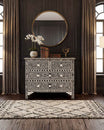
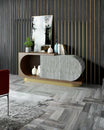
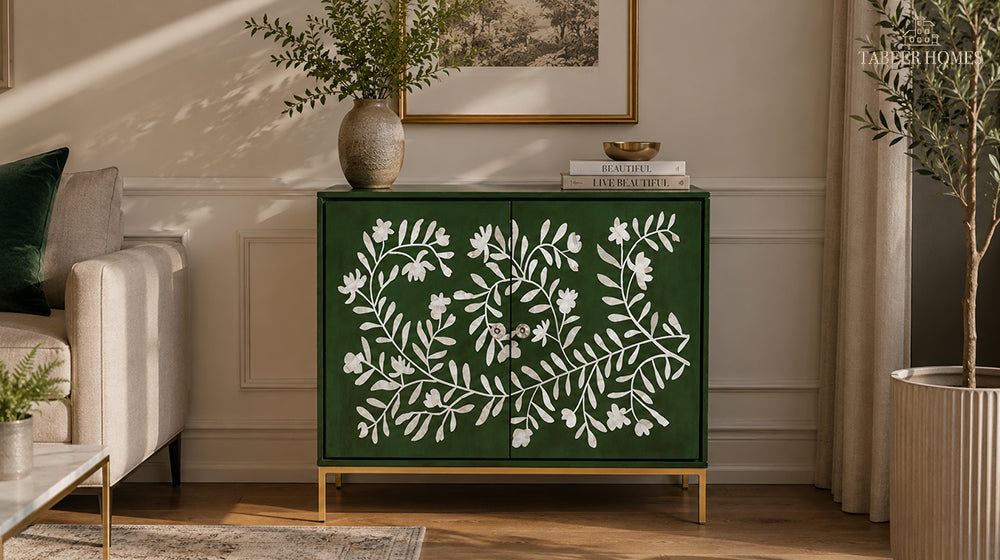
A mother of pearl cabinet pairs a wood or lacquered base, typically mango wood, with hand-cut shell segments set into resin across its front panels or full exterior, producing a shimmering finish that shifts with the light hitting it throughout the day. Unlike a plain painted or veneered cabinet, an MOP cabinet carries genuine texture and natural pattern variation, since every shell segment is individually placed by hand rather than printed or molded to look uniform. Cabinets in this category typically combine the decorative inlay work with genuine enclosed storage, doors, shelves, or a mix of both, making them functional furniture pieces first and decorative statements second, even though the shimmer is usually what draws attention initially.
Common Mother of Pearl Cabinet Types
Mother of pearl cabinets span several distinct furniture categories, each suited to a different role in a home.
- Media or TV cabinets , sized to hold a television and entertainment equipment while providing enclosed storage below for media devices, remotes, and cables out of sight.
- General storage cabinets , offering flexible enclosed space for linens, decor, or household items, often positioned along a living room or majlis wall.
- Display cabinets , frequently featuring glass-front doors or open shelving alongside the inlaid exterior, designed to showcase decorative objects, china, or collectibles behind or beside the shimmering surface.
- Bar or drinks cabinets , combining enclosed storage for bottles and glassware with a durable top surface suited to mixing or serving drinks.
Standard Sizes for a Mother of Pearl Cabinet
Sizing varies considerably across this category depending on function, and matching the right size to your specific room and use case matters more than defaulting to whatever looks most striking in a product photo. Tabeer Homes' Luna Cabinet in blue mother of pearl inlay measures 145 x 45 x 87 cm, a mid-size footprint well suited to a media cabinet or general storage piece along a living room or majlis wall. The Azure Cabinet in black mother of pearl inlay offers a more compact alternative at 112 x 48 x 90 cm, useful for a narrower wall section where the Luna Cabinet's additional width would not comfortably fit. For dedicated media storage, the Iris TV Unit Cabinet in white mother of pearl inlay runs considerably wider at 175 x 45 x 70 cm, a lower, longer profile designed specifically to accommodate a television and surrounding audio equipment rather than serving primarily as vertical storage.
Using a Mother of Pearl Cabinet as a Luxury Display Cabinet
A luxury display cabinet built around mother of pearl inlay works best when the cabinet's own shimmer and whatever it displays are allowed to complement rather than compete with each other. Glass-front cabinet doors let a curated collection, fine china, crystal, or decorative objects, remain visible while still protecting the contents from dust, creating a layered visual effect where the inlaid exterior frames the display inside. For cabinets without glass fronts, using the closed cabinet for less visually important storage while reserving the open top surface for a smaller, more curated display, a single striking object rather than a cluttered grouping, keeps the piece reading as intentional. Lighting matters considerably here as well, since a display cabinet positioned to catch natural or evening light shows off both its own inlay pattern and the contents inside far more effectively than one placed in a consistently dim corner.
Inlay Cabinet Vs Plain Cabinet: Is the Extra Detail Worth It
The decision between an inlay cabinet and a plain lacquered or veneered alternative comes down to more than surface appearance alone. A mother of pearl cabinet costs more than an equivalent plain piece, driven by the labor-intensive hand-cutting and setting process rather than the raw shell material itself, and that premium buys genuine handcrafted detail that a printed or painted finish cannot replicate. For a cabinet positioned as a genuine room focal point, in a formal living room, a majlis, or a dining room wall, the extra investment tends to pay off visually in a way that matters less for a cabinet tucked into a utility space or a room with limited sightlines. Buyers furnishing a full room on a tighter budget often find a reasonable middle ground in choosing one inlay cabinet as a genuine statement piece while filling out the rest of the room's storage needs with simpler, plainer furniture, rather than attempting to outfit an entire room in inlay work at a proportionally higher total cost.
Choosing Base Color: White, Black, Blue
Base color affects both how dramatically a mother of pearl cabinet's shimmer reads and how easily it integrates with an existing room. A white base, as seen on the Iris TV Unit Cabinet, offers the most versatile option, complementing nearly any room palette while still allowing the shell inlay's natural iridescence to show clearly against the pale background. A black base, like the Azure Cabinet, creates the highest contrast between the dark lacquer and the shimmering inlay, producing a bolder, more dramatic presence well suited to a room already built around darker, richer tones. A blue base, as used on the Luna Cabinet, sits between these two extremes, offering a distinctive, less commonly seen option that still provides enough contrast for the inlay pattern to read clearly while introducing a genuine color statement into the room rather than remaining strictly neutral.
Pearl Inlay Storage: What to Actually Store Inside
Beyond its decorative role, pearl inlay storage needs to genuinely serve the household using it, and matching cabinet configuration to actual storage needs prevents an expensive piece from being underused. Media cabinets suit devices, cables, game consoles, and streaming equipment, with cable management cutouts, when available, keeping the setup tidy behind closed doors. General storage cabinets work well for table linens, seasonal decor, or serving ware that does not need daily access, items that benefit from enclosed protection from dust without requiring constant retrieval. Display-oriented cabinets with glass fronts or open shelving suit items meant to be seen, china, crystal, or curated collectibles, rather than everyday clutter that would undermine the display's intended effect. Bar cabinets, when part of the configuration, work best holding bottles and glassware specifically, since a mixed-use bar cabinet cluttered with unrelated storage loses much of its function as a dedicated serving station during gatherings.
Placement Ideas: Living Room, Majlis, Bedroom, Media Room
A mother of pearl cabinet's placement shapes both its function and how effectively its shimmer registers in daily life. In a living room, a cabinet positioned along the main seating wall, often doubling as media storage, becomes a natural focal point visible from every seat in the room. In a majlis, a wider cabinet positioned along the perimeter serves both storage and display roles during gatherings, holding serving ware while showcasing decorative objects on top. In a bedroom, a smaller cabinet can substitute for a traditional wardrobe section or hold linens and out-of-season clothing, bringing the same handcrafted detail into a more private space. In a dedicated media or entertainment room, a wider, lower cabinet like the Iris TV Unit Cabinet anchors the room's technology while still contributing genuine decorative value to a space that often defaults to purely functional, unremarkable furniture. Home offices and studies, less commonly considered for this category, can also benefit from a mother of pearl cabinet used for closed document or supply storage, introducing a touch of genuine craftsmanship into a room that typically prioritizes function over any decorative ambition.
Caring for a Mother of Pearl Cabinet
A cabinet's larger surface area and cabinet-door hardware call for a slightly broader care routine than smaller mother of pearl accessories.
- Dust regularly with a soft, dry microfiber cloth , following the direction of the inlay pattern rather than wiping across it.
- Clean cabinet door hardware separately , since metal handles or knobs may need different care products than the shell inlay surrounding them.
- Keep the cabinet away from direct sunlight and AC vents , since both prolonged UV exposure and repeated humidity swings can affect the shell's iridescence and the resin bond over time.
- Check door hinges and drawer glides periodically , since a larger cabinet sees more daily opening and closing than smaller inlay pieces, making hardware maintenance more relevant to long-term function.
- Avoid placing heavy or sharp objects directly against the inlaid exterior , since the shimmer surface can scratch more visibly than a plain lacquered finish.
Hardware and Finish Details Worth Checking
Beyond the inlay pattern itself, a handful of construction details separate a well-made mother of pearl cabinet from one that will show wear prematurely. Cabinet door hardware, whether handles, knobs, or hinges, should feel solid and move smoothly without resistance or rattling, since this hardware sees more repeated daily use than almost any other part of the piece. Interior shelving, if adjustable, should hold its position securely under load rather than shifting or sagging once books, dinnerware, or media equipment are placed on it. The finish on any interior, non-inlaid surfaces should feel smooth and fully sealed, since a rough or unfinished interior can catch on stored fabrics or contents over time. For cabinets with glass-front doors, checking that the glass sits securely in its frame without rattling, and that it is tempered safety glass rather than standard glass, matters particularly in households with children who might bump into the cabinet during regular activity.
Mother of Pearl Cabinets and Room Lighting
Because a mother of pearl cabinet's shimmer depends entirely on light interaction, the lighting in its intended location affects how much visual impact the piece actually delivers day to day. A cabinet positioned to catch natural daylight, near a window or in a bright, open-plan living space, shows off its shimmer far more consistently than one placed in a dim hallway or a room with limited natural light. For evening hours, a nearby floor lamp, wall sconce, or even simple picture lights mounted above the cabinet can recreate some of that daytime effect, ensuring the piece continues to read as a genuine focal point after dark rather than fading into a shadowed corner. Warm-toned lighting generally flatters mother of pearl's natural iridescence more than cool white LEDs, producing a softer, more luxurious glow that complements the shell's own coloring rather than washing it out with a harsher, bluer light source.
Common Buying Mistakes to Avoid
- A handful of recurring errors account for most of the regretted mother of pearl cabinet purchases.
- Choosing a cabinet based on appearance alone, ignoring internal configuration. A stunning exterior does little good if the interior shelving or drawer layout does not actually suit what you need to store.
- Underestimating the room's existing color palette when choosing a base color. A bold black or blue base can dominate a room more than expected if the surrounding furniture and walls are not accounted for during the decision.
- Skipping measurements for the specific wall and delivery path. A cabinet that fits the wall on paper can still become a delivery-day problem if it cannot pass through doorways or elevators on the way to its final placement.
- Assuming every cabinet in a collection offers identical storage capacity. Since media cabinets, general storage cabinets, and display cabinets serve different functions even within the same material family, confirming the specific configuration before ordering avoids a mismatch with your actual needs.
Ending Thoughts
A mother of pearl cabinet earns its place in a luxury home by combining genuine storage function with handcrafted shimmer that changes character throughout the day as light moves across it. Taking the time to match cabinet type to actual storage needs, and base color to your room's existing palette, prevents the most common regret in this category: a stunning piece that ends up either underused or visually mismatched with the room around it. Tabeer Homes' Luna Cabinet in blue mother of pearl inlay offers a distinctive, mid-size option well suited to a majlis or living room wall, while the Azure Cabinet in black mother of pearl inlay brings a bolder, higher-contrast alternative to a more compact space, and the Iris TV Unit Cabinet in white mother of pearl inlay serves dedicated media storage needs at a wider, lower profile. Matching cabinet type, size, and base color to your room's actual function and existing palette will do more for the final result than choosing on shimmer alone. For a broader look at how mother of pearl compares to its closest material relative before committing to a full room built around either, our guide on bone inlay versus mother of pearl furniture covers the practical differences in more depth.
Frequently Asked Questions
What is a mother of pearl cabinet made from?
A mother of pearl cabinet pairs a wood or lacquered base, typically mango wood, with hand-cut shell segments set into resin across its exterior, producing a shimmering finish with natural pattern variation.
What can I store in a mother of pearl cabinet?
Storage depends on the cabinet type: media cabinets suit devices and cables, general storage cabinets suit linens and seasonal decor, and display cabinets with glass fronts suit china, crystal, or curated collectibles.
Is a mother of pearl cabinet worth the extra cost compared to a plain one?
It depends on placement and priorities. A cabinet positioned as a genuine room focal point tends to justify the investment, while a cabinet in a low-visibility utility space may not need the same handcrafted detail.
What base color should I choose for a mother of pearl cabinet?
White offers the most versatile, easy-to-integrate option, black creates the boldest contrast for dramatic interiors, and blue provides a distinctive middle ground with genuine color character.
Where should a mother of pearl cabinet be placed in a home?
Common placements include a living room's main seating wall, a majlis perimeter, a bedroom for linen or clothing storage, or a media room for television and entertainment equipment storage.
How do I care for a mother of pearl cabinet?
Dust regularly with a soft dry cloth, keep the cabinet away from direct sunlight and AC vents, check door hardware periodically, and avoid placing heavy or sharp objects directly against the inlaid surface.

اترك تعليقًا
This site is protected by hCaptcha and the hCaptcha Privacy Policy and Terms of Service apply.