


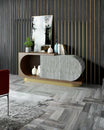
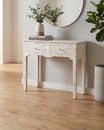
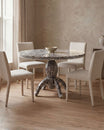


A coffee table sits at the centre of the living room's daily life and its visual composition simultaneously, which makes it both the most important furniture decision in the seating area and the one most frequently rushed. The sofa gets measured, the rug gets sized to the arrangement, the lighting gets planned. Then the coffee table gets chosen because it was in stock, or because it looked right in a product photograph, or because the price fitted what was left in the budget.
Six months later it is too low, or too far from the sofa, or the surface is too small for four people during a gathering, or it turns out the round form that looked elegant in a styled photograph does not give everyone in the L-shaped sofa arrangement a surface they can actually reach. None of those outcomes are inevitable.
They are all the result of a decision made without the right information. This guide provides that information in full, covering every dimension of the coffee table buying decision from shape and size to material and placement.
What a Coffee Table Actually Needs to Do Before It Needs to Look Good
The most productive starting point for any coffee table purchase is a precise understanding of what the piece needs to do in the specific room before any consideration of what it should look like.
A coffee table in a family living room where four people watch television every evening, where drinks are placed on the surface, where children occasionally use it as a homework surface, and where it needs to be cleared quickly when guests arrive is asking something entirely different from a coffee table in a formal sitting room used twice a week where the piece functions primarily as a visual anchor and a surface for one decorative tray and a lamp.
The daily use question determines the material choice: a high-maintenance genuine marble surface suits the formal sitting room and not the family room. It determines the surface area requirement: a family room needs more functional surface than a decorative arrangement allows. It determines whether storage is necessary: a living room that accumulates remote controls, charging cables, and books between uses benefits from a lower shelf or a drawer that a formal sitting room does not need.
Establishing this context before looking at any product page eliminates the majority of pieces that photograph well but would not function correctly in the actual room.
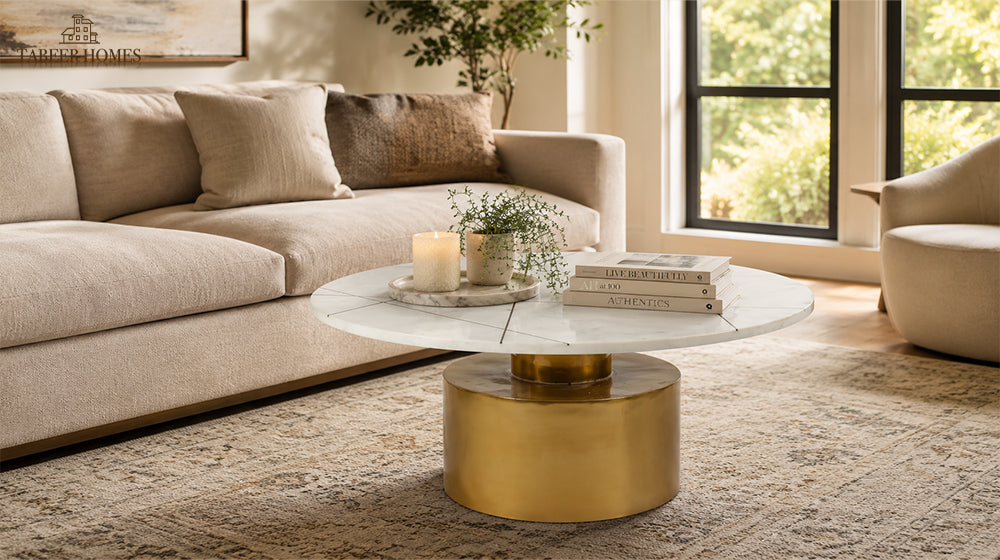
What Is a Round Coffee Table and When Does It Work Best
What is a round coffee table and when should a buyer choose it over a rectangular or oval form? This is the question most frequently asked by UAE buyers who have seen round tables in styled interiors and are unsure whether the form suits their specific sofa configuration.
A round coffee table is a table with a circular top surface. Its defining advantage over rectangular forms is the absence of corners, which eliminates the corner projection problem that rectangular tables create in furniture arrangements where people move around the seating area frequently. Every point on a round perimeter sits at an equal distance from the centre, which means every seated position around a round table has equivalent reach to the centre of the surface.
What is a round coffee table most suited for in practical terms? Four configurations specifically:
- An L-shaped or sectional sofa, where a rectangular table creates dead zones at the corner position that no one seated there can comfortably reach
- A curved or modular sofa arrangement where the round form echoes the sofa's own curve rather than introducing a contrasting angular form at its centre
- A compact living room where the absence of corners makes the round form more space-efficient in terms of how it relates to the circulation path around the seating arrangement
- A room with predominantly rectilinear furniture where introducing a round form at the centre provides a deliberate soft counterpoint to all the hard edges around it
The round form's limitation is surface area relative to footprint. A round table of 80 cm diameter provides less usable surface than a rectangular table of 100 by 60 cm in an equivalent visual footprint. For rooms where the coffee table needs to carry significant functional load, a larger diameter or an oval form, which extends the round's shape without introducing corners, addresses this limitation.
How to Choose a Round Coffee Table: The Sizing Logic
How to choose a round coffee table correctly depends on getting two measurements right before shortlisting any specific piece: the diameter relative to the sofa configuration, and the height relative to the sofa cushion height.
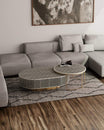
For a straight sofa of 180 to 220 cm, a round table of 70 to 90 cm diameter sits in the correct proportional range. For an L-shaped or sectional sofa where the round form is chosen specifically to serve all seating positions equally, a diameter of 90 to 110 cm gives every seated position adequate reach to the centre. In a large villa living room where the seating arrangement is generous and the round table needs to anchor the zone visually as much as it serves it functionally, a diameter of 110 to 130 cm sits in the correct range.
The gap between the sofa front and the nearest edge of the round table should be 35 to 45 cm. This gap allows comfortable standing from the sofa and keeps the surface within easy reaching distance from a seated position. Less than 35 cm restricts movement. More than 50 cm puts the table centre out of natural reach.
Height for any coffee table , round or otherwise, should fall within 5 cm of the sofa cushion height. Most UAE residential sofas carry cushion heights between 42 and 52 cm from the floor. A coffee table that sits significantly below this requires a downward reaching arc that becomes uncomfortable over an evening of use.
Where Do You Place a Round Coffee Table
Where do you place a round coffee table within a living room arrangement is a question with both a precise technical answer and a practical one.
The precise answer is at the centre of the seating arrangement, positioned so that every primary seating position, every chair and sofa section, has equivalent reach to the nearest edge of the table. For a straight sofa with two armchairs facing it, the round table sits in the middle of the arrangement, equidistant from the sofa front and the armchair fronts. For an L-shaped sofa, the round table sits slightly toward the inner corner of the L, which is the position where the table edge is closest to the greatest number of seated positions simultaneously.
Where do you place a round coffee table practically when the room is not a standard symmetrical arrangement? Three placement principles apply regardless of the specific configuration:
- The table should sit fully within the rug beneath the seating arrangement, with at least the front legs of the sofa also on the rug. A round table that floats off the edge of the rug reads as disconnected from the seating zone.
- The table should not block the natural walking path through the seating area. In a living room where movement between the entrance and adjacent rooms passes through the seating zone, the 35 to 45 cm gap between the sofa and the table defines the clearance on one side, and the path through the room defines the clearance required on the other.
- In an open-plan UAE living area where the seating zone defines itself within a larger combined space, placing the round table slightly closer to the sofa than the maximum recommended gap, at 35 to 38 cm rather than 45 cm, helps the seating zone read as compact and cohesive rather than as furniture floating in a large floor area.
Unique, Visually Interesting Coffee Table Designs as Focal Points
A unique visually interesting coffee table designs focal point living room piece is one of the most effective single investments a buyer can make in a living room that is otherwise well-furnished but lacks a design statement at its centre.
The coffee table is the only furniture piece in the living room that every person in the room faces simultaneously during a gathering. A visually interesting piece at this position is seen by more people for longer than any other furniture purchase in the room. This is why a unique visually interesting coffee table designs focal point living room investment returns its cost in terms of room impact per dirham spent more reliably than comparable investments elsewhere in the space.
The directions producing the most consistently compelling focal point coffee table results in UAE and Gulf living rooms in 2026:
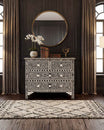
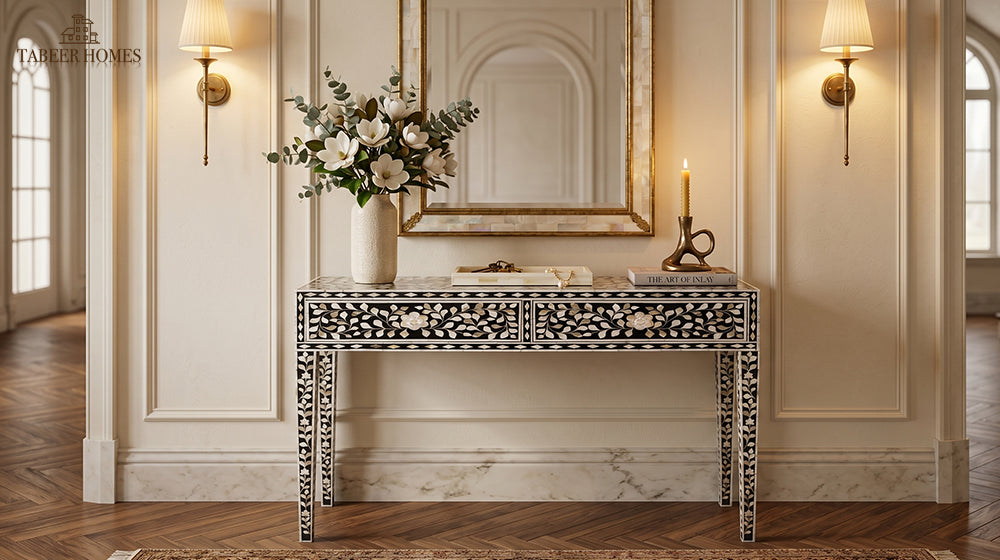
- A coffee table in bone inlay on a lacquered frame in an unexpected colour direction, forest green, deep teal, or terracotta, which carries both handcraft quality and colour presence at the centre of the arrangement
- A sculptural base in forged or cast metal under a simple stone or glass top, where the base's structural complexity is the visual argument and the quiet top gives it space to read
- A round travertine slab on an organic or architectural base, where the stone's natural variation and the base's designed form combine into a piece that reads as both material and sculpture
- A mother of pearl all-over coverage piece in a round or oval form, where the iridescent surface behaves differently across the day as the light changes and makes the living room's centre visually alive rather than static
Pink Coffee Table: When a Colour Statement at the Centre Works
The pink coffee table deserves specific treatment in 2026 because pink has moved further into UAE and Gulf residential design than any previous period in the local market's recent history, and the coffee table is one of the positions where a pink piece delivers the most impact.
A pink coffee table in a dusty rose or blush direction suits living rooms with a warm, layered, and feminine-leaning aesthetic. Dusty rose sits at the desaturated end of the pink spectrum, carrying a warm grey undertone that prevents it from reading as sweet or childish in the way that saturated pink would in a formal living room. Under the warm-toned LED lighting standard in UAE residential interiors, dusty rose shifts toward a warm, terracotta-adjacent tone that reads as organic and considered rather than deliberately trendy.
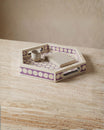
A pink coffee table in bone inlay on a blush or dusty rose lacquered frame, with ivory bone patterning, is one of the most refined expressions of this colour direction in the handcrafted furniture category. The bone inlay's graphic precision gives the blush ground a craft context that elevates the colour choice from decorative to material.
The room palette that works best with a pink coffee table :
- Cream, warm white, or warm ivory walls that do not compete with the blush tone
- Natural linen or warm cotton upholstery in cream, oatmeal, or warm grey tones on the adjacent sofa
- Warm brass or antique gold metallic accents in lamp bases, mirror frames, and decorative hardware
- Natural material rugs in jute, sisal, or low-contrast wool in warm neutral tones that ground the arrangement without introducing a competing colour
The pink coffee table direction to approach with care is saturated or cool-toned pink in a room with cool grey walls and steel-finish metals. These conditions make the pink read as a colour that belongs to a different room's palette rather than as a considered statement within the one it occupies.
Material Choices and What Each One Delivers
The material of a coffee table determines its visual character, its daily use performance, and how much maintenance it demands in UAE indoor conditions. Understanding what each material delivers rather than what it looks like in a product photograph is the practical foundation of a confident purchase decision.
|
Material |
Visual Character |
UAE Climate Performance |
Daily Use Durability |
Maintenance Level |
|
Genuine marble, light |
Luminous, veined, formal |
Good with sealing |
Medium |
High, annual sealing |
|
Genuine marble, dark |
Rich, dramatic |
Good with sealing |
High |
Medium, annual sealing |
|
Sintered stone |
Marble appearance |
Excellent |
Very high |
Very low |
|
Bone inlay, lacquered |
Graphic, pattern-rich |
Good indoors |
High with care |
Low |
|
Mother of pearl inlay |
Iridescent, luminous |
Good indoors |
High with care |
Low |
|
Solid hardwood, oiled |
Warm, natural |
Excellent |
Very high |
Low to medium |
|
Tempered glass |
Light, minimal |
Excellent |
Medium |
High, shows marks |
|
Powder-coated metal frame |
Structural, contemporary |
Excellent |
High |
Very low |
For a coffee table that will see intensive daily family use in a UAE home, sintered stone or solid hardwood tops on metal or hardwood frames offer the most practical performance without significant maintenance commitment. For a coffee table in a formal sitting room or a position where daily use is lower and visual quality is the priority, genuine marble, bone inlay, or mother of pearl surfaces deliver the material richness that the focal point position warrants.
Styling a Coffee Table Surface: The Rules That Actually Work
A coffee table surface styled correctly makes the entire seating arrangement look more considered. Styled incorrectly, it makes it look cluttered or empty. The rules that produce consistently good results are simpler than most styling guides suggest.
The three-zone approach works across all coffee table shapes, materials, and sizes:
The first zone is functional and occupies one end or one side of the surface. A tray in a contrasting material, brass, natural wood, or stone, corrals the functional items: a coaster set, a remote, a candle. The tray defines this zone with a clear boundary and makes the functional items look organised rather than scattered.
The second zone is decorative and sits adjacent to or within the tray grouping. One tall element, a vase, a sculptural object, a tall candle holder, gives the arrangement vertical dimension. One low element beside it provides width without adding height. Two or three objects at most.
The third zone is clear. The remaining surface area should be visibly empty, allowing the coffee table material itself to contribute to the room's visual composition. This clear zone is also the functional zone for daily use: the clear surface is where drinks get placed, where books get set down, where the table does its daily work.
What does not work on a coffee table surface regardless of the piece's quality:
- Remote controls and charging cables left loose on the surface between uses
- Multiple candles at varying heights without a unifying tray or grouping logic
- Personal items including medications, sunglasses, and receipts that make the surface read as a pocket rather than a furniture piece [INTERNAL LINK: anchor text suggestion "living room furniture UAE"]
Frequently Asked Questions
What size coffee table works in a standard UAE apartment living room?
For the most common UAE apartment living room with a sofa of 180 to 220 cm, a coffee table of 120 to 155 cm in length for a rectangular form, or 80 to 100 cm in diameter for a round form, sits within the correct proportioning range. The gap from the sofa front to the table edge should be 38 to 45 cm. Height should be within 5 cm of the sofa cushion height, which in most UAE residential sofas falls between 42 and 52 cm. Measuring the specific sofa dimensions and the available floor space before shortlisting any piece eliminates the sizing mistakes that account for the majority of coffee table returns.
What is a round coffee table best suited for?
An L-shaped or sectional sofa configuration where every seating position needs equivalent reach to the surface centre, a room where the circulation path around the furniture is tight and the absence of corners helps, and a room with predominantly rectilinear furniture where the round form provides a deliberate soft counterpoint. In a straight sofa configuration with clear floor space around it, round and rectangular forms perform comparably and the choice is a matter of the room's design direction.
Where do you place a round coffee table in an open-plan UAE living area?
At the centre of the defined seating zone, positioned so that the rug beneath the seating arrangement contains the table fully and the sofa's front legs also sit on the rug. The table should not block the natural walking path through the seating zone. In an open-plan space where the seating zone needs to define itself against a larger surrounding area, positioning the round table slightly closer to the sofa, at 35 to 38 cm rather than the maximum 45 cm gap, helps the seating zone read as compact and cohesive.
Is a pink coffee table a practical choice for a UAE living room?
A pink coffee table in a dusty rose or blush direction is a practical and considered choice for a UAE living room with a warm, neutral-palette design direction. Dusty rose in a bone inlay or lacquered finish performs with the same daily use reliability as any equivalent lacquered piece. The practical consideration specific to a pink coffee table is that the blush tone requires surrounding materials in warm neutrals, cream upholstery, warm wood tones, and brass accents, to read as considered. In a room with cool grey walls and steel-finish metals, the same pink reads as a colour that belongs elsewhere.
What makes a coffee table visually interesting enough to function as a focal point?
A unique visually interesting coffee table designs focal point living room piece achieves its focal point quality through material complexity, structural invention, or colour confidence that a standard table does not carry. Bone inlay in an unexpected colour direction, a sculptural base in forged metal under a quiet stone top, a mother of pearl all-over coverage surface in a round form, and a pink coffee table in a handcrafted inlay configuration are all directions that deliver genuine focal point presence because they carry visual qualities that reward attention from across the room rather than only at close inspection.
How do I choose between a standard coffee table and a round coffee table?
An L-shaped or sectional sofa almost always suits a round form better because it eliminates dead zones at the corner position. A straight sofa suits both forms depending on the room's other design decisions. A room with strong rectilinear furniture benefits from a round counterpoint at the centre. A room already carrying curved forms in its sofa or armchairs benefits from a rectangular form that provides contrast to the existing curves. When in genuine doubt between the two, the sofa configuration is the deciding factor.
Bottom Line
A coffee table chosen with precise knowledge of what the room needs at its centre, sized correctly for the sofa it serves, in a material suited to the household's daily use intensity, and styled with the restraint that allows the piece itself to remain visible, delivers more to a living room than any other single furniture decision of equivalent investment. How to choose a round coffee table correctly comes down to measuring the sofa, the gap, and the room's circulation path rather than choosing on visual appeal alone.
Where do you place a round coffee table is answered by the sofa configuration first and the room's circulation logic second. A unique visually interesting coffee table designs focal point living room piece, whether in bone inlay, sculptural metal, or mother of pearl, earns its position at the centre by carrying visual qualities that reward sustained attention. A pink coffee table in a blush bone inlay configuration suits a UAE living room with the warm neutral palette that makes the colour read as considered rather than accidental. A coffe table decision made with all of this information in hand is a decision made with confidence rather than on faith that the photograph told the whole story.

Leave a comment
This site is protected by hCaptcha and the hCaptcha Privacy Policy and Terms of Service apply.