


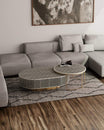
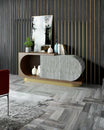
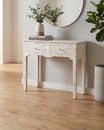
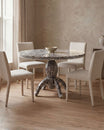


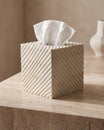
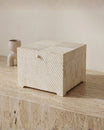
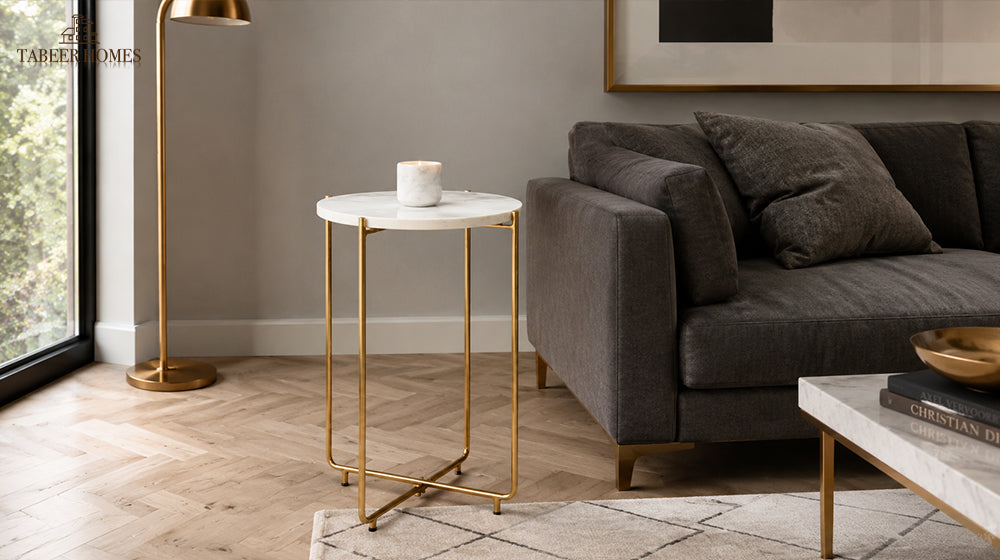
A marble side table occupies the smallest floor footprint of any marble furniture piece in a room and carries the greatest material presence per square centimetre of surface area. At the scale of a side table, the stone's veining, its surface luminosity, and its physical density are observed at a proximity that larger marble pieces, a dining table or a console, do not invite in the same way. The person seated beside a marble side table in a sofa position sees the stone's surface at close range multiple times every evening.
The person reaching for the bedside table in the morning touches the stone before anything else in the room. At this intimate scale, material quality is not a luxury abstraction. It is a daily sensory experience that a lower-quality surface alternative does not replicate.
Why Marble Works at the Side Table Scale
The appeal of a marble side table is rooted in material properties that operate most effectively at the scale where the piece is seen and touched closely.
Stone carries a surface temperature independent of the room's ambient temperature. A marble side table in a Dubai living room where air conditioning runs continuously feels cool to the touch throughout the day. This physical quality, the temperature contrast between the stone surface and a warm hand, is a sensory dimension of the material that photographs cannot communicate and that no alternative surface at equivalent visual quality replicates.
Marble's veining pattern is unique to every piece. No two marble side table tops are identical because the veining is a property of the specific section of stone cut from the specific quarry block. This uniqueness at the scale of a side table, where the piece's surface area is small enough to be taken in fully at a glance, reads as specifically chosen rather than generically selected.
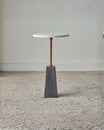
The visual weight of a marble side table , despite the stone's physical density, can be managed through base design in a way that a large marble dining table or console cannot. A marble side table on a slender brass tripod base or a minimal powder-coated metal frame reads as light in the room despite the stone's physical heaviness, because the base's visual weight is so low that the stone floats above it rather than dominating the room.
Marble Side Table Varieties: Choosing the Right Stone
The marble table category encompasses stone varieties with different visual characters, different performance properties in daily use, and different maintenance requirements. Choosing between them is a material decision with practical consequences.
White and Light Marble
A white side table in genuine white or light marble, including Carrara, Calacatta, and Bianco varieties, carries the highest surface luminosity of any stone variety and the highest maintenance requirements in a high-contact side table position. Light marble is reactive to acidic liquids. A condensation ring from a cold glass on an unsealed Carrara surface forms within minutes. Coffee, citrus juice, and soft drinks etch the surface rapidly if not wiped immediately.
A white side table in white marble suits a living room side table position in a formal sitting room used for guest occasions rather than daily intensive family use, or a bedroom bedside position where the aesthetic direction of the room specifically calls for white or light stone and the household will maintain the sealing and coaster habits the material requires.
Dark Marble
Nero Marquina black marble and Emperador Brown are the most practical stone varieties for a high-contact marble side table position in a Dubai living room or bedroom. The dark ground colour shows condensation marks, fingerprints, and handling evidence far less visibly than white or light marble. The density of these darker varieties is typically higher than Carrara, giving them better scratch resistance in daily use.
A black side table in Nero Marquina on a minimal metal or brass frame is among the most visually striking marble side table configurations available in 2026 Dubai furniture retail. The deep black ground with bright white veining and warm brass frame reads as a maximally resolved material combination that suits contemporary, traditional, and transitional living room directions equally.
Travertine
Travertine is the marble table adjacent stone variety that has grown most significantly in UAE and Dubai residential specification over 2024 and 2025. Technically a limestone rather than marble, travertine carries natural pitting, warm ivory-to-tan tonal variation, and an organic texture that suits the natural material direction dominant across Dubai villa and apartment interiors.
A travertine marble side table on an organic wood or metal base reads as naturally material-rich rather than formally luxurious, which suits rooms furnished with rattan, natural linen, and organic ceramic objects.
Modern Side Table and Marble: When the Combination Delivers
A modern side table configuration in marble combines the clean geometric restraint of the modern direction with the inherent material richness of genuine stone. The most compelling versions in 2026 Dubai retail pair a minimal or architectural base in matte black steel, brushed brass, or natural oak with a honed or polished marble top.
The base profile is the design quality of a modern side table with a marble top, and it should sit in a considered relationship to the stone above it. A slender tripod base in blackened steel under a round Nero Marquina top creates a high-contrast material combination where the base's precision meets the stone's drama. A solid brass frame with integrated base sweep under a honed travertine top creates a warm, textural combination that suits natural material direction rooms.
A modern side table in marble suits rooms where the other furniture is already resolved in its design direction and the side table is asked to add material presence at the sofa end position without introducing visual complexity that competes with the room's primary design elements.
Mother of Pearl Side Table: An Alternative to Pure Marble
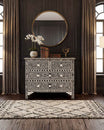
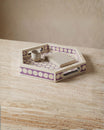
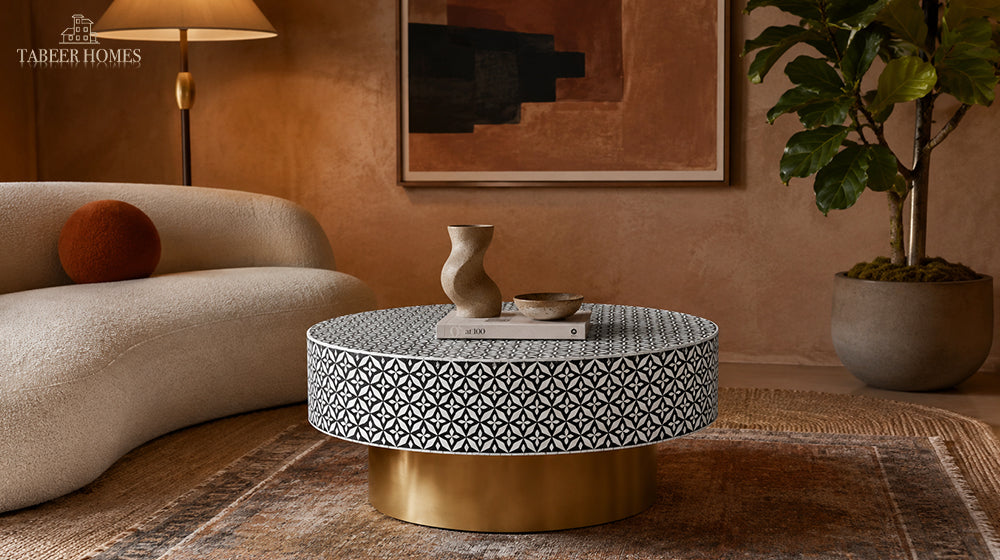
A mother of pearl side table offers the luxury surface quality at the side table scale through a different material tradition: nacre shell inlay on a lacquered hardwood frame rather than cut stone on a metal or wood base.
The iridescent surface of a mother of pearl side table behaves differently from marble at the bedside or sofa-side position. Where marble is cool, consistent, and carries its visual quality uniformly across the surface, mother of pearl shifts with the angle of the viewer and the quality of the light source. In the evening, with a bedside lamp creating oblique light across the surface, a mother of pearl side table shifts through pale greens, warm golds, and cool creams in a way that makes the piece visually alive during the hours it is most closely observed.
For Dubai bedroom and living room positions where the side table will be seen primarily under warm artificial light rather than direct natural light, a mother of pearl side table frequently delivers more compelling evening visual performance than a marble top at an equivalent price.
Tabeer Homes produces marble side table and mother of pearl side table pieces in configurations suited to Dubai living room and bedroom positions, with handcrafted bone inlay options available in coordinating configurations.
Sizing a Marble Side Table Without Overwhelming the Space
A marble side table adds visual weight to a room through both the stone's physical density and its surface luminosity, and getting the size right prevents the luxury quality from becoming a dominating presence rather than a considered accent.
The height rule is the same as for any side table : within 5 cm of the sofa arm height in a living room position, within 3 cm of the mattress top in a bedside position. Measure the specific adjacent furniture before shortlisting any piece.
Surface diameter or width for a marble side table should be assessed against the surface area required for the piece's actual daily use. For a sofa-side position that holds a lamp and a drink: minimum 40 cm diameter or width. For a position that holds only a lamp or only functional items without a lamp: 32 to 38 cm is sufficient. For a bedside position that holds a lamp, a glass, and a phone: minimum 40 cm.
The base spread relative to the top diameter is the safety dimension most frequently overlooked. A marble side table with a narrow base under a wide stone top is inherently unstable on polished tile floors common across Dubai residential properties. A base spread of at least 70 percent of the top diameter gives adequate stability for daily use.
Side tables and side table configurations in marble for Dubai rooms by position:
- Living room sofa end: 40 to 50 cm diameter or width, 55 to 68 cm height, diameter or round form preferred for tight gaps
- Reading chair position: 45 to 55 cm diameter, 60 to 70 cm height, open shelf or single drawer configuration
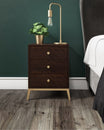
- Bedside position: 40 to 52 cm diameter, mattress top level, gap of 5 to 15 cm from bed frame
- Corner lamp position: 30 to 40 cm diameter, 65 to 80 cm height, lamp table function only
Styling a Marble Side Table Without Clutter
The marble side table surface is where the luxury quality of the piece is seen most clearly, and covering it with objects removes the material quality that makes the piece worth choosing.
The styling approach that works consistently across all marble side table positions:
A tray in a contrasting material, brass, natural wood, or dark lacquer, covers one third of the surface area and corrals the functional items within a visible zone. One tall element, a lamp in a sofa-side position or a vase at a styled corner position, provides vertical dimension. The remaining surface stays clear.
On a white side table in light marble, the tray should be in a warm contrasting material, brass or dark natural stone, to create visible definition against the light surface. On a black side table in Nero Marquina, the tray should be in a warm lighter tone, natural brass or warm wood, to create warmth against the dark ground.
Frequently Asked Questions
What is the most practical marble side table stone variety for a Dubai living room?
Nero Marquina black marble and Emperador Brown are the most practical stone varieties for a high-contact marble side table in a Dubai living room. Their dark ground colour shows condensation rings and handling evidence far less visibly than white or light marble, and their density gives them better scratch resistance in daily sofa-side use. Both require annual sealing. For the highest daily use practicality without a sealing commitment, a sintered stone alternative in a marble-effect pattern delivers comparable visual quality.
What height should a marble side table be beside a Dubai sofa?
A marble side table beside a Dubai sofa should sit within 5 cm of the sofa arm height, which in most UAE residential sofas falls between 55 and 68 cm from the floor. Measure the specific sofa arm before shortlisting any piece. A side table that sits more than 5 cm below the arm height creates a downward reaching arc that becomes uncomfortable over an evening. One that sits above the arm height creates an upward reach and a visual mismatch.
How is a mother of pearl side table different from a marble side table?
A mother of pearl side table uses nacre shell inlay on a lacquered hardwood frame, producing an iridescent surface that shifts in colour and luminosity with changing light angles. A marble side table uses quarried stone, producing a consistent surface whose visual quality depends on veining pattern and stone variety rather than light interaction. Mother of pearl performs at its best under oblique warm artificial light. Marble performs consistently across all lighting conditions. The choice between them depends on the room's lighting direction and the buyer's preference for iridescent versus static material quality.
What base material works best with a marble side table in a contemporary Dubai interior?
A matte black powder-coated steel base under a marble top suits contemporary and design-forward Dubai interiors where the base's precision contrasts cleanly with the stone's organic character. A brushed brass base suits traditional and transitional directions and responds to the warmth within most marble varieties' veining. A natural wood base suits organic natural material directions and works particularly well with travertine and warm-toned marble varieties. The base material should reference at least one other metallic or material element already present in the room.
How do I prevent a marble side table from feeling too heavy in a small room?
Choose a marble side table with a minimal or visually light base, a slender tripod, a single-pedestal stem, or a minimal two-leg configuration, which allows the stone top to appear to float above the floor rather than anchoring it heavily. A smaller diameter top, 35 to 42 cm, also reduces the visual weight of the stone at the room scale. In a compact room, one marble side table as an accent piece reads more effectively than two, where the stone's material weight doubles across the arrangement.
What is the difference between a modern side table and a marble side table?
A modern side table describes a design direction: clean geometric form, minimal hardware, and a resolved proportional relationship between base and top. A marble side table describes a material choice: a top surface in quarried stone. These categories overlap: a modern side table with a marble top is both simultaneously. The distinction matters when a buyer is prioritising the design direction, which the modern label addresses, versus the material quality, which the marble label addresses. Both criteria should be evaluated before any purchase at this price point.

Leave a comment
This site is protected by hCaptcha and the hCaptcha Privacy Policy and Terms of Service apply.