


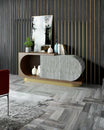
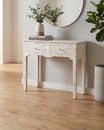


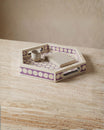
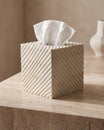
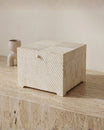
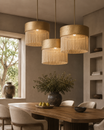
The delivery team has just left, and your new sideboard is sitting against the wall, completely empty, and somehow more intimidating than it was in the showroom photo. You know it needs something on top, a lamp, maybe a vase, but every attempt so far has looked either bare or cluttered, never quite like the styled photos that convinced you to buy it. Learning how to decorate a sideboard is less about having good taste and more about following a handful of repeatable principles that designers use on every project, principles that work whether the piece sits in a dining room, a living room, or a hallway.
Why Sideboard Styling Deserves Its Own Plan
A sideboard sits at a height that makes it one of the most effective display surfaces in a home, tall enough to hold lamps and art, low enough to still feel grounded and approachable rather than showroom-stiff. That combination is exactly why an unstyled sideboard reads as unfinished even when the furniture itself is beautiful, and why a few deliberate styling choices can transform the same piece from a storage box into the visual anchor of the room. Unlike a shelf or a mantel, a sideboard also has to keep working as furniture, holding tableware, linens, or everyday items behind its doors, which means the styling has to sit comfortably alongside genuine function rather than turning the piece into a display-only object. The nine ideas below cover the core techniques designers return to again and again, from the more advanced sideboard styling ground rules structure to how a vignette is built.
1. Anchor the Wall Above With a Mirror or Art
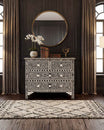
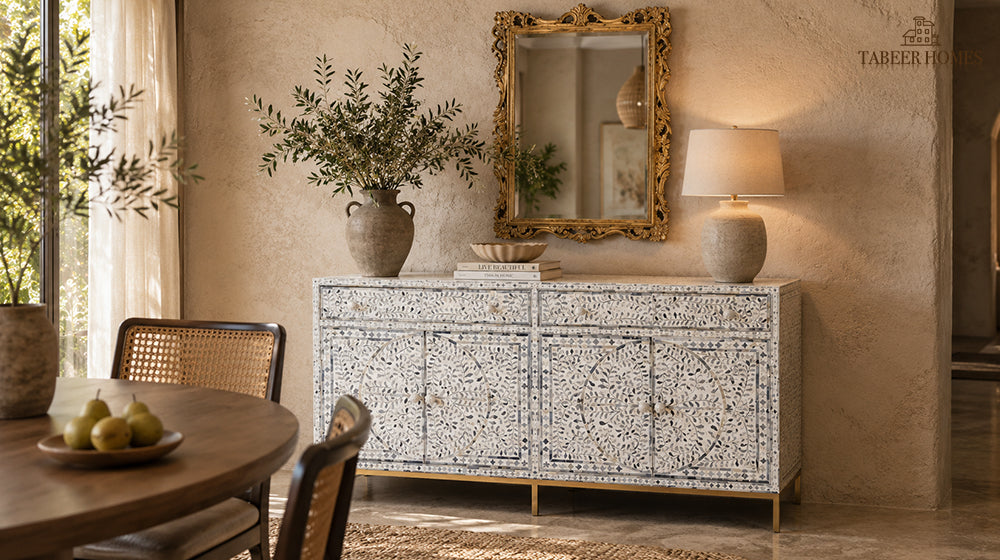
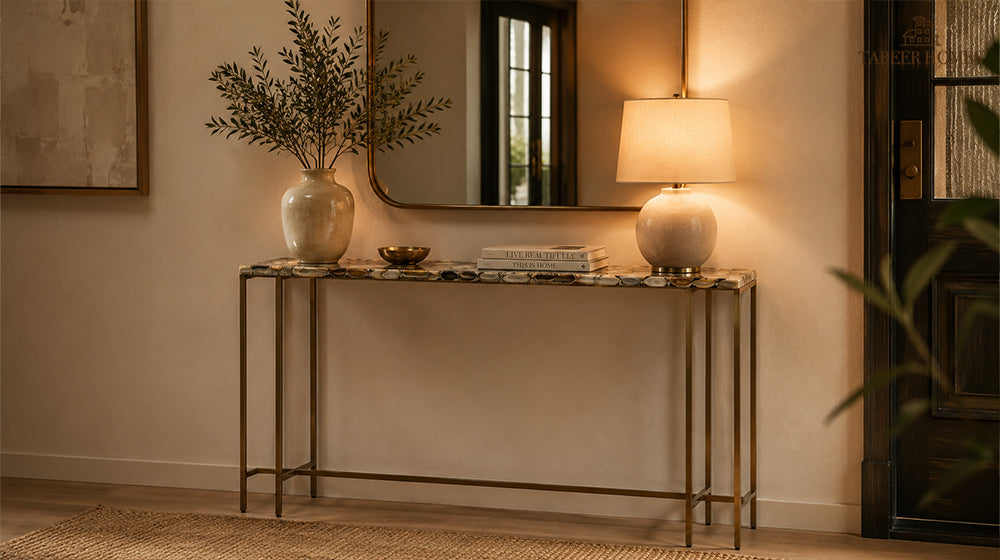
Every strong sideboard vignette starts above the surface, not on it. A large mirror or a piece of art hung on the wall gives the eye somewhere to land first, and everything on the sideboard's surface then reads as supporting detail rather than a random collection of objects. In a hallway or entryway, a mirror does double duty, bouncing light into the space and giving people somewhere to check their appearance on the way out the door. In a dining or living room, a large framed piece of art creates a more editorial, gallery-like feeling, especially when its scale roughly matches the width of the sideboard beneath it rather than looking undersized floating on a larger wall.
2. Build Around a Single Focal Object
Once the wall above is settled, the surface itself needs one clear starting point. This might be a large ceramic vessel, a sculptural bowl, a striking table lamp, or a single oversized vase, but the key is restraint: one strong object usually reads as more intentional than five smaller ones competing for attention. Choose a piece with genuine shape or material interest, something carved, glazed, or textured, rather than a generic decorative object, since this piece sets the tone that everything else on the surface will follow.
3. Use the Rule of Three
Designers return to groupings of three more than any other single styling trick, because odd numbers of objects read as more natural and less rigid than even ones. A candle, a small sculpture, and a low bowl grouped together will generally look more considered than the same three items lined up individually or paired off into twos. This principle scales up as well: three larger elements, a lamp, a stack of books, and a plant, can anchor an entire end of a longer sideboard using the same underlying logic.
4. Vary Heights to Create a Visual Triangle
Flat, same-height arrangements are one of the fastest ways to make a styled sideboard look accidental rather than designed. Choosing items of different heights, a tall vase, a mid-height stack of books, and a low dish, and arranging them so the eye moves in a rough triangle or a left-to-right skyline gives the display genuine visual rhythm. A simple version of this rule: place your tallest item toward one end, something mid-height in the middle, and something low near the opposite end, then adjust until the arrangement feels balanced rather than symmetrical down to the inch.
5. Frame the Vignette With a Runner or Tray
A runner or a tray does two jobs at once: it protects the surface from scratches and rings, and it visually frames whatever sits on top of it, giving loose objects a defined boundary instead of letting them float across the whole surface. A linen or woven runner works well for a more traditional or textured look, running the runner's edges a few centimeters short of the sideboard's own edges so a strip of wood or lacquer still shows on either side. A tray works particularly well for grouping several small items, a stack of coasters, a few votive candles, a small dish, since it lets you move the entire vignette as one unit when you need to actually use the sideboard's surface.
6. Layer Front to Back for Depth
Placing every object in a single row along the back edge of the sideboard is one of the most common ways a vignette ends up looking flat. Instead, layer taller items toward the back and smaller ones toward the front, building a sense of depth similar to how a bookshelf or gallery wall is arranged. A tall lamp or vase at the back, a stack of two or three books in the middle distance, and a small dish or object at the very front creates a natural front-to-back progression that reads as considered even from across the room.
7. Bring In Fresh Greenery or Flowers
Almost nothing brings a sideboard vignette to life faster than something living. A single stem in a narrow vase, a small potted plant, or a full arrangement of fresh flowers introduces color, texture, and a sense of change that static decorative objects cannot match on their own. Mixing a few different leaf shapes and plant heights together, rather than a single uniform pot, adds visual interest without requiring any particular gardening skill. Rotating flowers weekly or seasonally is also one of the easiest ways to keep a sideboard vignette feeling current without redesigning the whole arrangement, since a different bloom color or shape shifts the entire mood of the display.
8. Add Warm Lighting With Lamps or Candles
A pair of matching lamps at either end of a sideboard is one of the most reliable ways to create instant symmetry and a warm, ambient glow in the evening, particularly effective in a dining room or living room where overhead lighting alone can feel flat. For a more relaxed, asymmetrical look, a single sculptural lamp placed toward one end, balanced by a lower object on the other side, achieves a similar warmth without the formality of a matched pair. Candles, whether in simple taper holders or grouped votives, add a similar quality of light for evenings and gatherings, though they work best paired with heat-safe holders and kept a reasonable distance from any greenery or fabric runners.
9. Mix Textures, Then Edit Ruthlessly
The final and arguably most important idea is one of restraint rather than addition. A polished ceramic vase, a woven basket, a rough stone bowl, and a smooth brass candlestick together create a tactile, layered feel that a collection of similar materials cannot achieve on its own. Once the textures and heights are in place, the last step is to remove anything that does not add to the story the vignette is telling, since a surface with too many objects, however individually nice, reads as clutter rather than as a styled display. Most designers agree that a sideboard should feel edited enough that every object earns its place, with enough open surface remaining that the display can breathe.
Choosing a Color Palette for Your Sideboard Display
A vignette with strong individual pieces can still feel disconnected if the colors do not relate to one another or to the room. A reliable shortcut designers use is pulling two or three colors directly from a nearby piece of art, a rug, or a cushion, then repeating those tones across the objects on the sideboard, a dark vase, a candle in a matching shade, a picture frame with the same accent color in its mat. Metallic finishes benefit from the same logic: choosing one metal, brass, black, or chrome, and repeating it two or three times across lamps, frames, or candle holders reads as coordinated, while mixing several unrelated metals in small quantities can make the display feel accidental rather than curated. Neutral bases (white, cream, wood tone) give the most flexibility for seasonal color swaps, since only the smaller accent pieces need to change rather than the whole arrangement.
Functional Styling: Making the Vignette Useful, Not Just Pretty
The best sideboard vignettes do more than look good in photos; they earn their place in daily life. A decorative bowl near one edge can double as a catch-all for keys or sunglasses in an entryway, while a tray in a dining room can hold everyday items like napkin rings or coasters that get used at nearly every meal. In a living room, the same tray logic works for remote controls, keeping small clutter contained without it disappearing into a drawer where it is never quite easy to find. Building at least one genuinely functional element into the display, rather than styling purely for appearance, is part of why a well-planned sideboard vignette tends to stay intact over time instead of getting rearranged out of frustration within a few weeks.
Common Sideboard Styling Mistakes to Avoid
Even with the right principles in mind, a few recurring habits undo an otherwise well-planned sideboard decor ideas list.
- Overcrowding the surface. Filling every available inch removes the sense of hierarchy that makes a vignette feel intentional, and it makes the piece harder to actually use for its storage or serving function.
- Ignoring scale. A tiny decorative object on a long, wide sideboard gets visually lost, while an oversized piece on a compact sideboard can overwhelm the furniture beneath it.
- Treating the sideboard as an isolated project. A vignette styled without reference to the room's existing colors, textures, or furniture rarely feels cohesive, since the sideboard should echo the room around it rather than compete with it.
- Forgetting practicality. A sideboard that holds tableware or everyday items should keep a portion of its surface genuinely usable, not just decorative, particularly in a dining room where the top doubles as a serving area.
- Styling once and never revisiting it. A vignette that never changes tends to fade into the background over time. Refreshing even one or two elements every few months keeps the eye engaged with the display instead of tuning it out entirely.
How to Style a Sideboard Vignette for a Small Space Versus a Large Wall
The same nine ideas scale differently depending on the sideboard's size and the wall it sits against. On a compact sideboard in a small entryway or apartment dining nook, a single focal object paired with one small grouping of three items is usually enough, since overloading a shorter surface with multiple vignettes makes the whole piece feel busy rather than curated. Choosing pieces with a slightly smaller scale than you might instinctively reach for also helps, since oversized objects on a compact sideboard can make the furniture itself look smaller by comparison. On a longer sideboard spanning a large dining or living room wall, splitting the surface into two or three distinct zones, a lamp and stack of books on one end, a central mirror-anchored grouping, and a smaller accent on the other end, gives the eye multiple resting points across the full width without any single area feeling sparse. A common mistake on longer sideboards is placing a single small vignette in the exact center and leaving both ends empty, which tends to make the piece look under-furnished rather than intentionally minimal.
Seasonal Sideboard Styling: Keeping the Look Fresh
One of the sideboard's biggest advantages over built-in furniture is how easily its sideboard vignette can change with the seasons or a specific occasion without any permanent redesign. Clearing the surface back to its base layer, the runner or tray and one or two anchor pieces, then rebuilding around seasonal accessories keeps the display feeling current throughout the year. This approach also protects the investment in your original decorative pieces, since the same lamps, vases, and trays can carry a room through every season with only the smaller accent items changing out. During Ramadan or Eid gatherings, this might mean swapping in lanterns, a patterned runner, and a small crescent or star accent, always keeping the tallest pieces toward the outer edges so the arrangement does not feel top-heavy in the center. Tabeer Homes covers this specific scenario in more detail in its guide on styling a sideboard buffet cabinet for a festive Ramadan gathering , which applies the same layering principles described above to a specific seasonal context.
Bringing the Nine Ideas Together
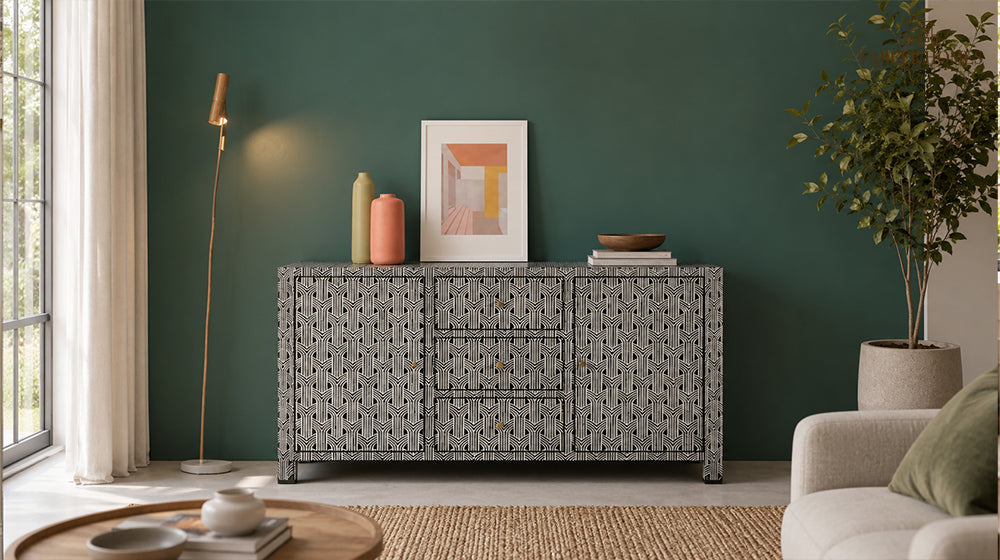
None of these ideas needs to be used in isolation, and the most successful sideboard vignettes typically combine three or four of them at once: a focal mirror above, a grouping of three objects at varying heights, a runner to frame the arrangement, and a lamp for warmth in the evening. Start with just one or two ideas if the whole list feels like too much at once, since a simple, well-executed pairing, a focal object plus a tray of grouped items, already outperforms a crowded surface with no underlying structure. Tabeer Homes' Maze Sideboard Buffet , with its black bone inlay checkerboard pattern, works particularly well as a base for a mixed-texture vignette, since its bold graphic surface can carry either a minimal, restrained styling approach or a fuller, layered one depending on the room. For guidance on choosing the sideboard itself before you start styling it, Tabeer Homes' broader guide on choosing the perfect sideboard buffet cabinet for any space is a useful starting point.
Frequently Asked Questions
How do you decorate a sideboard step by step?
Start by anchoring the wall above with a mirror or art, then build a focal point on the surface, group smaller items in threes with varied heights, and finish with a runner or tray to frame the arrangement.
What is the rule of three in sideboard styling?
It refers to grouping decorative objects in odd numbers, most commonly three, since odd-numbered groupings tend to read as more natural and visually balanced than items arranged in pairs.
How many items should be on a sideboard?
There is no fixed number, but most designer-styled sideboards use one focal object plus one or two smaller groupings, leaving enough open surface that the display does not feel crowded.
Should sideboard decor be symmetrical or asymmetrical?
Both work well. Matching lamps or vases on either end create formal symmetry, while a single focal piece balanced by a lower object on the opposite side creates a more relaxed, asymmetrical look.
How do you style a sideboard vignette for a small room?
Keep it simple with a single focal object and one small grouping of three items, since overloading a compact sideboard with multiple vignettes tends to make the whole piece feel busy.
How often should you change sideboard decor?
Many designers recommend refreshing flowers or greenery weekly and rotating seasonal accessories, photos, or accent colors every few months to keep the display feeling current.

Leave a comment
This site is protected by hCaptcha and the hCaptcha Privacy Policy and Terms of Service apply.