


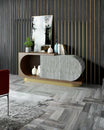
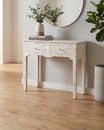
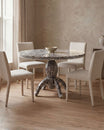

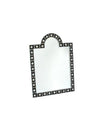

A dressing table earns a different kind of daily use than almost any other bedroom furniture piece, the spot where a morning routine actually happens, not just a surface that holds decor. A bone inlay dressing table brings genuine handcrafted detail to that routine, turning a functional necessity into a piece worth looking forward to sitting at. This guide covers how to choose the right size and storage configuration, how to pair it with a mirror and stool, and how to keep its hand-carved surface looking sharp through years of daily makeup, jewelry, and skincare use.
What Is a Bone Inlay Dressing Table?
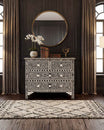
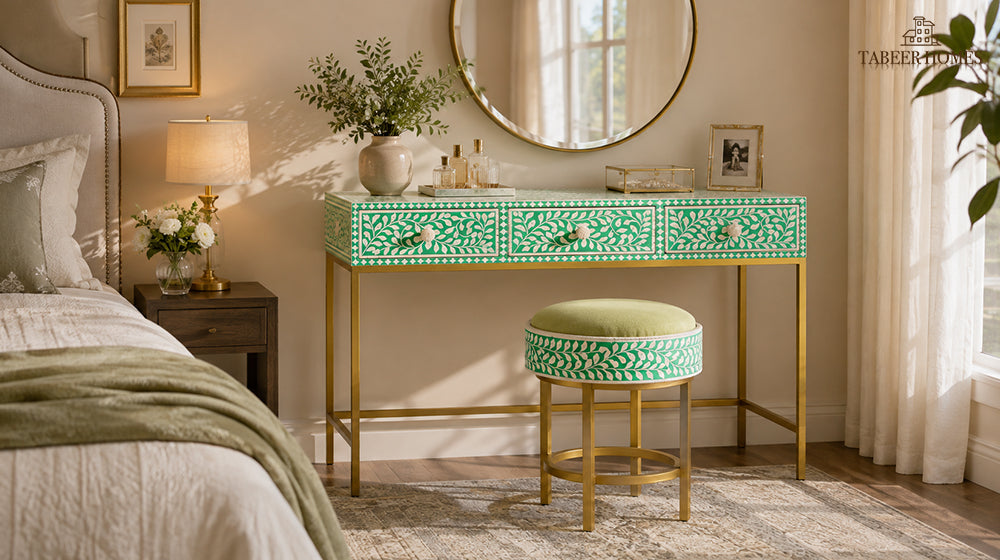
A bone inlay dressing table pairs a wood base, typically mango wood, with hand-carved bone segments set into resin across its front panels and top surface, producing the same matte, textured shimmer found in larger bone inlay furniture at a scale built specifically for seated daily use. Unlike a plain painted or veneered vanity, the inlay work means every dressing table carries small natural variations in pattern and tone, a mark of genuine handcrafting rather than a manufacturing flaw. Most bone inlay dressing tables include a combination of drawers and open surface area, balancing enclosed storage for makeup and accessories with a clear working space for a mirror and daily routine.
Dressing Table Vs Bone Inlay Dresser: Is There a Difference?
The terms dressing table and bone inlay dresser are often used interchangeably in furniture listings, though a genuine distinction exists in typical use and scale. A dressing table is specifically designed for seated use, with a knee well or open space beneath the surface to accommodate a stool or chair, and typically includes a mirror either built in or paired separately. A dresser, in the broader sense covered elsewhere in bedroom furniture, generally prioritizes wider storage capacity across multiple drawer columns without necessarily accommodating seated use. In practice, many products marketed as a "dresser console" in the bone inlay category, including pieces designed with three drawers and a knee well beneath the surface, function specifically as dressing tables despite the dresser terminology, so checking the actual configuration, particularly whether the design leaves room for a stool, matters more than relying on the product name alone. This naming inconsistency mirrors the same confusion found across other bedroom storage categories, buffet versus sideboard, chest of drawers versus dresser, where the underlying dimensions and knee-well clearance tell you more about actual function than whatever term a specific retailer happens to use in the product title.
Standard Sizes for a Bedroom Dressing Table
Sizing for a bedroom dressing table follows a fairly consistent range across the category, built around comfortable seated use. Table height typically runs 75 to 80 cm, matching standard desk height so a stool or chair sits at a comfortable working level. Width generally spans 90 to 120 cm, with narrower options suited to a compact bedroom corner and wider versions offering more surface space for a larger mirror or additional storage. Depth usually falls between 35 and 48 cm, shallow enough to avoid crowding a bedroom's walking space while still providing enough surface for a mirror, makeup organizers, and daily essentials. Tabeer Homes' Vaan Mini Dresser Console in cream bone inlay measures 90 x 35 x 80 cm, a compact footprint with spacious drawers and shelves suited to a smaller bedroom corner, its smooth top surface designed specifically to accommodate a vanity mirror, decorative items, or a table lamp. Buyers with a larger bedroom and a more extensive daily routine often find the wider end of the range worth the additional floor space, since a 120 cm table comfortably fits both a full mirror setup and a meaningful stretch of open surface for laying out products during use, something a narrower 90 cm table can struggle to accommodate once a mirror and lamp are already in place.
Choosing the Right Dressing Table for Your Bedroom Layout
Placement constraints matter as much as the table itself when choosing a bone inlay dressing table, since the piece needs both wall space and enough clearance in front for a stool to pull out comfortably. A corner placement works well for a compact bedroom, tucking the table into an underused space while still leaving the room's main walking paths clear. A placement along a window wall takes advantage of natural light for daily makeup and skincare application, generally preferable to a windowless interior wall where artificial lighting becomes the sole source of illumination for the routine. Confirming at least 60 to 70 cm of clearance behind the stool, enough room to sit down and stand up comfortably without bumping into a bed or other furniture, prevents a dressing table that looks proportional on paper from becoming an awkward daily obstacle.
Makeup Vanity Inlay: What Storage Configuration Works Best
Storage needs vary considerably between buyers, and matching a makeup vanity inlay piece's drawer and shelf configuration to actual daily habits matters more than choosing based on drawer count alone. A design with several shallow drawers suits someone with a larger collection of smaller items, palettes, brushes, skincare bottles, that benefit from being sorted and visible rather than stacked together in one deep compartment. A design with fewer, deeper drawers works better for bulkier items or for someone who prefers a simpler, less compartmentalized storage approach. Open shelving beneath or beside the main drawer bank offers a middle ground, providing quick-access storage for frequently used items without the friction of opening a drawer for something used multiple times a day.
Pairing a Bone Inlay Dressing Table With a Mirror and Stool
A dressing table's function depends heavily on its mirror and seating, and coordinating these elements thoughtfully improves the daily experience considerably. A freestanding mirror positioned on top of the table offers flexibility, since it can be angled or moved as needed, while a wall-mounted mirror above the table frees up surface space but commits to a fixed position and height. Matching the mirror's frame material to the dressing table's own finish, a bone inlay mirror frame alongside a bone inlay table, creates a more cohesive, intentional look than pairing unrelated finishes. For seating, a stool sized to tuck fully beneath the table when not in use keeps the overall footprint compact, particularly valuable in a smaller bedroom where the dressing table shares space with other furniture. Tabeer Homes' Jade Dresser Console & Stool in blue bone inlay comes with a matched stool included, ensuring the seating and table finish coordinate without requiring a separate search for a complementary piece.
An Inlay Vanity as a Multi-Purpose Desk
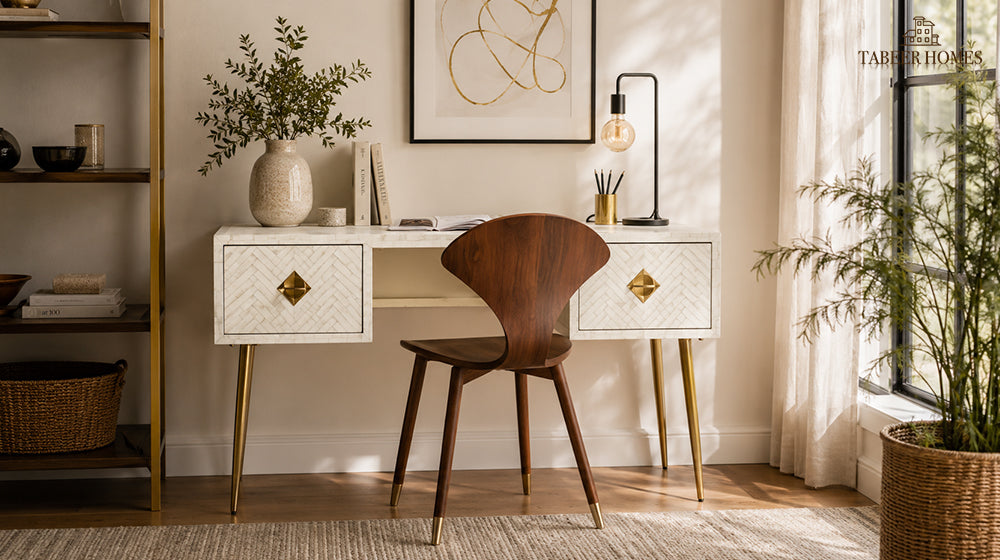
Beyond its primary role, an inlay vanity frequently serves double duty as a compact writing desk or workspace, particularly valuable in smaller homes where a dedicated home office is not available. The same knee-well design that accommodates seated makeup application works equally well for a laptop or notebook, and the table's drawers can hold stationery and documents alongside beauty products without requiring a separate desk purchase. This dual function matters most when choosing surface depth, since a table depth on the shallower end of the range, closer to 35 cm, may feel cramped for regular desk work, while a table closer to 45 to 48 cm deep offers more comfortable multi-purpose use.
Styling a Bone Inlay Dressing Table
A dressing table's surface benefits from a similar restraint to other bone inlay pieces, balancing decorative styling against genuine daily function.
- Keep the working area clear. Reserve enough open surface directly in front of the mirror for actual makeup application, styling only the edges or corners of the table.
- Use trays or small organizers for loose items. Grouping smaller objects, brushes, perfume bottles, jewelry, into a tray keeps the surface from feeling cluttered while still keeping everything accessible.
- Add one decorative object. A small vase, a candle, or a single striking piece adds personality without competing with the table's own inlay pattern.
- Layer in a table lamp for evening use. Since makeup application often happens in both morning and evening light, a dedicated lamp ensures consistent visibility regardless of the time of day.
Caring for a Bone Inlay Dressing Table
A dressing table's daily use, cosmetics, skincare products, and jewelry all in close proximity, calls for slightly more vigilant care than a purely decorative bone inlay piece.
- Wipe up product spills immediately , since makeup and skincare products can stain or discolor the resin surface if left sitting.
- Dust regularly with a soft, dry microfiber cloth , moving in the direction of the inlay pattern rather than across it.
- Avoid placing hot styling tools directly on the surface , since sustained heat from a curling iron or straightener can affect the resin bond.
- Keep the table out of direct sunlight when possible , since a window-adjacent placement, while good for lighting, increases UV exposure that can gradually yellow pale bone tones.
- Clean up perfume or nail polish spills with particular care , since these products can be more aggressive toward the resin finish than water-based spills.
Lighting Setup for a Bone Inlay Dressing Table
Good lighting matters more for a dressing table than almost any other bedroom furniture piece, since inaccurate lighting during a makeup routine leads directly to a mismatched result once you step outside. Natural light remains the most reliable option when available, positioned so light falls evenly across the face rather than from a single harsh angle, which is why a window-adjacent placement is worth prioritizing over a corner with no natural light source at all. For evening or early morning use when natural light is unavailable, symmetrical lighting on either side of the mirror, whether wall-mounted sconces or a pair of table lamps, reduces the shadows that a single overhead or single-side light source tends to create. Ring lights and dedicated vanity mirror lighting have also become popular additions for buyers prioritizing consistent, camera-ready lighting, though these can be added to an existing bone inlay dressing table setup without needing a table specifically designed to house them internally. Warm-toned bulbs generally produce more flattering, natural-looking results for makeup application than cool white LEDs, which can wash out warmer skin tones and lead to color-matching mistakes that only become apparent in daylight.
Bone Inlay Dressing Tables in Different Bedroom Styles
A bone inlay dressing table's bold, matte pattern interacts differently depending on the broader bedroom style it sits within. In a maximalist or traditionally styled bedroom, already built around rich textiles and patterned textiles, a bone inlay table complements the existing pattern language rather than standing out as an isolated statement. In a minimalist bedroom with plain walls and simple furniture, the same table becomes the room's clear focal point, its pattern reading as more dramatic against an otherwise quiet backdrop. In a transitional or eclectic bedroom mixing several furniture styles and eras, a bone inlay dressing table tends to work best when at least one other element in the room, a rug, a headboard detail, or an accent chair, shares a related color or material note, tying the table into the broader room rather than leaving it feeling disconnected from everything else in the space.
Common Buying Mistakes to Avoid
A handful of recurring errors account for most of the regretted bone inlay dressing table purchases.
- Choosing table height without checking the paired stool. A mismatched table and stool height makes daily use genuinely uncomfortable regardless of how attractive either piece looks individually.
- Underestimating clearance needed for the stool to pull out. A table that fits the wall perfectly can still crowd the room if there is not enough space behind the stool for comfortable daily use.
- Ignoring lighting when choosing placement. A dressing table positioned away from natural or supplemental lighting makes makeup application considerably harder regardless of how well-designed the table itself is.
- Assuming all configurations suit the same storage habits. A buyer with an extensive product collection needs a genuinely different drawer configuration than someone who keeps a minimal routine, so matching storage layout to actual habits matters more than drawer count alone.
Bottom Line
A bone inlay dressing table earns its place in a bedroom by combining genuine daily function with handcrafted detail that turns a morning routine into something worth looking forward to. Taking the time to match table height to your paired stool, confirm adequate clearance for daily seated use, and choose a storage configuration suited to your actual product collection prevents the most common regrets in this category. Tabeer Homes' Jade Dresser Console & Stool in blue bone inlay comes with a matched stool for a fully coordinated setup, while the Vaan Mini Dresser Console in cream bone inlay offers a more compact 90 x 35 x 80 cm footprint suited to a smaller bedroom, and the Saphed Console Table in black and white bone inlay brings a bold, high-contrast alternative for buyers wanting a more dramatic statement piece. Matching table size, storage configuration, and mirror pairing to your actual bedroom layout and daily habits will do more for long-term satisfaction than choosing on pattern alone. For a deeper look at the craft behind these pieces, our guide on what bone inlay furniture is and how it's made covers the full carving and setting process in more depth.
Frequently Asked Questions
What is the standard height of a bone inlay dressing table?
Most dressing tables stand 75 to 80 cm tall, matching standard desk height so a paired stool or chair sits at a comfortable working level for daily use.
Is a dressing table the same as a bone inlay dresser?
Not exactly. A dressing table is designed for seated use with a knee well and typically a mirror, while a dresser generally prioritizes wider storage capacity without necessarily accommodating seated use.
How much space do I need for a bone inlay dressing table?
Beyond the table's own footprint, plan for at least 60 to 70 cm of clearance behind the stool to allow comfortable sitting and standing during daily use.
Can a bone inlay dressing table double as a desk?
Yes, the same knee-well design suits both makeup application and desk work, though a deeper table, closer to 45 to 48 cm, offers more comfortable multi-purpose use than a shallower one.
What storage configuration is best for a makeup vanity?
It depends on your collection size: several shallow drawers suit sorting smaller items, while fewer deep drawers work better for bulkier items or a simpler storage approach.
How do I care for a bone inlay dressing table?
Wipe up makeup and skincare spills immediately, dust regularly with a soft dry cloth, avoid placing hot styling tools directly on the surface, and keep the table out of prolonged direct sunlight.

اترك تعليقًا
This site is protected by hCaptcha and the hCaptcha Privacy Policy and Terms of Service apply.