


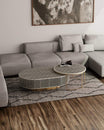
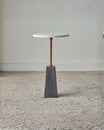
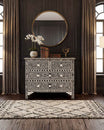
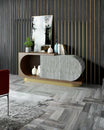



A marble console left near a balcony door in Dubai will show water rings within a season if nobody's paying attention. The same table in a drier climate might go two years without a mark. That difference comes down to one factor most furniture buyers underestimate when they invest in marble: humidity does more damage to natural stone than dust, sunlight, or daily wear combined.
Kuwait and the UAE sit in one of the most humid urban climates in the world for several months a year. Dubai's average relative humidity runs close to 60% annually, and during the peak summer months it regularly climbs above 90% along the coast, according to Dubai's National Center of Meteorology data reported by Weatherbase. Kuwait's inland desert climate swings less predictably, but coastal humidity spikes during the Shamal wind season bring similar moisture loads indoors, especially in homes near Kuwait Bay. For marble furniture, that moisture is a genuine threat to the stone's finish, not a minor inconvenience.
This guide breaks down exactly how humidity affects marble, what a realistic care routine looks like for Gulf households, and how to handle the stains and etch marks that show up despite your best efforts.
Why Marble Reacts So Strongly to Humidity
Marble is not a sealed, uniform surface. It starts as limestone that has recrystallized under heat and pressure, and that process leaves behind a network of microscopic pores throughout the stone. Those pores are what give marble its soft veining and depth, but they are also an open door for moisture.
Understanding this porosity is the starting point for every other care decision you will make.
According to the Natural Stone Institute (formerly the Marble Institute of America), marble's water absorption rate varies significantly by variety, with denser stones like Carrara absorbing roughly 0.2% to 0.4% of their weight in water, while more porous types can absorb considerably more. In a low-humidity environment, that porosity is manageable. In Kuwait or the UAE, where ambient moisture is in the air almost constantly for half the year, the stone is absorbing water vapor even when nobody has spilled a single drop on it.
This constant, low-level moisture exposure causes three specific problems in Gulf homes:
- Sealant breakdown accelerates. A sealer that might last 12 to 18 months in a drier climate often needs reapplication every 6 to 9 months in high-humidity conditions, since the protective layer is under continuous moisture pressure rather than occasional exposure.
- Water rings form more easily. A glass placed on an unsealed or under-sealed surface leaves a mark faster when the stone is already partially saturated with ambient moisture.
- Efflorescence becomes more visible. This is a white, powdery residue that appears when mineral salts inside the stone are carried to the surface by moisture and left behind as the water evaporates. It is common on stone that has absorbed humidity over an extended period.
Building a Realistic Care Routine for Humid Conditions
A marble care routine built for a dry climate will not hold up in Kuwait City or Dubai. The routine needs to account for near-constant ambient moisture in addition to occasional spills.
The table below breaks down what a Gulf-appropriate marble maintenance schedule actually looks like, compared to general guidance you might find written for drier regions.
|
Task |
General Guidance |
Gulf Climate Adjustment |
|
Sealing frequency |
Every 12 to 18 months |
Every 6 to 9 months, or sooner if the water-drop test fails |
|
Daily wiping |
As needed |
Daily, especially in rooms near windows or balconies |
|
Humidity monitoring |
Not typically required |
Keep indoor humidity below 55% where possible using AC or dehumidifiers |
|
Coaster and mat use |
Recommended |
Essential, particularly for dining and console pieces |
|
Deep cleaning |
Monthly |
Every 2 to 3 weeks during peak humidity months (June to September) |
Daily and Weekly Habits That Actually Matter
Most marble damage in humid homes comes from small habits, not major accidents. A few adjustments make a measurable difference.
- Wipe down marble surfaces with a soft, dry microfiber cloth each evening to remove condensation that accumulates near air-conditioned vents or windows.
- Use a pH-neutral stone cleaner, never a household cleaner containing vinegar, lemon, or ammonia, since acidic products etch the calcium carbonate in marble within seconds of contact.
- Position dining tables, consoles, and side tables away from direct airflow from AC units, which creates localized condensation on the stone surface over time.
- Run the water-drop test every two to three months during summer: place a small amount of water on an inconspicuous section of the stone and watch for 10 to 15 minutes. If the water darkens the surface or soaks in rather than beading, the sealer has worn through and needs reapplication.
Sealing: The Single Most Important Habit
Sealing does not make marble immune to damage. What it does is slow the rate at which liquid and moisture penetrate the stone, buying enough time to wipe up a spill before it becomes permanent.
A penetrating sealer, sometimes called an impregnating sealer, is the right choice for marble in humid conditions. Unlike a topical sealer that sits on the surface and can trap moisture underneath, a penetrating sealer lines the internal pores of the stone while still allowing trapped moisture vapor to escape. This distinction matters enormously in a climate where the stone is absorbing ambient humidity around the clock, since a topical film can actually worsen efflorescence by sealing moisture in rather than letting it out.
Removing Stains and Etch Marks Without Damaging the Stone
Even with a disciplined care routine, marks will appear eventually in a humid climate. The response depends entirely on whether you are dealing with a stain or an etch mark, since they require completely different treatments.
A stain sits on or just below the surface and has color from whatever caused it, such as coffee, oil, or ink. An etch mark, on the other hand, is a chemical reaction that has physically altered the stone's surface texture, usually caused by something acidic. Etching often looks like a dull or cloudy patch rather than a colored mark, and no amount of cleaning will remove it, since the damage has happened at a molecular level in the stone itself.
Here is how to approach each type.
- Identify the mark first. Run a finger over the spot. If the texture feels smooth and only the color looks off, it is likely a stain. If the area feels slightly rough, dull, or matte compared to the surrounding polish, it is an etch mark.
- For stains, use a poultice. Mix baking soda with water into a thick paste, apply it directly over the stain, cover with plastic wrap, and leave it for 24 hours. The poultice draws the staining substance out of the stone's pores as it dries. Rinse with water and buff dry.
- For light etching, use a marble polishing compound designed specifically for calcium-based stone. Apply in small circular motions with a soft cloth, following the product's instructions closely, since over-polishing can create an uneven sheen across the surface.
- For deep etching or large affected areas, call a restoration professional. Attempting to sand or aggressively polish a large etch mark without proper equipment often makes the surface uneven and more noticeable, not less.
Choosing Marble Pieces That Suit Gulf Households
Not every marble finish or variety performs equally well in high-humidity conditions. If you are furnishing a home in Kuwait, Dubai, Abu Dhabi, or a neighboring GCC city, a few decisions made at the buying stage will reduce how much maintenance the piece demands later.
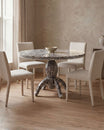
Darker, denser marbles like Nero Marquina generally absorb less moisture than lighter varieties such as Carrara or Calacatta, which makes them a more forgiving choice for dining tables and consoles that see daily use. A honed finish, which has a matte rather than glossy surface, also tends to show water marks and etching less visibly than a highly polished finish, since the light does not reflect off imperfections in the same way.
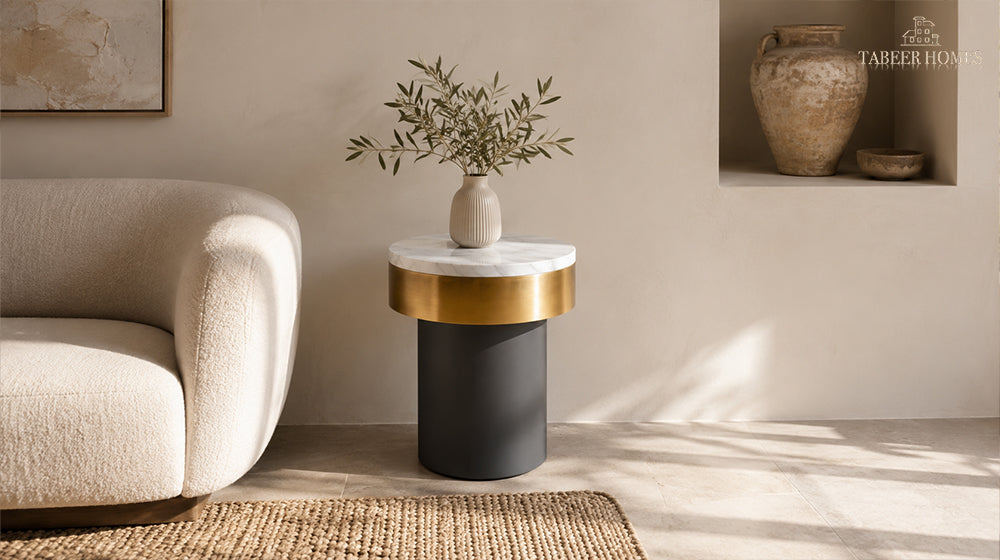
This is one reason handcrafted furniture makers who work extensively with marble, including studios like Tabeer Homes, pair their marble tabletops with detailing that accounts for regional humidity from the outset, such as pre-sealed surfaces and finishes selected for durability in coastal Gulf conditions rather than purely for appearance.
Getting the Placement Right
Where a marble piece sits in your home matters almost as much as how you clean it. A few placement principles reduce long-term exposure to humidity swings.
- Keep marble furniture at least a meter from balcony doors, windows, or any point where outdoor humidity enters directly, particularly during the June to September peak humidity window.
- Avoid placing marble directly beneath AC vents, where the temperature differential creates condensation on the stone's surface.
- In bathrooms or kitchens with marble accessories, ensure adequate ventilation or exhaust fan use during and after showers or cooking, since trapped steam is one of the most concentrated humidity sources in a typical Gulf home.
A marble piece placed thoughtfully, cleaned consistently, and sealed on a humidity-adjusted schedule will hold its finish for decades in this climate. The difference between a table that looks tired after two years and one that still looks new after ten almost always comes down to these routine decisions rather than one dramatic mistake.
Frequently Asked Questions
How often should I seal marble furniture in the UAE or Kuwait?
In humid Gulf conditions, marble should be sealed every 6 to 9 months rather than the standard 12 to 18 months recommended in drier climates. Run a water-drop test every few months to check if resealing is needed sooner.
Can I use vinegar or lemon to clean marble stains?
No. Vinegar, lemon juice, and other acidic cleaners etch marble on contact because they react with the calcium carbonate in the stone. Use a pH-neutral stone cleaner instead, and blot spills immediately rather than wiping.
What causes white powdery residue on marble furniture?
This is efflorescence, caused by mineral salts inside the stone being carried to the surface by absorbed moisture. It is common in humid climates and can usually be removed with a dry cloth, though recurring efflorescence signals a need for resealing.
Is dark marble better than light marble for humid homes?
Generally, yes. Denser, darker varieties like Nero Marquina absorb less moisture than lighter stones such as Carrara, making them a lower-maintenance choice for daily-use furniture in high-humidity households.
How do I know if a mark is a stain or an etch?
Run your finger over the mark. A stain feels smooth with only the color affected, while an etch mark feels slightly rough or dull compared to the surrounding polish, since it has altered the stone's surface texture.
Can etch marks on marble be fixed at home?
Light etching can often be improved with a marble-specific polishing compound applied in small circular motions. Deep or widespread etching usually requires a professional restoration service to avoid making the surface uneven.
Should I place marble furniture near windows or balconies?
It is best to keep marble at least a meter from windows or balcony doors, especially during peak humidity months from June to September, since direct exposure to outdoor humidity accelerates sealant breakdown and moisture absorption.
Does air conditioning help protect marble furniture?
Yes, keeping indoor humidity below roughly 55% through consistent AC use reduces the moisture load on marble. However, placing furniture directly under AC vents can cause condensation, so positioning matters as much as the AC itself.
How long does a marble sealer take to dry before use?
Most penetrating sealers need 24 to 48 hours to cure fully, depending on humidity and ventilation. Avoid placing objects, food, or drinks on the surface until the curing period specified by the sealer manufacturer has passed.
What is the water-drop test and how do I do it?
Place a small amount of water on an inconspicuous area of the marble and wait 10 to 15 minutes without wiping. If the water beads on the surface, the seal is intact. If it darkens the stone or soaks in, it is time to reseal.

اترك تعليقًا
This site is protected by hCaptcha and the hCaptcha Privacy Policy and Terms of Service apply.