


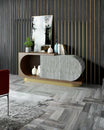
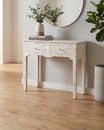


A tray is one of the smallest pieces of furniture in a home, and also one of the most useful, corralling loose objects into a single, movable surface that makes a coffee table, ottoman, or sideboard look considerably more intentional. A bone inlay tray does that same job while adding genuine hand-carved detail, turning a purely functional object into a small decorative statement on its own. Because a tray sits at the center of so many styling decisions, on an ottoman, a coffee table, a sideboard, getting its use, styling, and care right matters more than its modest size might suggest.
What Is a Bone Inlay Tray?
A bone inlay tray is a flat serving or decorative surface framed or fully covered in hand-carved bone segments set into a resin bed, built over a solid wood base, typically mango wood. Like larger bone inlay furniture, no two trays are ever fully identical, since each bone segment is individually cut and placed by hand, producing small natural variations in shape and spacing that signal genuine craftsmanship rather than a printed or molded imitation. Trays typically use a lower profile height, often just a few centimeters, with raised edges or handles that keep contents from sliding off during use or when the tray is moved between surfaces.
Common Bone Inlay Tray Shapes and Sizes
Bone inlay trays come in a wider variety of shapes than most other inlay furniture categories, since their smaller scale makes more elaborate silhouettes practical to produce.
- Rectangular trays , the most traditional format, typically measuring around 35 x 25 cm, well suited to serving drinks or holding a grouped set of smaller objects.
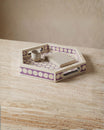
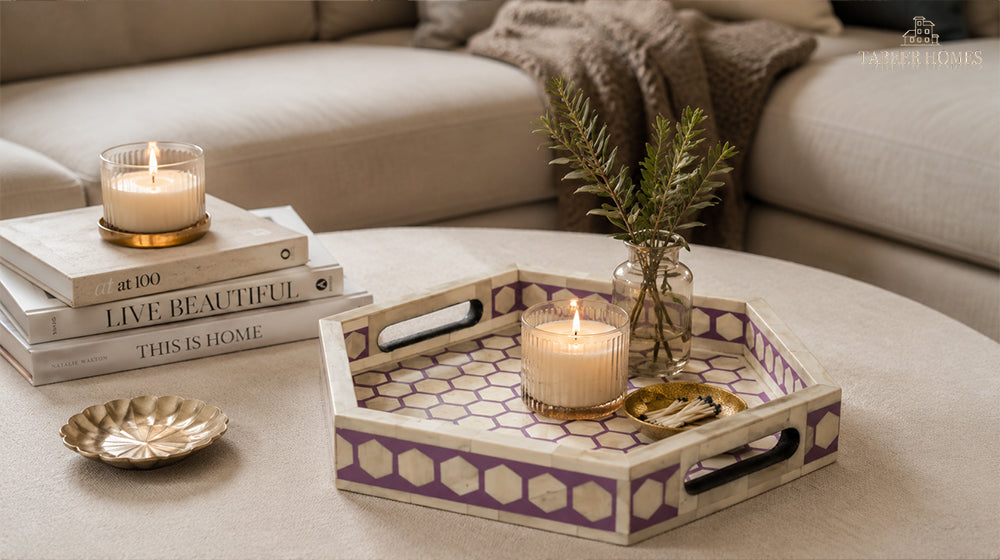
- Hexagonal trays , offering a more architectural, geometric silhouette, often finished with a bold checkerboard or striped pattern that reads clearly even at a compact scale.
- Round trays , softer in profile and well suited to a rounded coffee table or a curved seating arrangement where a rectangular tray's corners might feel visually at odds with the room.
- Square trays , a middle ground between rectangular and hexagonal, offering flat edges with a more compact footprint than a longer rectangular option.
Tabeer Homes' Amal Tray in blue bone inlay measures 35 x 25 x 5 cm in a classic rectangular format, while the Vaan Tray , also in blue bone inlay, uses a hexagonal silhouette at a similar 35 x 35 x 5 cm footprint, its geometric inlay catching light and shadow across a more architectural shape. Both sit within the compact size range typical of this category, small enough to move easily between surfaces while still offering enough area to hold a meaningful grouping of objects. Height, while less variable than width or depth across the category, still affects how a tray functions in practice: a very shallow tray under 3 cm offers minimal lip to contain contents during a hasty move between rooms, while a slightly deeper tray in the 5 cm range provides more security for a fuller grouping of glasses or small objects without them sliding toward the edge.
Serving Tray Vs Decorative Tray: Does It Matter?
The line between an inlay serving tray and a purely decorative tray is more about intended use than any structural difference in the piece itself. A tray used primarily for serving, carrying drinks or snacks to guests, sees more direct contact with liquids and food items, making resin quality and edge sealing more important considerations than for a tray that mostly sits styled on a shelf or ottoman. A decorative tray, by contrast, functions more as a base for a styled vignette, holding candles, small objects, or a single decorative piece, and can prioritize a bolder or more delicate pattern without worrying as much about daily wear from food and drink contact. Most bone inlay trays can comfortably serve both roles, though a tray intended for regular serving duty benefits from slightly more attention to resin quality and edge condition than one destined mainly for display.
Using a Bone Inlay Tray as an Ottoman Tray
An ottoman tray is one of the most practical applications for this category, converting a soft, cushioned ottoman into a usable surface without sacrificing its function as extra seating when needed. Positioned centrally on the ottoman, a bone inlay tray provides a stable, flat base for drinks, a stack of books, or a small styled vignette, while still allowing the tray to be lifted off entirely when the ottoman needs to serve as additional seating for guests. Because an ottoman's soft surface does not offer the same stability as a hard coffee table, choosing a tray with a slightly raised lip or handle detail helps keep objects from sliding during use, particularly relevant in a household where the ottoman doubles as a footrest and gets bumped or shifted more than a fixed coffee table would. Sizing matters more here than on a coffee table as well, since a tray that overhangs an ottoman's edges significantly becomes unstable and prone to tipping when weight is applied unevenly, while a tray sized to sit fully within the ottoman's top surface, with a small margin on all sides, stays secure even when the ottoman itself gets nudged or used as a footrest during regular daily use.
Styling a Bone Inlay Tray on a Coffee Table
On a coffee table, a bone inlay tray works best as a way to define a styled zone rather than covering the entire surface. Positioning the tray toward one side or corner of the table, rather than dead center, leaves room for a book stack or a plant elsewhere on the surface while keeping the tray's own contents, a candle, a small dish, a single decorative object, contained and easy to lift away when the table needs to be cleared for actual use. Grouping objects on the tray in odd numbers, three items rather than two or four, tends to read as more intentional, echoing the same principle that applies to styling a sideboard or console vignette at a larger scale.
Styling a Bone Inlay Tray on a Sideboard or Console
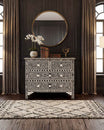
A tray plays a slightly different role on a taller piece like a sideboard or console, where it typically holds a smaller, more curated grouping positioned at one end of the surface rather than spanning the full width. Here, the tray's own pattern becomes part of the overall vignette rather than the base for a self-contained arrangement, so choosing a tray finish that complements rather than competes with the furniture piece beneath it matters more than it does on a plainer coffee table. A tray with a subtler linear or geometric pattern tends to sit more comfortably against an already patterned bone inlay sideboard, while a bolder floral or checkerboard tray can serve as a deliberate accent against a plainer, unpatterned console.
Bone Inlay Decor: Pairing Trays With Other Accents
A tray rarely needs to stand entirely on its own, and pairing it thoughtfully with other bone inlay decor or complementary materials generally produces a more considered result than surrounding it with matching inlay pieces alone. A tray paired with a single glass or ceramic vase introduces material contrast that keeps the vignette from feeling too heavily patterned in one direction. A small stack of books beside the tray, rather than on top of it, adds height variation to the overall grouping without crowding the tray's own surface. Candles, whether in simple holders or a small grouped set, work particularly well on a tray specifically, since the tray's raised edge helps contain any wax drips and keeps the flame-adjacent items separate from the rest of the table's surface.
Caring for a Bone Inlay Tray
A tray's small size makes it easy to overlook in a regular care routine, but its regular handling, being lifted, carried, and set down, means it benefits from consistent attention.
- Dust regularly with a soft, dry microfiber cloth , following the direction of the inlay pattern rather than wiping across it.
- Wipe spills immediately , since a tray used for serving will encounter more direct liquid contact than most other bone inlay pieces in a home.
- Avoid soaking or submerging the tray in water , since prolonged water exposure can affect both the wood base and the resin bond holding the bone segments in place.
- Keep the tray out of direct sunlight when not in active use , particularly if stored on an open shelf or windowsill, to prevent gradual yellowing of pale bone tones.
- Handle by the base rather than gripping the inlay edges tightly , since repeated pressure on raised inlay segments over time can loosen individual pieces faster than careful handling would.
Is It Food-Safe? Using a Bone Inlay Tray for Serving
Bone inlay trays are generally safe for serving food and drinks when the resin finish is properly sealed and fully cured, though direct, prolonged contact with food is best avoided in favor of using the tray to carry plated items or glassware rather than as a direct food-contact surface. Placing a cloth napkin, a small plate, or a coaster beneath food or drink items adds a protective layer between the contents and the tray's surface, reducing the risk of staining or moisture exposure over repeated use.
For buyers planning to use a tray primarily for serving rather than display, confirming the resin finish is smooth and fully sealed, with no visible gaps around the bone segments, is a reasonable check before regular food-adjacent use. This distinction matters most for households hosting frequent gatherings, where a tray sees repeated cycles of use and cleaning over a single evening, compared to a household that uses the same tray only occasionally, where the cumulative wear from food and drink contact accumulates far more slowly.
Common Mistakes When Buying or Using a Bone Inlay Tray
A handful of avoidable habits account for most of the wear and disappointment reported with this category.
- Choosing a tray based on pattern alone, ignoring its intended use. A tray meant for daily serving duty benefits from a simpler, more durable pattern, while a tray reserved for occasional display can prioritize a bolder or more delicate design.
- Leaving wet glasses directly on the surface without a coaster or napkin. Even a well-sealed resin finish benefits from an extra layer of protection during regular use.
- Stacking heavy objects directly on top of a tray in storage. Since bone inlay's resin surface can be scratched by sharp or heavy contact, storing a tray flat with nothing stacked on top protects the finish between uses.
- Assuming all trays in a collection share identical dimensions. Since trays vary between rectangular, hexagonal, round, and square formats even within the same product line, confirming the exact size before ordering avoids a mismatch with the ottoman, coffee table, or console it is meant to accompany.
Using Multiple Bone Inlay Trays Together
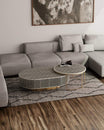
A single tray works well as a focal styling element, but layering two trays of different sizes on the same surface can add depth to a coffee table or console vignette that a single flat tray cannot achieve alone. Positioning a smaller square or hexagonal tray at an angle on top of, or slightly overlapping, a larger rectangular tray creates a tiered effect, with the smaller tray typically holding a single small object, a candle or a miniature vase, while the larger base tray carries the broader grouping.
This layered approach works particularly well when the two trays share a related but not identical pattern, a linear stripe paired with a checkerboard, for instance, since too much pattern repetition between stacked trays can start to feel visually busy rather than intentionally layered. Buyers building a collection of multiple trays over time, rather than purchasing several at once, benefit from choosing pieces within the same general color family, even if the specific patterns differ, since this makes future pairing considerably easier than starting with a mismatched color palette across separate purchases.
Ending Thoughts
A bone inlay tray earns its place through a combination of genuine daily usefulness and the same hand-carved detail found in larger inlay furniture, at a scale that makes it an accessible entry point into the craft for buyers not yet ready for a larger investment. Whether used as an ottoman tray , a coffee table accent, or a serving piece for guests, matching the tray's shape and pattern to its intended use will do more for its long-term satisfaction than choosing on looks alone. A tray also makes a genuinely practical gift for exactly this reason, offering someone unfamiliar with bone inlay a tactile, low-commitment way to experience the craft before considering a larger furniture piece. Tabeer Homes' Amal Tray in blue bone inlay offers a classic rectangular silhouette well suited to everyday serving, while the Vaan Tray 's hexagonal shape brings a more architectural statement to a coffee table or console vignette, and the Maze Tray , available in both black and brown bone inlay, rounds out the range with a bold checkerboard pattern suited to a higher-contrast styling approach. For a deeper look at the craft behind these smaller pieces, our guide on what bone inlay furniture is and how it's made covers the full carving and setting process in more depth.
Frequently Asked Questions
What is a bone inlay tray used for?
A bone inlay tray works both as a serving piece for drinks and snacks and as a decorative base for styling a coffee table, ottoman, or console, corralling smaller objects into one movable, visually defined surface.
Can a bone inlay tray be used on an ottoman?
Yes, an ottoman tray is one of the most practical uses for this category, providing a stable flat surface on a soft ottoman while still allowing the tray to be removed when the ottoman needs to serve as seating.
Is a bone inlay tray food-safe?
Generally yes, when the resin finish is properly sealed, though placing a napkin, plate, or coaster beneath food or drinks adds extra protection and reduces the risk of staining over repeated use.
How do you clean a bone inlay tray?
Dust regularly with a soft, dry microfiber cloth, wipe spills immediately, avoid soaking the tray in water, and keep it out of direct sunlight to prevent gradual yellowing of pale bone tones.
What shapes do bone inlay trays come in?
Common shapes include rectangular, hexagonal, round, and square, each suited to different table shapes and styling approaches, from a classic serving tray to a more architectural decorative accent.
How is a bone inlay tray different from a plain decorative tray?
A bone inlay tray uses hand-carved bone segments set into resin, producing natural pattern variation and genuine texture, unlike a plain decorative tray with a printed, painted, or uniform manufactured finish.

اترك تعليقًا
This site is protected by hCaptcha and the hCaptcha Privacy Policy and Terms of Service apply.