


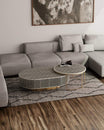
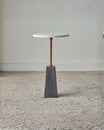
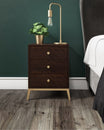
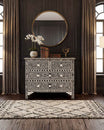
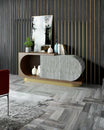
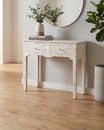
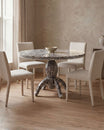


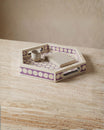
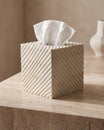
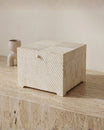
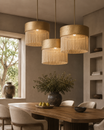

Search for luxury furniture brands in the UAE and you will find dozens of names, most of them showing the same polished showroom photography and the same words: handcrafted, premium, bespoke, timeless. The photography tells you very little. Two brands can show an almost identical dining table and deliver pieces that differ completely in how they are built, how long they take to arrive, and what happens if something goes wrong after delivery.
This guide gives you the comparison criteria that separate brands from each other in practice. It covers materials and construction, who actually makes the piece, how original the design is, what customisation really involves, lead times, delivery, and returns. It also covers what changes when you buy luxury furniture online rather than in a showroom, and it uses real examples from Tabeer Homes, a UAE-based brand specialising in bone inlay, mother of pearl and marble pieces, so the criteria are tied to products you can look up.
What "Luxury" Should Mean When You Compare Furniture Brands
Luxury is not a regulated term. Any brand can use it, and price alone does not prove it, because a high price can reflect a retail margin, a prime showroom location or a famous name rather than better making. A more useful definition has three parts.
Material that is hard to fake. Solid hardwood, natural stone, hand-cut bone, shell and real silk are expensive to source and slow to work with. A laminate printed to look like marble photographs well and costs a fraction of the real thing.
Making that takes time. Hand-set inlay, hand-carved joinery and hand-woven textiles cannot be rushed or fully automated. Time is the cost you are paying for, and it shows up in the finished edge, the joints and the consistency of the pattern.
Design with a point of view. Luxury furniture design means a piece that was drawn with a reason behind its proportions, pattern and finish, rather than a catalogue shape with a premium material added. You can usually tell the difference by asking whether the piece would look the same if you swapped the logo.
Hold any brand you are considering against those three tests before you look at price. A brand that passes all three at a price you can accept is worth a visit. A brand that passes none is selling its name.
Seven Criteria to Compare Before You Buy
1. Materials and Construction
Ask for the material list of the exact piece, not the category. "Marble table" can mean a solid slab, a marble-clad panel over a structural core, or a marble-look surface. "Wood" can mean solid timber or veneer over engineered board. Each is legitimate when described correctly, and each carries a different price, weight and repair profile.
Look for specifics on the product page: the species of wood, the type of stone, whether the inlay is bone or shell, and what the frame is made from. Tabeer's product pages, for example, list materials such as mother of pearl, resin and wood for its Iris Mirror, and bone inlay, brass and resin for its Ray Dining Table. A page that lists no materials at all gives you nothing to compare.
2. Craftsmanship and Who Makes It
Find out where the piece is made and by what process. Tabeer describes its furniture as made in its own ateliers in India, using hand-cut bone and mother of pearl motifs, and sold through a flagship store in the UAE. That is a clear statement you can check and ask questions about. Many brands never say where their pieces are made, which is itself information.
Ask whether the pattern is set by hand or applied by machine, because hand-set work has natural variation between pieces. A brand that is honest about craftsmanship will tell you that slight variations in pattern, tone or finish are expected. Tabeer's own policy states that such variations are inherent to artisanal craftsmanship and are not treated as defects, which is a fair thing to know before you order.
3. Luxury Furniture Design: Originality Versus Trend
Trend-led pieces date quickly. A design that leans entirely on this year's colour or silhouette will look like this year in five years' time. Pieces built around a lasting technique, such as inlay patterns with centuries of history behind them, tend to hold their appearance because the appeal sits in the craft rather than the fashion.
Compare a brand's range for internal consistency. A brand with a clear design language, such as the sunburst and starburst inlay on Tabeer's Ray and Nova dining tables, is easier to trust than one that mixes unrelated styles to cover every taste.
4. Customisation
Many brands advertise customisation and then offer a choice of three fabric swatches. Ask what can actually change: dimensions, finish, colour, pattern, material. Ask whether a custom order has a minimum, how much it adds to the price, and how much it extends the lead time.
Tabeer states that its pieces are made to order and customisable, which suits a dining room with an unusual footprint or a majlis that needs a specific scale. Confirm the details for the exact piece you want before you assume a change is possible, since customisation terms differ by product.
5. Lead Times and Stock
Lead time is the criterion buyers most often discover too late. Handcrafted furniture is frequently made to order, which means a beautiful piece can take weeks or months to arrive. That is acceptable if you plan for it and a problem if you need the room finished for an event.
Look for a stated policy. Tabeer's shipping policy gives in-stock items a delivery window of 2 to 4 working days within the UAE, and pre-order items an estimated 6 to 10 weeks from order confirmation. Its collection pages also label products as ready to ship or pre-order, which lets you filter for what is available now. Whatever brand you consider, find out which of your shortlisted pieces are in stock before you plan a delivery date around them.
6. Delivery and Installation
A heavy dining table or a full-length mirror is awkward and easy to damage in transit. Ask who delivers, whether delivery is included in the price, whether the team carries the piece into the room, and whether assembly is part of the service. Tabeer's shipping policy states that large pieces include white-glove delivery and basic on-site assembly where applicable.
Ask about access before you order. Measure lifts, stairwells and doorways, because a table that cannot get through the door is a problem no brand can fix after the fact.
7. Returns, Warranty and After-Sales
This is where luxury brands differ most, and where buyers read least. Handcrafted and made-to-order pieces often carry stricter return terms than mass-market furniture, because each piece is produced for one customer.
Tabeer's refund policy, for instance, states that all sales are final, that returns for change of mind or incorrect measurements are not accepted, and that returns are accepted for verified damage reported within 24 hours of delivery. Refunds go to the original payment method within 7 to 14 business days. That policy rewards careful measuring and a quick inspection on delivery, and you should apply the same scrutiny to any brand you compare.
Ask each brand three direct questions. Is there a warranty, and what does it cover? How do I report damage, and by when? What happens if a piece arrives different from the photo? A clear answer is a good sign, and a vague one tells you what to expect.
Buying Luxury Furniture Online: What to Verify First
Buying luxury furniture online removes the chance to touch the piece, so the product page has to do that work. Before you add anything to a basket, check five things.
Full dimensions. Width, depth and height at minimum. Tabeer lists dimensions such as 90 by 200 cm for the Iris Mirror and 120 by 120 by 75 cm for the Iris Dining Table, which is the level of detail to expect.
Material and finish description. Specific words, not "premium finish".
Multiple photographs and a close-up. You want to see the inlay edge, the joinery and the surface texture, not only a styled room shot.
Stock status. Ready to ship, pre-order or made to order, stated clearly.
Policies you can read before paying. Shipping, returns and customs or duties. Tabeer's shipping policy states that customs duties, taxes and import charges, where applicable, are included in the product or shipping price, which removes one common surprise for international orders.
Online buying also gives you something a showroom cannot: time. You can compare several brands side by side, read each policy in full and measure your room again before you commit. If a brand also has a physical store, visit it for the one or two pieces you are serious about, because seeing the inlay or stone in daylight settles questions a photograph cannot.
How Luxury Shows Up Across Home Furniture Categories
The phrase home furniture covers everything from a side table to a dining suite, and the quality markers shift by category. These are the signals worth checking in each.
Dining Tables
Weight, base design and tabletop construction matter most. Check whether the base is a pedestal or legs, what the top is made of, and how many people the diameter or length seats. Tabeer's dining range includes round bone inlay and mother of pearl tables such as Iris, Nova and Ray, priced at the time of writing from about 7,879 AED for the Iris Dining Table on sale, with larger and more complex pieces higher. Compare price against the hours of inlay work involved, not against a printed-surface table of the same size.
Coffee Tables and Side Tables
Look at the base as closely as the top. A beautiful inlaid surface on a wobbly or thin base undermines the piece. Tabeer's coffee table range runs from about 1,559 AED for smaller carved bone designs to about 5,699 AED for larger carved bone pieces, with bone inlay and mother of pearl round tables in between, and marble options such as the Avo, Split and Rohini. The spread shows how much material and technique drive price within a single category.
Mirrors and Decor
A mirror is a decorative object as much as a functional one, so frame quality matters. Hand-set inlay frames, like those on Tabeer's Iris, Maze and Ameerah mirrors, vary slightly piece to piece. Ask about hanging hardware and weight, especially for a full-length format.
Rugs
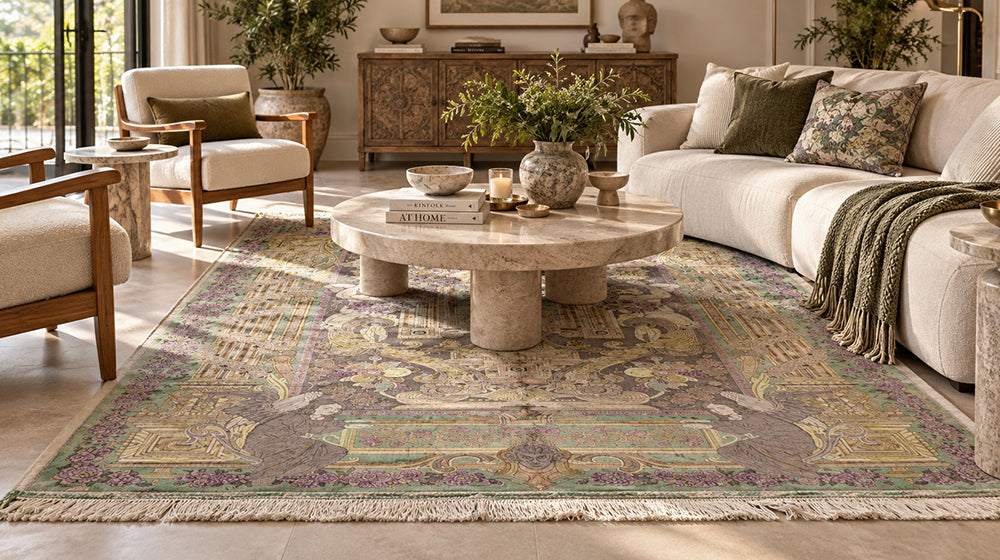
Check fibre, size and weaving method. Tabeer's rug range is mostly silk in sizes from 150 by 100 cm up to 400 by 300 cm, described by the brand as handcrafted. If hand-knotting matters to you, ask the brand to confirm the exact construction method, because handcrafted and hand-knotted are not the same claim.
A Quick Comparison Checklist
Use this table when you shortlist brands. Fill in one column per brand, and leave a cell blank if you cannot find the answer, because a blank is a finding.
|
Criterion |
What to look for |
Red flag |
|
Materials |
Named species, stone or inlay type |
"Premium finish" with no detail |
|
Making |
Stated workshop location and process |
No mention of where it is made |
|
Design |
Consistent language across the range |
Unrelated styles copied from trends |
|
Customisation |
Specific options and stated limits |
Vague "bespoke service" |
|
Lead time |
Published window per stock status |
"Contact us" for every timeline |
|
Delivery |
White-glove option, assembly stated |
No mention of who delivers |
|
Returns |
Written policy, damage procedure |
Terms only available after purchase |
|
Price |
Clear price, duties stated |
Hidden import charges |
Where Tabeer Homes Fits
Tabeer Homes is a specialist rather than a generalist. Its focus is bone inlay, mother of pearl and marble furniture and decor, made in its own ateliers in India and sold through a UAE flagship store and its website. That focus has clear consequences for buyers.
On the plus side, the range goes deep within its niche. There are dozens of coffee table variants, a long list of round dining tables in several colourways, a full mirror collection and over a hundred rug designs. You can compare finishes within one maker rather than across unrelated makers.
On the other side, a specialist does not cover every style. If you want a plain upholstered sofa or a minimalist pale oak bedroom, a broader brand will serve you better. The honest way to use this guide is to decide first which style you want, then pick the brand whose specialism matches it.
Questions to Ask Any Brand Before You Pay
Take this list into every showroom visit or chat conversation.
- What exactly is this piece made from, including the frame, base and finish?
- Where is it made, and is the pattern set by hand?
- Is this piece in stock, and if not, how long will it take from order to my door?
- What does delivery include, and is assembly part of it?
- Can the size, colour or finish be changed, and what does that cost in money and time?
- What is the return policy for a made-to-order piece, and how quickly must I report damage?
- Is there a warranty, and what does it cover?
- Are duties and taxes included in the quoted price?
Final Thoughts
Comparing luxury furniture brands is easier once you stop reading the marketing and start collecting facts. Write down the material, the maker, the lead time, the delivery terms and the return policy for each brand on your shortlist, and the real differences appear quickly. The best brand for you is the one whose answers are specific, whose style matches your room, and whose terms you are comfortable living with once the piece is delivered.
Sources used for Tabeer Homes details: the brand's collection pages, About Us page, shipping policy and refund policy on tabeerhomes.com.
Frequently Asked Questions
How do I compare luxury furniture brands in the UAE?
Compare them on the same seven points: materials and construction, who makes the piece and where, design originality, customisation options, lead times, delivery and installation, and returns or warranty terms. Write the answers side by side, and treat any blank as a missing answer rather than a good sign.
Is luxury furniture bought online as reliable as showroom furniture?
It can be, if the product page gives full dimensions, specific materials, clear photographs and readable policies. Online buying works best when the brand also has a physical store you can visit for the final decision, and when you have measured your room and access routes before ordering.
How long does handcrafted luxury furniture take to arrive?
It depends on stock status. Ready-to-ship pieces can arrive within days, while made-to-order or pre-order pieces often take several weeks or more. Tabeer's policy states 2 to 4 working days for in-stock items within the UAE and 6 to 10 weeks for pre-orders from order confirmation. Ask any brand for its figure per piece.
Can I return luxury furniture if I change my mind?
Often not. Handcrafted and made-to-order furniture commonly has strict return terms. Tabeer's refund policy states that all sales are final, with returns accepted for verified damage reported within 24 hours of delivery. Read the policy of every brand you consider before you pay.
What is the difference between handcrafted and mass-produced home furniture?
Handcrafted furniture is made with significant hand work, such as hand-set inlay or hand-carved joinery, which gives natural variation between pieces and takes longer to produce. Mass-produced furniture is made in volume by machine for consistency and lower unit cost. Each suits a different budget and priority.
Does a higher price always mean better luxury furniture?
No. Price can reflect materials and labour, but it can also reflect location, branding and retail margin. Judge a piece by its documented materials, construction and policies, then judge whether the price is fair for those.


اترك تعليقًا
This site is protected by hCaptcha and the hCaptcha Privacy Policy and Terms of Service apply.