






A side table is easy to buy wrong precisely because it seems like such a small decision. It is not a sofa or a dining table, the purchases that get measured and remeasured before ordering, and yet a side table that sits at the wrong height or crowds a walking path causes daily friction every bit as real as a poorly sized piece of major furniture. Getting this small but genuinely important decision right comes down to a handful of measurements and a clear sense of what job the table actually needs to do, covered step by step in this guide.
What Counts as a Side Table?
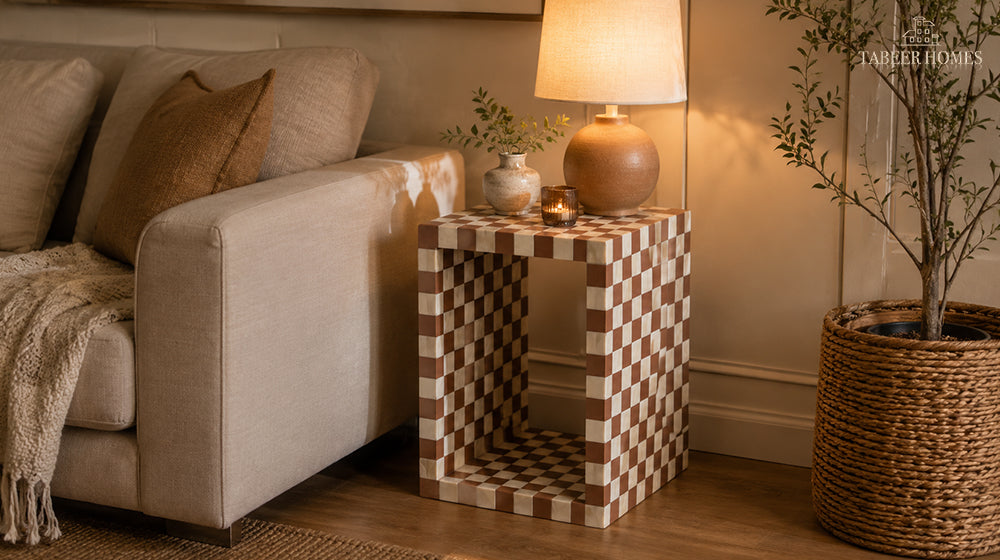
A side table is any small table positioned beside a larger piece of furniture, a sofa, an armchair, or a bed, to hold items within easy reach rather than serving as a room's central surface the way a dining or coffee table does. The category covers considerable ground: a living room accent piece beside a sofa arm, a bedside table within reach of the mattress, and an occasional table tucked into a corner for a lamp or a plant all fall under the same broad umbrella, even though their specific proportions and roles differ. What unites them is function over formality, a side table exists to be useful first, decorative second, even in cases where its craftsmanship or material makes it a genuine design statement in its own right.
Side Table Height: Getting This One Measurement Right
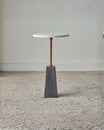
Side table height matters more than any other single measurement in this category, since a table at the wrong height undermines its entire purpose regardless of how attractive it looks. For a living room side table positioned beside a sofa or armchair, the ideal height sits at or within a few centimeters of the arm height of the seating it accompanies, typically landing between 45 and 60 cm depending on the specific sofa. A table noticeably taller than the arm height makes reaching a drink or book awkward, while one noticeably shorter requires leaning down further than feels natural during regular use. For a bedside table, the calculation shifts to the mattress rather than a sofa arm, ideally sitting within a few centimeters of the mattress top, usually somewhere between 55 and 70 cm depending on the specific bed frame and mattress combination. Measuring your actual furniture, rather than relying on a general average, matters considerably here, since both sofa and mattress heights vary enough between specific products that a generic rule can miss the mark by several centimeters in either direction.
Side Table Size: Width, Depth, and Clearance
Beyond height, a side table's footprint needs to fit its intended spot without crowding the room's walking paths or overwhelming the furniture it accompanies. Most living room side tables run 35 to 50 cm in width and depth, small enough to tuck into the gap beside a sofa or chair without disrupting the space around it. Bedside tables follow a similar range, though depth matters slightly more here, since a table positioned too close to the bed can interfere with getting in and out, while one too far away undermines the entire point of having it within arm's reach. As a general rule, leaving at least 10 to 15 cm of clearance between a side table and any adjacent furniture prevents the pieces from visually or physically crowding each other, and checking this clearance against your actual room, not just the table's dimensions in isolation, catches sizing problems before they become a daily annoyance.
Accent Table Vs Side Table Vs Bedside Table: Are They Different?
The terms accent table , side table, and bedside table overlap considerably in furniture listings, and understanding the subtle distinctions helps when comparing options across different retailers. Side table functions as the broadest umbrella term, covering any small table used beside larger furniture regardless of room or specific purpose. An accent table generally emphasizes the decorative role over the functional one, often chosen specifically for its material or design statement rather than purely for its bedside or sofa-side utility, and can appear in an entryway or corner without necessarily sitting beside another piece of furniture at all. A bedside table is simply a side table used specifically beside a bed, sometimes called a nightstand instead, with its sizing and height calculated relative to the mattress rather than a sofa or chair. In practice, these terms are used inconsistently enough across retailers that checking the actual dimensions and intended placement matters more than relying on which specific term a listing uses.
How to Choose a Side Table for Your Living Room
A living room side table needs to balance function against the room's existing furniture arrangement, since it typically sits in close proximity to seating that sees heavy daily use. Start by identifying the gap it needs to fill, beside a sofa arm, between two chairs, or in an underused corner, and measure that space precisely before shopping rather than estimating by eye. Consider what the table actually needs to hold: a table meant primarily for a lamp and a coaster needs less surface area than one expected to hold a stack of books, a remote, and a drink simultaneously. Material and style matter too, but only after the functional questions are settled, since a beautiful table that is the wrong height or too large for its spot will underperform regardless of its finish.
How to Choose a Bedside Table for Your Bedroom
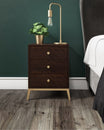
A bedside table's primary job, holding a lamp, a phone, and a glass of water within comfortable reach, makes its height relative to the mattress the single most important decision in the buying process. Beyond height, consider storage needs: a household that keeps books, medication, or personal items close at hand benefits from a table with at least one drawer or an enclosed cabinet, while a household that prefers a minimalist nightstand can prioritize a simple, single-surface design instead. Symmetry matters for many bedrooms as well, since a matched pair of bedside tables on either side of the bed creates a more formal, coordinated look than two mismatched pieces, though this is a style preference rather than a functional requirement. Households with mobility considerations should also weigh table stability and edge profile, since a table that gets bumped or leaned on regularly benefits from a solid, low center of gravity rather than a delicate, top-heavy design.
Choosing a Style and Material
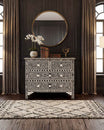
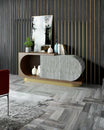
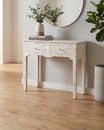
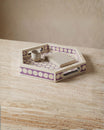
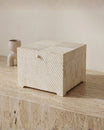
Side tables span nearly every material category available in furniture, and the right choice depends on both the room's existing style and how much daily wear the table will experience. Solid wood offers warmth and durability suited to nearly any room, generally the lowest-maintenance option available in this category. Marble brings a cool, polished surface with genuine natural veining, durable and elegant though heavier and pricier than most wood alternatives, well suited to both living room and bedside use given its resistance to daily wear. Bone inlay and mother of pearl bring genuine handcrafted detail and pattern, bone inlay offering a bold, matte finish and mother of pearl a glossy, light-catching shimmer, both requiring slightly gentler care than plain wood or marble but delivering a level of visual interest neither of those materials can match. Metal and glass combinations offer a lighter, more contemporary alternative, often the most affordable option in this category and well suited to a minimalist or industrial-leaning room.
Nesting and Stacking Side Tables: A Flexible Alternative
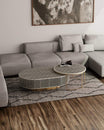
For buyers uncertain about committing to a single fixed-size table, or for smaller spaces that benefit from flexible furniture, nesting or stacking side tables offer a genuine alternative to a single piece. A nesting set typically includes two or three tables of graduated sizes, designed to tuck beneath or beside each other when not in full use, expanding to offer additional surface area during gatherings or when extra guests need somewhere to set down a drink. This format works particularly well in smaller apartments where floor space is at a premium, since the full set's footprint can shrink down to just the largest table's space requirement when the smaller pieces are nested away. Buyers drawn to a specific pattern or material, whether bone inlay's bold geometry or a simpler wood finish, also get to see that design registered at multiple scales within the same set, adding visual variety without requiring multiple separate purchases.
How to Choose a Side Table: A Quick Checklist
Bringing the full decision-making process together, here is what actually matters when working through how to choose a side table for any room.
- Measure the gap it needs to fill , including width, depth, and the height of the adjacent furniture.
- Confirm height relative to the sofa arm or mattress , aiming for a match within a few centimeters rather than a rough approximation.
- Decide what it needs to hold , since surface area and storage needs vary depending on daily use.
- Choose a material suited to the room's wear level , prioritizing durability for a heavily used spot and reserving more delicate finishes for lower-traffic placements.
- Consider whether a single table or a nesting set better suits the space , particularly relevant for smaller rooms or flexible entertaining needs.
- Match style to the room's existing furniture , ensuring the table complements rather than clashes with what is already there.
Styling a Side Table Once It's in Place
A side table's small surface benefits from restraint more than elaborate styling, since its primary job is holding items within reach rather than serving as a full decorative vignette. A lamp remains the most common and often most functional choice, providing genuine task lighting for reading or general ambient light in the evening. Beyond the lamp, one or two additional objects, a small stack of books, a coaster, a single decorative piece, keep the surface from feeling either bare or cluttered. Leaving some open surface area matters more here than on a larger piece of furniture, since a side table that is fully covered in decor loses much of its practical function the moment someone actually needs to set down a drink or a phone. For a bedside table specifically, keeping a clear spot for a glass of water and a phone charger, even amid other styled objects, ensures the table continues serving its primary purpose alongside whatever decorative role it also plays.
Side Tables in Pairs Vs Singles
Beyond the symmetry question already covered for bedside tables, the single-versus-pair decision extends into living rooms and other spaces as well. A pair of matching side tables flanking a sofa creates a formal, balanced look, particularly effective in a more traditional or symmetrical room layout. A single side table, positioned at one end of a sofa or beside a single armchair, suits a more asymmetrical, relaxed room arrangement, and allows a bolder, more individually striking piece to serve as a clear focal point without a matching twin diluting its visual impact. Mixed pairs, two tables in a related but not identical style, split the difference, offering some of the coordinated feel of a matched pair while introducing subtle variety that a fully identical pair cannot achieve. The right choice ultimately depends on the room's existing furniture symmetry: a perfectly balanced, matched living room layout generally calls for a matched pair, while a room already built around asymmetry and mixed pieces suits a single standout table better.
Common Mistakes When Buying a Side Table
A handful of recurring errors account for most of the regretted purchases in this category.
- Choosing height based on general appearance rather than actual furniture measurements. A table that looks proportional in a showroom can sit noticeably too tall or too short once placed beside your specific sofa or bed.
- Ignoring clearance around the table's placement. Even a well-sized table can create a walking hazard or feel cramped if the surrounding space is not accounted for.
- Underestimating weight for a stone or marble option. Heavier materials are more stable but also harder to reposition, worth confirming before assuming a table can be easily moved later.
- Buying a mismatched pair when symmetry was the goal. Ordering two separate tables from different collections in hopes they will coordinate rarely produces the same cohesive result as a genuinely matched pair.
Bringing It All Together
Choosing the right side table comes down to a small number of genuinely important decisions, height relative to the adjacent furniture, size relative to the available space, and material suited to how the table will actually be used, rather than an overwhelming number of style choices. Taking the time to measure your actual furniture and available space before shopping, rather than relying on general averages or a table's appearance in a showroom photo, prevents the single most common regret in this category: a beautiful table that never quite feels right once it is home. Whether you land on a warm wood accent table, a cool marble bedside piece, or a bone inlay or mother of pearl statement table with genuine handcrafted detail, matching the table to your room's actual measurements and daily habits will do more for long-term satisfaction than choosing on looks alone. For material-specific guidance once you have settled on the right size and role for your space, our guides on marble side tables and bone inlay versus mother of pearl furniture cover the specific considerations for each material in more depth.
Frequently Asked Questions
What is the standard height for a side table?
A living room side table typically works best at 45 to 60 cm, matching nearby sofa or chair arm height, while a bedside table should sit within a few centimeters of the mattress top.
Is an accent table the same as a side table?
They overlap considerably, though an accent table generally emphasizes decorative impact while a side table is defined more by its functional placement beside larger furniture like a sofa or bed.
How do I choose the right size side table?
Measure the exact gap the table needs to fill, including width, depth, and adjacent furniture height, and leave at least 10 to 15 cm of clearance around the table for comfortable walking space.
What material should I choose for a side table?
It depends on use and room style: wood suits most spaces with low maintenance, marble adds durable elegance, and bone inlay or mother of pearl bring genuine handcrafted pattern for a statement piece.
Should bedside tables match on both sides of the bed?
Not necessarily. A matched pair creates a formal, symmetrical look, while mismatched tables offer more flexibility and a relaxed, collected aesthetic, both are valid style choices.
Are nesting side tables a good choice for small spaces?
Yes, a nesting set offers flexible surface area within a smaller overall footprint, since smaller tables can tuck beneath or beside the largest one when not in active use.

اترك تعليقًا
This site is protected by hCaptcha and the hCaptcha Privacy Policy and Terms of Service apply.