


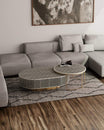
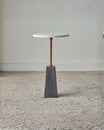
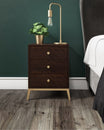
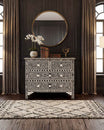


Somewhere between a showroom floor and a checkout page, most buyers realize they have questions about bone inlay furniture that a single product listing cannot answer. What actually makes it different from a printed pattern? How is it made, and does that process affect how it should be cared for? What separates a fair price from an inflated one, and how do you know a piece will actually suit the room you have in mind rather than just look good in a product photo? This guide pulls the full picture together in one place, covering style, craft, care, and buying decisions, so you can move from curious to confident before a single piece enters your home. Each section below links out to a more detailed guide where one exists, so readers who want to go deeper on a specific topic, the full craft process, a material comparison, or UAE-specific buying advice, can jump straight there rather than searching separately.
What Is Bone Inlay Furniture?
Bone inlay furniture is a decorative technique in which individually hand-carved pieces of bone are set into a resin bed cut into a solid wood frame, forming detailed geometric or floral patterns across the surface. The core bone inlay meaning comes from this embedding process itself: the bone is physically set into the wood, not painted or printed on top of it, which is why the surface has a distinct texture and why no two pieces are ever fully identical. For the full history of the craft, including its Mughal-era origins and the Rajasthani cities where it has been practiced continuously for centuries, our dedicated guide on what bone inlay furniture is and how it's made covers the background in more depth than this overview has room for.
The Raw Material: Camel Bone and Its Alternatives
Camel bone inlay is the material most closely associated with the craft, valued for its fine texture and pale, even tone that supports delicate, detailed patterns. Camel bone used in furniture production is a byproduct of the meat industry in the regions where the craft is practiced, and reputable workshops describe their sourcing as ethical for this reason, using bone that would otherwise go to waste. Buffalo bone offers a slightly darker, more robust alternative suited to larger pieces or heavier daily use, while cow bone is generally the most accessible and cost-effective option, producing a natural white tone with somewhat less capacity for fine detail than camel bone. All three materials pass through the same essential hand-carving and setting process, and the choice between them tends to affect cost and durability more than it changes the overall visual style of the finished piece. For buyers evaluating multiple pieces from the same workshop, asking which bone type was used in each is a reasonable way to understand price differences between otherwise similar-looking products.
Common Styles and Patterns in Bone Inlay Furniture
The physical shape of hand-carved bone segments naturally suits certain pattern families, and recognizing them helps when comparing pieces from different workshops or collections.
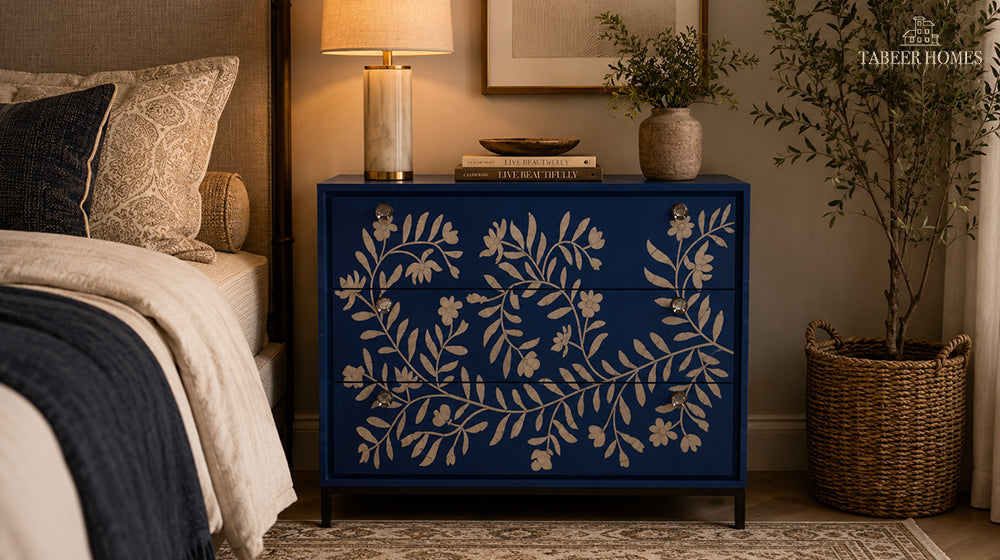
- Floral patterns , using curved, petal-shaped segments arranged into repeating blossom or vine motifs, generally the most labor-intensive and detailed of the pattern types.
- Geometric and chevron patterns , using straight-edged pieces arranged into diamonds, zigzags, or repeating grids, well suited to more contemporary interiors.
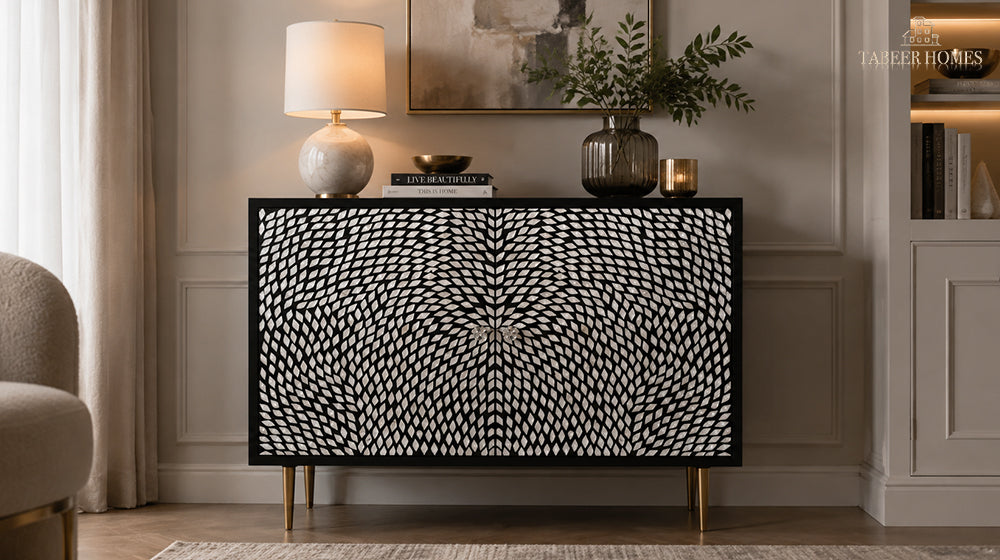
- Checkerboard patterns , alternating bone and resin squares in a bold, simple grid, common on buffet cabinets, sideboards, and larger flat surfaces.
- Fish scale and zebra line patterns , using overlapping curved or striped segments for a more textured, layered visual effect on smaller accent pieces.
Dyed background colors have also expanded the style range considerably beyond the classic white-on-wood look. Black, deep green, and navy backgrounds create strong graphic contrast against pale bone, giving bone inlay a bolder, more contemporary presence than the softer ivory tones traditionally associated with the craft.
How Handmade Bone Inlay Furniture Is Made
Producing a single piece of handmade bone inlay furniture follows a consistent multi-stage process regardless of which workshop produces it. Artisans first sketch the intended pattern directly onto the wood surface, then carve narrow channels following that design. Each individual piece of bone is cut and shaped by hand to fit its exact position, pressed into its channel, and the surrounding gaps are filled with colored resin. Once set, the entire surface is sanded flat and polished until bone and resin sit flush together, producing the smooth, matte finish characteristic of finished bone inlay. This process typically takes several weeks per piece depending on size and pattern density, since none of the carving or setting steps have ever meaningfully mechanized. Our detailed breakdown of the full carving-to-polish process walks through each stage in more depth for readers who want the complete craft explanation.
Bone Inlay Furniture Types You'll Commonly Find
The technique appears across a wide range of furniture and decor categories, each suited to different rooms and uses.
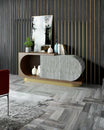
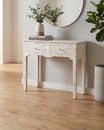
- Sideboards, buffet cabinets, and consoles , the most common starting point, giving artisans the most surface area for dense, repeating patterns.
- Chests of drawers and nightstands , bringing the craft into the bedroom at a more compact scale.
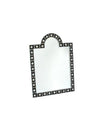
- Mirrors and picture frames , a lower-commitment entry point for buyers who want the look without a large furniture purchase.
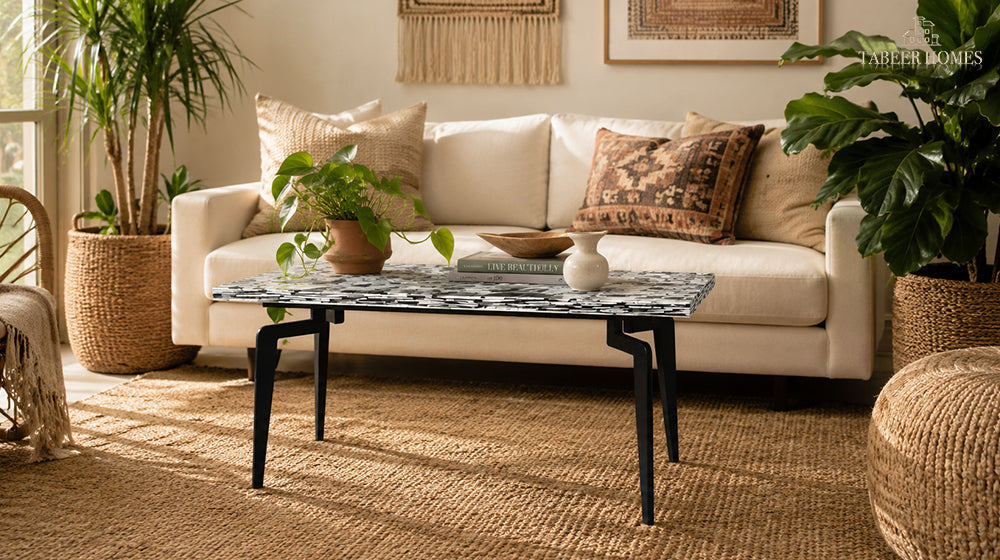
- Coffee and side tables , positioned where the pattern gets regular close-up viewing during daily use.
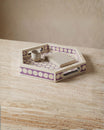
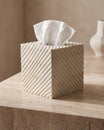
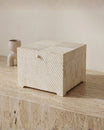
- Trays, boxes, and small decor objects , extending the craft into functional tabletop accessories.
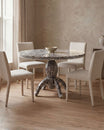
- Dining tables and majlis-scale furniture , the most labor-intensive applications given their larger surface area.
Identifying Genuine Handmade Bone Inlay
Not every piece marketed as bone inlay uses the full hand-carving process, and a few checks separate genuine handmade work from a lower-quality imitation, particularly relevant given how visually similar a well-photographed imitation can look to the real thing online.
- Look for natural irregularities. Hand-carved bone shows slight variation in shape, spacing, and tone between segments; a pattern that looks mechanically uniform is worth questioning.
- Check the texture. Real bone feels cool and slightly textured, distinct from the warmer, more uniform feel of printed or molded plastic imitations.
- Confirm the wood base. Genuine pieces are built on solid wood, typically mango wood, rather than particleboard or MDF.
- Ask about sourcing directly. Reputable workshops are transparent about using ethically sourced bone as a meat-industry byproduct, and vagueness here is worth taking as a caution sign.
Caring for Bone Inlay Furniture
Bone inlay needs gentler handling than plain wood furniture, since both the bone and the resin holding it in place are sensitive to moisture, heat, and abrasive cleaning.
- Dust weekly with a soft, dry microfiber cloth , moving in the direction of the pattern rather than across it.
- Blot spills immediately rather than wiping, since standing liquid can seep into the resin seams and cause discoloration over time.
- Keep pieces away from direct sunlight and AC vents , since both prolonged UV exposure and repeated humidity swings can affect the bone's tone and loosen the resin bond.
- Use only a barely damp cloth for deeper cleaning , and avoid household chemical cleaners, which can strip or discolor the resin finish.
What Drives the Price of Bone Inlay Furniture
The price gap between a bone inlay piece and an equivalent plain wood piece comes down almost entirely to labor rather than raw material cost. A single sideboard-sized piece can involve thousands of individually cut bone segments, each shaped and placed by hand before the resin filling and polishing stages even begin, which is why production timelines commonly run into several weeks rather than days. Within any given furniture category, denser floral or checkerboard patterns generally cost more than simpler linear designs, since pattern complexity drives labor time more directly than a piece's overall dimensions. A price far below what several weeks of skilled hand labor would reasonably justify is usually a signal that shortcuts, in material, process, or both, are somewhere in the production. Buyers comparing two similarly sized pieces at significantly different price points should treat that gap as a direct signal of the labor and material quality behind each one, rather than assuming the lower-priced option is simply a better deal on an identical product.
Questions to Ask Before Buying Bone Inlay Furniture
A short list of direct questions tells you more about a piece's authenticity than product photos ever will. Asking these questions before ordering, rather than after a piece arrives, is the single most effective way to avoid a mismatch between what was expected and what was delivered.
- Is the bone hand-cut and hand-set, or applied as a printed or molded finish?
- What is the base material underneath the inlay?
- Is the bone ethically sourced as a byproduct rather than harvested specifically for inlay use?
- What is the realistic production or delivery timeline for this specific piece?
- What customization options exist for dimensions, color, or pattern density?
- What is the return policy for large, handcrafted pieces?
For a deeper walkthrough of buying inlay furniture in the UAE specifically, including showroom versus online considerations and red flags to watch for, our complete guide on where to buy mother of pearl and bone inlay furniture covers the shopping process in full.
Bone Inlay Vs Its Closest Material Relative
Bone inlay is often compared directly to mother of pearl inlay, its closest material relative in both technique and price tier. Bone inlay produces a matte, earthy finish well suited to bold, high-contrast rooms, while mother of pearl's glossy, iridescent surface suits softer, light-filled spaces. Neither material is objectively superior, and the choice generally comes down to the mood a room is built around rather than any meaningful difference in durability or craftsmanship quality. Our dedicated comparison of bone inlay versus mother of pearl furniture breaks down the full material, finish, and care differences in detail.
Styling Bone Inlay Into Different Interior Styles
Bone inlay's bold, matte pattern reads differently depending on what surrounds it, and understanding this helps it fit intentionally into a room rather than sitting awkwardly against furniture it was never meant to complement. In a traditional or maximalist interior, a bone inlay sideboard or console can echo other richly patterned textiles and dark wood tones without feeling out of place. In a minimalist or contemporary space, a single bone inlay piece, a coffee table or mirror, functions as a deliberate contrast against otherwise plain, neutral furniture, working best when it remains the only heavily patterned object in the immediate area. Coastal or neutral-toned interiors generally suit lighter, undyed bone inlay in ivory or white tones better than the bolder black or navy dyed variants, which tend to read as more dramatic than a softer palette calls for. As with any strongly patterned material, restraint elsewhere in the room, simpler furniture, quieter wall colors, lets the bone inlay piece function as the intended focal point rather than one competing pattern among several. A useful test before committing to a piece is to consider how many other strongly patterned or textured elements the room already contains, rugs, upholstery, wallpaper, since a bone inlay piece added to a room already carrying two or three bold patterns is more likely to compete for attention than to anchor the space the way it would in a calmer setting.
Mixing Bone Inlay With Other Materials
Bone inlay rarely needs to stand entirely on its own in a room, and pairing it thoughtfully with other materials often produces a more balanced result than surrounding it with more inlay work. Marble pairs particularly well with bone inlay, since its cool, smooth surface offers a visual and tactile contrast to the warmer, more textured inlay pattern, a combination frequently seen in coffee tables that pair a marble top with a bone inlay base. Brass and gold-toned metal accents, whether in lamp bases, drawer pulls, or table legs, add a warmth that complements bone inlay's earthy palette without competing with its pattern the way another strongly patterned material might. Leather upholstery, particularly in seating placed near a bone inlay console or sideboard, grounds the room with a simpler, monochrome texture that lets the inlay piece remain the clear focal point. Glass, whether in a tabletop or a nearby mirror frame, reflects light back onto the inlay's matte surface, subtly enhancing its visibility in a room without introducing another competing pattern.
Bringing the Complete Guide Together
Bone inlay furniture rewards buyers who understand what they are actually purchasing: a labor-intensive, centuries-old craft rather than a decorative finish applied to standard furniture. Knowing the material options, recognizing genuine handwork, understanding fair pricing, and caring for the piece correctly afterward all matter as much as the pattern itself when it comes to a purchase that should last for years rather than fade after one season. Tabeer Homes produces both bone inlay and mother of pearl pieces using traditional Rajasthani techniques across sideboards, consoles, mirrors, and majlis-scale furniture, offering one starting point among several for buyers ready to bring the craft into their own home.
Frequently Asked Questions
What does bone inlay mean?
Bone inlay refers to a decorative technique where hand-carved pieces of bone are set into a resin bed cut into a wood frame, forming detailed patterns that are physically embedded rather than painted or printed onto the surface.
Is bone inlay furniture durable?
Yes, when properly cared for. The wood base and resin bond hold up well over years of normal use, though the piece should be kept away from prolonged direct sunlight and high humidity to protect its finish.
What is the difference between camel bone and buffalo bone inlay?
Camel bone offers a finer texture suited to delicate, detailed patterns, while buffalo bone is slightly darker and more robust, generally used for larger pieces or heavier daily use.
How can I tell if bone inlay furniture is handmade?
Genuine handmade pieces show natural irregularities in bone shape and spacing, a cool matte texture, and a solid wood base, unlike the uniform look of printed or molded imitations.
How much does bone inlay furniture typically cost?
Pricing depends on piece size and pattern complexity, since labor time rather than raw material cost drives most of the price, with denser floral or checkerboard patterns generally costing more than simpler linear designs.
Where should I start if I'm new to buying bone inlay furniture?
A smaller accent piece, a tray, box, or mirror, offers a lower-cost way to experience the craft before committing to larger furniture like a sideboard or dining table.

اترك تعليقًا
This site is protected by hCaptcha and the hCaptcha Privacy Policy and Terms of Service apply.