




A coffee table sees more direct daily contact than almost any other piece of living room furniture, resting drinks, holding books, catching feet during a lazy Sunday, which makes choosing one purely on looks a genuine risk. A mother of pearl coffee table raises the stakes slightly further, since its shimmering surface is both the reason you want it and the thing you need to protect once it is holding your morning coffee mug. This guide covers how to choose the right shape and size, how to style the table once it is home, and how to keep its shimmer intact through years of actual daily use rather than museum-piece treatment.
What Makes a Mother of Pearl Coffee Table Different
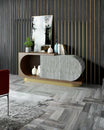
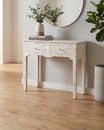
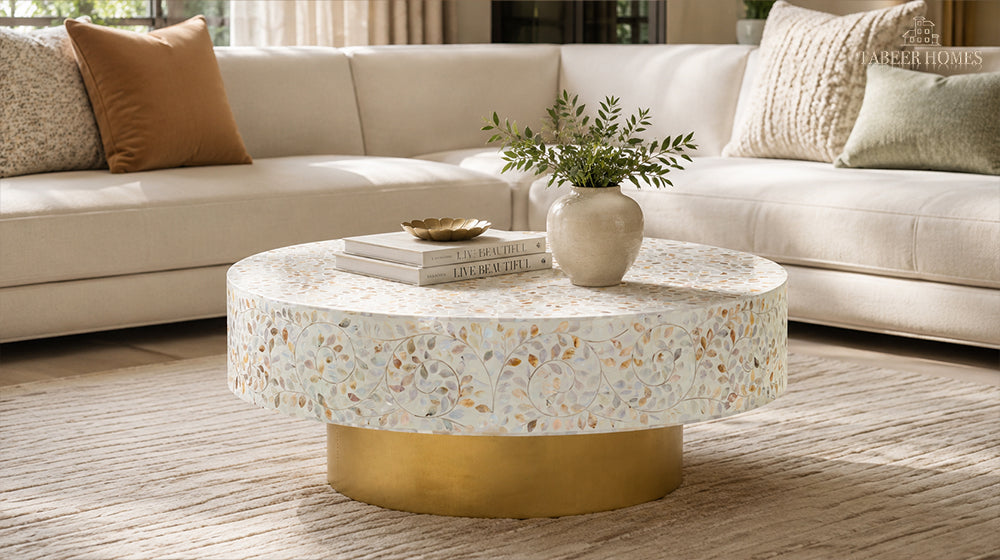
A mother of pearl coffee table pairs a tabletop inlaid with hand-cut shell segments, set into resin and polished flush with the surface, over a base typically finished in wood, lacquer, or metal. Unlike a printed or laminate finish designed to mimic the look, genuine MOP coffee table surfaces catch and shift light as you move around the room, producing a subtle shimmer that a flat finish cannot replicate. This light-reactive quality is also why the table's role in a room extends beyond pure function: positioned well, it becomes a moving visual element that changes throughout the day as natural or lamp light hits it from different angles.
Round Vs Rectangular: Choosing the Right Shape
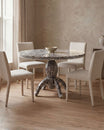
Shape affects both how a coffee table fits a seating arrangement and how its inlay pattern reads from different vantage points around the room. A round MOP table tends to suit a room with softer, curved seating or a smaller footprint, since a circular shape has no sharp corners to navigate around and generally feels more forgiving in a tighter layout. Round tables also display a radial or floral inlay pattern particularly well, since the shape naturally supports a symmetrical design radiating from the center. Rectangular or oval coffee tables suit longer sofa arrangements and larger living rooms better, offering more surface length for styling and typically a more formal, structured presence in the room. Neither shape is inherently superior, and the choice generally comes down to the existing furniture layout: a round table for a room built around curves and openness, a rectangular one for a room built around straight lines and a defined seating axis. Square tables, less common than either round or rectangular, occupy a middle ground, offering some of round's compact footprint while still presenting distinct edges that some buyers prefer over a fully curved silhouette, useful for a room with an existing mix of both angular and curved furniture where either pure shape might feel slightly mismatched.
Standard Sizes for a Mother of Pearl Coffee Table
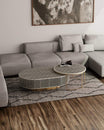
Coffee table sizing depends heavily on the seating arrangement it serves, and mother of pearl pieces follow the same general sizing logic as any coffee table category. As a rule of thumb, a coffee table should sit roughly two-thirds the length of the sofa it faces, with 35 to 45 cm of clearance between the table's edge and the seating on every side to keep the space walkable. Height typically matches or sits slightly below the seat height of the surrounding sofa, usually landing between 40 and 45 cm, so drinks and objects are easy to reach without leaning up or down awkwardly. Tabeer Homes' Iris Coffee Table in white mother of pearl inlay comes in three size variants, 90, 100, and 115 cm, covering a compact apartment seating arrangement through a larger sectional sofa setup without changing the underlying floral pattern or gold cylindrical base design. The Manzil Coffee Table in brown mother of pearl inlay runs a fixed 100 x 100 x 45 cm, a size well suited to a mid-size living room built around a standard three-seat sofa and one or two accent chairs. For an L-shaped sectional specifically, positioning the table toward the longer arm of the sectional rather than dead center between both arms generally keeps the table within comfortable reach of the most-used seating rather than serving the corner section where people sit least often.
Base Materials: Gold, Wood, or Marble Pairings
The base beneath a mother of pearl tabletop plays as large a role in the table's overall character as the inlay pattern itself. A gold or brass cylindrical base, as seen on both the Iris and Manzil tables, adds warmth and a sense of glamour that complements mother of pearl's own light-catching quality, producing a cohesive, luxury-leaning look. A wood base offers a more grounded, natural counterpoint to the tabletop's shimmer, suiting rooms built around warmer, earthier palettes rather than a fully metallic aesthetic.
A marble-topped table incorporating mother of pearl inlay as a border or accent, rather than across the full surface, offers a third option, blending two luxury materials while keeping maintenance more centered on marble's care requirements than a full inlay surface would need. Matching the base material to other metal finishes already in the room, lamp bases, door handles, picture frames, tends to unify the space more effectively than treating the coffee table's base as an isolated design decision. Base shape also affects the table's visual weight independently of the top: a slim cylindrical pedestal base reads as lighter and more contemporary, while a wider four-legged base or solid plinth gives the table a more substantial, grounded presence, a distinction worth considering alongside material choice rather than treating base selection as purely about finish color.
How to Choose a Mother of Pearl Coffee Table for Your Living Room
Choosing the right table for a pearl inlay living room comes down to matching scale, shape, and finish to the room's existing furniture rather than selecting a table in isolation. Start by measuring the actual gap between your seating pieces, since a table that looks proportional in a showroom can crowd or overwhelm a room once placed against your specific sofa and chairs. Consider how the room is used day to day: a household that regularly rests drinks, laptops, or plates directly on the coffee table benefits from confirming the resin seal is durable enough for that level of contact, while a more display-oriented living room can prioritize a bolder, more delicate pattern without worrying as much about daily wear.
Finally, consider the room's lighting, since the mother of pearl's shimmer depends on light interaction, a table positioned to catch natural daylight or evening lamp light will show off its finish far more effectively than one placed in a consistently dim corner of the room. Households with young children or pets should also weigh the table's edge profile and overall stability, since a rounded edge and a solid, low center of gravity generally suit a busier living room better than a delicate pedestal base that a running child or an excitable dog could tip.
Styling a Mother of Pearl Coffee Table
A coffee table's styling needs to balance visual appeal with the fact that the surface gets used constantly, unlike a sideboard or console that mostly holds display objects.
- Use a tray to define a styled zone. A tray groups a few decorative objects, a candle, a small dish, a coaster stack, into one movable unit, letting you clear the table quickly for actual use without disturbing a carefully arranged vignette.
- Keep the center of the table clear. Since a coffee table's middle is where drinks and feet most often land, styling the outer edges or one side rather than the full surface keeps the table both usable and visually intentional.
- Add one live element. A small plant or a single stem in a narrow vase introduces color and texture without competing with the tabletop's own pattern.
- Stack books at varying heights. A short stack of two or three books adds a natural height variation that complements the table's own visual weight without overwhelming the surface.
- Avoid overcrowding the pattern. Since the inlay itself is already the table's main visual feature, keeping the number of styled objects modest lets the pattern remain visible rather than buried under decor.
Caring for a Mother of Pearl Coffee Table Surface
Because a coffee table sees more direct daily contact than most other inlay furniture, its care routine benefits from a few surface-specific habits beyond the general guidance that applies to any mother of pearl piece.
- Use coasters for every drink , since condensation left directly on the inlay surface can seep into the resin seams between shell segments over time.
- Avoid placing hot items directly on the surface , as sustained heat can affect both the resin bond and the shell's natural sheen.
- Dust weekly with a soft, dry microfiber cloth , moving in the direction of the pattern rather than across it to avoid catching on any raised segment edges.
- Blot spills immediately rather than wiping , since standing liquid is more likely to work into the resin seams on a horizontal surface than on a vertical piece like a cabinet front.
- Keep the table out of a direct, sustained sun path , since a coffee table's position at the center of a room often puts it directly in a window's light path more than a wall-mounted piece would experience.
Pairing a Mother of Pearl Coffee Table With Existing Furniture
A coffee table rarely gets chosen in a true vacuum, and thinking through how it sits alongside a room's existing sofa, rug, and side tables prevents a beautiful individual piece from feeling disconnected once it arrives. Against a neutral or solid-color sofa, a mother of pearl table's pattern gets to act as the room's primary visual statement without competing for attention, making this pairing a reliable default for buyers unsure how bold to go elsewhere in the room.
Against a patterned or textured sofa, a fabric with visible weave, a bold print, or tufted upholstery, the coffee table benefits from a simpler, less densely patterned inlay design, since two competing focal points in close proximity tend to undercut each other rather than reinforce the room's overall look. A rug beneath the seating arrangement should generally sit in a complementary but not identical color family to the table's base, gold or brass bases in particular tend to read best against warm neutrals or jewel tones rather than stark, cool grays. Side tables flanking the sofa, if present, do not need to match the coffee table's material exactly, but repeating at least one element, the base metal finish or a shared color note, helps the room feel considered rather than assembled from unrelated pieces.
Common Buying Mistakes to Avoid
A handful of recurring errors account for most of the regretted mother of pearl coffee table purchases.
- Choosing size based on the room alone, ignoring the sofa's actual length. A table sized to the room rather than the specific seating arrangement often ends up too large or too small relative to where people actually sit.
- Underestimating the base's visual weight. A bold gold or brass base can make a table read as more dramatic than the tabletop pattern alone suggests, worth considering if the room already has other strong metallic accents.
- Assuming all mother of pearl finishes handle daily use identically. A table intended primarily for display can use a more delicate or densely patterned finish than one that will see food, drinks, and regular contact throughout the week.
- Skipping the resin quality check. Since a coffee table experiences more contact than most inlay furniture, confirming the resin seal is smooth and fully cured, with no visible gaps around the shell segments, matters more here than for a purely decorative piece.
Bringing It All Together
A mother of pearl coffee table earns its place at the center of a living room by doing two things at once: functioning as genuinely usable furniture and catching light in a way that changes the room's character throughout the day. Whether you choose the Iris Coffee Table 's white floral pattern in one of its three available sizes or the Manzil Coffee Table 's warmer brown tone at a fixed 100 x 100 cm footprint, matching the table's scale to your actual seating arrangement and its finish to your room's existing palette will do more for the final result than choosing on pattern alone.
Taking the time to measure your specific room, confirm the resin quality in person or through detailed product photos, and consider how the table will actually be used day to day pays off in a piece that still looks and functions well years after the purchase, rather than one that only impressed in the first few weeks. For a broader look at how mother of pearl compares to its closest material relative before committing to a full living room built around either, our guide on bone inlay versus mother of pearl furniture covers the practical differences in more depth.
Frequently Asked Questions
What is a mother of pearl coffee table made from?
A mother of pearl coffee table pairs a tabletop inlaid with hand-cut shell segments set into resin, typically over a wood, lacquer, or metal base, producing a shimmering finish that shifts with light.
Is a round or rectangular mother of pearl coffee table better?
Neither is inherently better. Round tables suit smaller rooms and curved seating arrangements, while rectangular tables suit longer sofas and larger living rooms with a more structured layout.
What size mother of pearl coffee table do I need?
As a general rule, choose a table roughly two-thirds the length of your sofa, with 35 to 45 cm of clearance on each side, and a height that matches or sits slightly below your seating height.
Can a mother of pearl coffee table handle daily use?
Yes, with reasonable care. Using coasters, avoiding direct heat, and cleaning spills promptly protect the resin seal, allowing the table to handle normal daily living room use without damage.
How do I style a mother of pearl coffee table without hiding the pattern?
Keep the center of the table clear for actual use, style the edges with a tray or a small grouping of objects, and avoid overcrowding the surface so the inlay pattern remains visible.
How is a mother of pearl coffee table different from a bone inlay one?
Mother of pearl produces a glossy, iridescent shimmer that shifts with light, while bone inlay offers a matte, more graphic finish, making the two suited to different room moods rather than one being objectively better.

اترك تعليقًا
This site is protected by hCaptcha and the hCaptcha Privacy Policy and Terms of Service apply.