








A chest of drawers is one of those furniture purchases that buyers rush through and then live with for years. The wardrobe is measured carefully, the bed is chosen with deliberation, and then the chest gets selected quickly because it fits the budget and ships within the week. Six months later the drawers bind in the humidity, the finish chips at the corners, or the piece is simply the wrong height for the wall it occupies. None of these outcomes are inevitable. They are all the result of a buying decision made without the right information. This guide covers everything a buyer across the UAE, Saudi Arabia, and Kuwait needs to know before committing to a chest of drawers: drawer count, sizing logic, material performance in Gulf climates, finish trade-offs, and the construction indicators that separate a piece worth buying from one that looks adequate in a product photograph.
What a Chest of Drawers Actually Needs to Do in Your Home
Before drawer count, before finish, before price, the first question is functional. A chest of drawers in a primary master bedroom carrying the full folded clothing load for two people needs to do something entirely different from one supplementing a wardrobe in a guest room or sitting in a child's bedroom as secondary storage.
The answer to this question determines almost every other decision in the buying process. A chest that is the sole folded storage solution in a room needs more drawers, deeper drawer interiors, and more robust construction than one sharing the load with a wardrobe. A chest in a high-traffic master bedroom that is opened and closed multiple times daily needs better runner quality than one in a guest room used three months a year. A chest of drawers UAE apartment bedroom buyer selecting a piece for a 12 square metre secondary bedroom has different constraints from a chest of drawers Saudi Arabia villa buyer furnishing a master dressing area of 30 square metres.
Drawer Count: Matching Configuration to Storage Load
Drawer count is the filter most buyers apply first, and it is worth applying with more precision than the typical approach of choosing between three and six drawers based on visual preference.
A 5 drawer chest is the most practical configuration for a single-occupant primary bedroom where the chest carries the majority of folded clothing storage. Five drawers give enough segmentation to keep categories separate, tops, bottoms, underlayers, sleepwear, and one overflow drawer, without requiring the chest to be so tall that the upper drawers sit above comfortable reaching height.
A narrow chest of drawers of three to four drawers suits supplementary positions: a guest bedroom with minimal permanent storage requirements, a child's room where the chest sits alongside a wardrobe, or a bedroom where floor space is constrained and a wider configuration is not viable. The trade-off for narrow width is reduced surface area on top, which limits the chest's usefulness as a lamp or display surface.
|
Drawer Count |
Width Range |
Best Use Case |
Who It Suits |
|
3 drawers |
55 to 70 cm |
Guest bedroom, supplementary storage |
Single occupant, light load |
|
4 drawers |
65 to 85 cm |
Single occupant primary bedroom |
One person with wardrobe support |
|
5 drawers |
75 to 100 cm |
Primary bedroom, moderate full load |
Single occupant, primary storage |
|
6 drawers |
85 to 110 cm |
Shared master bedroom |
Two people or heavy folded volume |
|
7 to 8 drawers |
100 to 130 cm |
Dressing room, high-volume storage |
Dedicated dressing area |
Drawer internal depth matters as much as drawer count. A chest with six shallow drawers can hold less usable volume than one with four deep drawers. Standard internal depth on mid-range and above construction runs between 35 and 45 cm. Anything below 30 cm internal depth will not hold a folded shirt flat without it catching on the rear of the drawer, which defeats the organisational purpose the chest is meant to serve.
Sizing a Chest of Drawers for UAE and Saudi Arabia Bedrooms
Three measurements determine whether a chest of drawers fits a specific room correctly. Most buyers check one of the three, occasionally two, and almost never all three before ordering.
Wall section width. The wall section available for the chest is almost always narrower than the total wall length. Door swing clearance, skirting board projections, adjacent furniture edges, and power socket positions all reduce the usable run. Measure the specific gap the chest will occupy, not the wall length, before comparing product dimensions.
Height constraints. A white chest of drawers Dubai buyer placing a piece below a window, beside a light switch at 110 cm from the floor, or in a room with a wall-mounted air conditioning unit needs to measure the height clearance specifically. Standard chest heights range from 75 cm for a three-drawer configuration to 130 cm for a seven or eight-drawer tall piece. The most common mid-range height for a 5 drawer chest falls between 95 and 110 cm.
Depth and drawer clearance. A standard chest of drawers runs between 38 and 50 cm deep. More critically, a fully extended drawer requires 40 to 55 cm of clear floor space in front of the chest. In a narrow chest of drawers configuration placed in a room where the bed or a wardrobe sits opposite, this clearance determines whether drawers can be opened fully without obstruction.
For chest of drawers Saudi Arabia villa bedroom buyers, ceiling heights of 280 to 320 cm common in Riyadh and Jeddah residential builds allow taller configurations without visual crowding. In UAE apartment secondary bedrooms of 10 to 15 square metres, a chest no wider than 80 cm and no taller than 100 cm is the practical constraint that preserves adequate circulation and passage space.
Material Performance in Gulf Climate Conditions
The UAE and Saudi Arabia present furniture materials with conditions that differ meaningfully from temperate climates. Air conditioning runs continuously for eight to ten months, creating persistently dry indoor air. In coastal cities including Dubai, Sharjah, and Jeddah, outdoor humidity is high, and the daily transition between conditioned and unconditioned air causes materials to expand and contract repeatedly over time.
Solid hardwoods, properly kiln-dried and sealed, are the most climate-resilient option for a chest of drawers UAE or chest of drawers Saudi Arabia buyer investing in a primary bedroom piece. Teak, sheesham, and oak are dimensionally stable under these conditions. They hold drawer runner hardware securely over years of use and can be refinished if the surface requires attention after extended use. The single environmental risk for any wood is placement directly in front of or below an air conditioning vent, which creates localised drying that causes surface cracking over time regardless of species.
MDF with a quality lacquer or veneer finish is more dimensionally stable than solid wood across humidity variation because engineered board does not move across moisture cycles the way solid timber does. Its vulnerability is edge and corner impact.
Particle board is the material to avoid for any primary bedroom chest. It holds screws and runner fittings poorly, which means hardware becomes loose within a year of regular use, and once particle board screw holes are stripped the fix is temporary at best.
|
Material |
Climate Performance |
Repairability |
Drawer Hardware Retention |
Price Range AED |
|
Solid hardwood (teak, sheesham) |
Excellent |
High |
Very high |
1,400 and above |
|
Solid mango wood, sealed |
Good |
Medium |
Medium to high |
700 to 1,600 |
|
High-density MDF, thick lacquer |
Very good |
Low |
Medium |
600 to 1,600 |
|
Standard MDF, film laminate |
Moderate |
Very low |
Low |
350 to 900 |
|
Particle board |
Poor |
Very low |
Very low |
250 to 700 |
Finish Options: White, Natural, Dark, and Decorated
Finish is where most buyers make their decision and where most of the ongoing maintenance reality is concentrated.
A white chest of drawers Dubai and UAE apartment buyer specifies most frequently because white reads as lighter, cleaner, and more spatially generous in compact bedrooms with light walls and neutral palettes. The maintenance reality is less forgiving than the aesthetic appeal suggests. White lacquered and painted surfaces show scuff marks at drawer edges, fingerprints at pull positions, and daily handling evidence more visibly than any other finish. In a household where the chest is opened multiple times daily, white requires more frequent cleaning than buyers typically factor into the purchase decision.
A white chest of drawers Dubai buyer who wants the light, clean aesthetic with lower maintenance should look specifically for a sprayed lacquer finish rather than a painted or film-wrapped surface. Sprayed lacquer holds up to wiping and daily handling significantly better and is less likely to show wear at the drawer edge contact points that accumulate the most visible marks.
Natural wood finishes occupy the most forgiving position across all maintenance dimensions. Surface scratches on an oiled hardwood chest are addressed with fine sandpaper and a coat of oil. The same mark on a white lacquered surface requires professional refinishing to resolve invisibly.
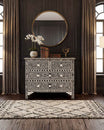
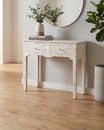
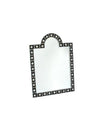
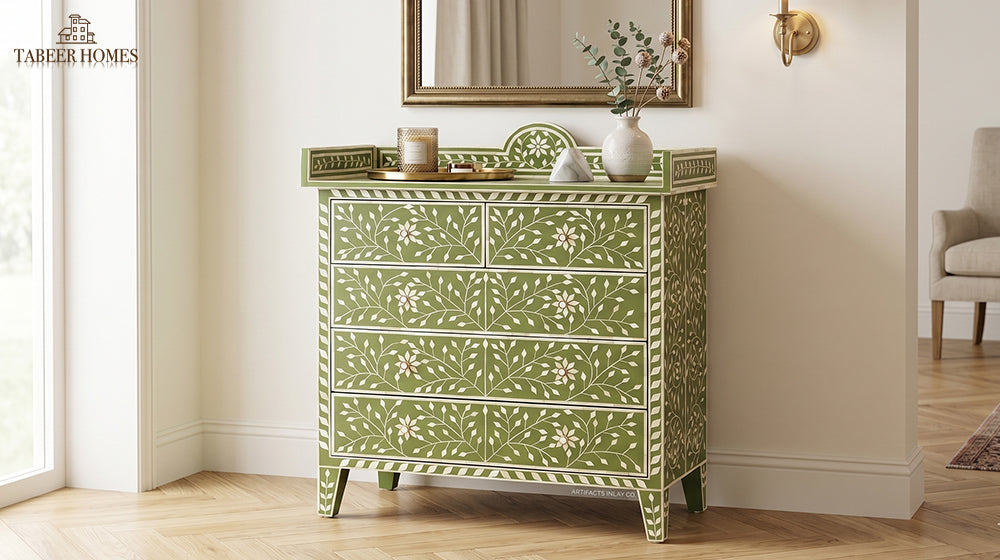
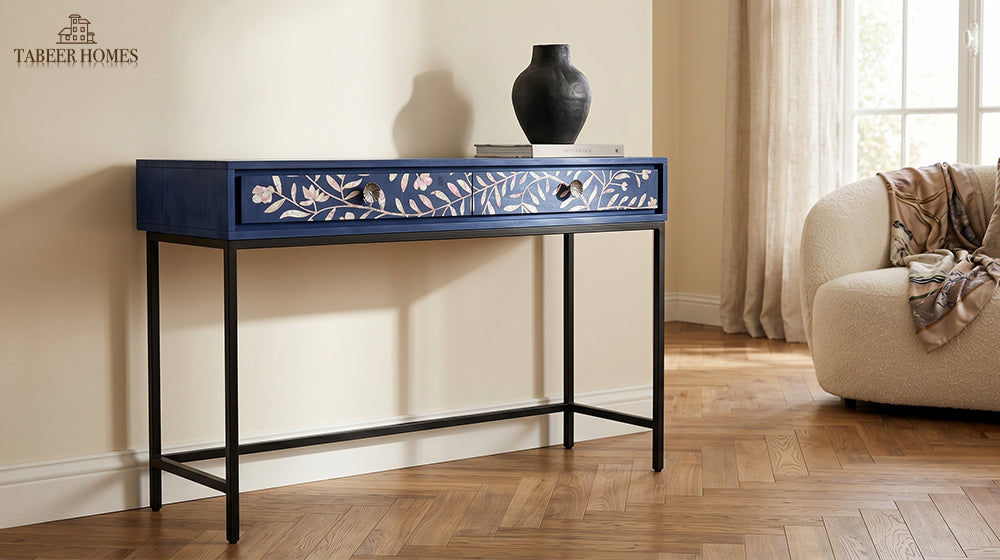
Decorated finishes, including bone inlay surfaces on lacquered frames and mother of pearl panel insets, position the chest as a decorative object as much as a storage piece. Tabeer Homes produces bedroom chest of drawers pieces with hand-applied bone inlay in lacquered frame configurations, suited to bedrooms where the chest is a deliberate design focal point rather than a background storage element.
Construction Quality: What to Check Before Buying
The difference between a chest of drawers that performs well for a decade and one that shows significant wear within two years is almost entirely a construction quality difference rather than a price or brand difference. These are the indicators that buyers can check in a showroom or request evidence of before an online purchase.
Drawer runner type is the most important single indicator. Metal undermount or side-mount runners with a soft-close mechanism are the standard for any mid-range or above piece. They operate smoothly under load, tolerate the daily opening and closing of a primary bedroom chest over years, and prevent fingers being caught in a slamming drawer.
Drawer box joinery at the corners is the second indicator. Dovetail joints at drawer corners, visible as interlocking wedge-shaped cuts, indicate joinery designed to hold under repeated stress. Stapled or glued butt joints at drawer corners are the most common failure point in lower-grade chests and become visible as loosening and racking within months of regular use.
Additional construction checks worth making before committing:
- Back panel thickness. The rear panel of the carcass should be solid or thick plywood rather than a thin hardboard sheet stapled into a groove. A thin back panel bows under load over time and allows the carcass to rack out of square.
- Drawer stop presence. Each drawer should stop before it can be pulled fully clear of the carcass. A drawer that comes completely out when pulled opens the possibility of the drawer and its contents falling.
- Finish consistency across all surfaces. Drawer fronts, carcass sides, and the top surface should read as the same colour and sheen level. Inconsistency between surfaces indicates different production batches or finishing quality control issues.
Frequently Asked Questions
What is the most practical drawer count for a chest of drawers in a UAE master bedroom?
A 5 drawer chest is the most practical configuration for a single-occupant UAE master bedroom where the chest carries the majority of folded clothing storage. Five drawers provide enough segmentation for clear category separation without placing upper drawers at an uncomfortable reaching height. e.
Is a narrow chest of drawers a practical choice for a small Dubai apartment bedroom?
A narrow chest of drawers of 55 to 70 cm wide is a practical choice for a secondary bedroom of 10 to 14 square metres, which covers the majority of apartment bedroom dimensions across Dubai and Abu Dhabi residential builds. The trade-off is reduced surface area on top and lower total storage volume compared to a wider configuration.
How does UAE humidity affect a chest of drawers over time?
The main risk in chest of drawers UAE conditions is not humidity alone but the cycling between outdoor humidity and dry air-conditioned interiors. Solid hardwoods in well-sealed condition handle this cycling well. Particle board and poorly sealed MDF show edge swelling and drawer binding within one to two years in rooms with inconsistent climate control.
What should I look for in a white chest of drawers in Dubai?
A white chest of drawers Dubai purchase should prioritise a sprayed lacquer finish over a painted or film-wrapped surface, as lacquer holds up to daily handling and cleaning significantly better. Check that the finish is consistent across all surfaces, that drawer edges show a clean lacquer edge rather than a film wrap that can lift at corners, and that the white tone is consistent between the drawer fronts and the carcass sides.
How do I verify a chest of drawers is genuinely solid wood and not MDF?
Check the weight first. A genuinely solid hardwood chest feels substantially heavier than an MDF equivalent of the same dimensions. Check drawer box corners for dovetail joinery, which indicates solid wood construction. Ask the retailer directly which components are solid wood and which are engineered board. A chest of drawers Saudi Arabia or UAE retailer selling genuine solid hardwood will answer this question without hesitation.
What is the right height for a chest of drawers in a bedroom?
Standard chest of drawers heights run from 75 cm for a three-drawer configuration to 130 cm for a tall seven or eight-drawer piece. The most common height for a 5 drawer chest falls between 95 and 110 cm, which sits comfortably below a standard window sill and does not visually crowd a room with ceiling heights of 260 to 280 cm standard across UAE and Saudi Arabia apartment and villa builds.
Bottom Line
A chest of drawers chosen with the right drawer count for the actual storage load, sized precisely for the room it enters, in a material suited to Gulf climate conditions, and with construction quality verified before purchase is a piece that improves the bedroom rather than simply furnishing it. Whether the priority is a 5 drawer chest for a Dubai master bedroom, a narrow chest of drawers for a compact apartment secondary room, a white chest of drawers Dubai buyers favour for a light neutral bedroom, or a solid hardwood piece for a chest of drawers Saudi Arabia villa dressing area, the buying framework is consistent. Establish the function first, size it for the specific room second, assess the material and construction third, and let the finish work within those constraints.

Leave a comment
This site is protected by hCaptcha and the hCaptcha Privacy Policy and Terms of Service apply.