


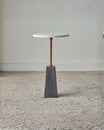


A rectangular side table is the default choice for most rooms, but a round side table solves a specific set of problems a square or rectangular alternative cannot, tight corners, curved seating, and a room that already has enough sharp angles competing for attention. Choosing a round shape is not purely an aesthetic preference; it is a genuinely practical decision in the right context, and understanding when and where it works best helps avoid choosing a shape that fights against your room rather than fitting comfortably into it.
Why Choose a Round Table Over a Rectangular One?
A round table's core advantage is its lack of corners, which matters more in daily life than it might seem on paper. In a tight walkway or a corner where floor space is limited, a round accent table allows people to pass closer to it without catching a hip or a knee on a sharp edge, a genuine practical benefit in smaller homes or high-traffic areas. Visually, a round table also softens a room built around angular furniture, sofas with squared arms, rectangular coffee tables, boxy media units, introducing a curved counterpoint that breaks up an otherwise uniformly straight-edged space. For rooms already built around curves, an arched doorway, a round rug, a curved sofa, a round side table extends that same visual language rather than introducing a competing geometric shape.
Where a Round Side Table Works Best
A circular side table earns its place most clearly in a handful of specific spots around a home. In a tight corner beside a chair or sofa, a round table's lack of corners lets it sit closer to adjacent furniture without creating an awkward, jutting edge. In an entryway or hallway, a small round table softens a space that is often narrow and full of straight lines, doorframes, walls, and other furniture. Beside a curved or rounded armchair, a round table continues the seating's own silhouette rather than introducing a visual clash between curved seating and an angular table. In a room with a round or oval rug already anchoring the space, a round side table reinforces the room's existing geometry rather than working against it. A round table also earns particular consideration in a room used for movement more than lingering, a busy family living room where children and pets navigate the space frequently, since the reduced injury risk from a corner-free edge carries real practical weight beyond pure aesthetics in households with active daily foot traffic through the furnished area.
Round Side Table Vs Rectangular: Making the Choice
The decision between a round and rectangular side table often comes down to the specific gap the table needs to fill and the shapes already present in the room. A round table generally suits a smaller or more irregular space better, since its shape has no sharp corners to negotiate around adjacent furniture or walkways. A rectangular table typically offers more usable surface area for its footprint, since a round tabletop of the same width as a rectangular one loses corner space to the curve, making rectangular tables the more practical choice when surface area for multiple objects matters more than shape flexibility. Rooms with a strong existing pattern of straight lines, a boxy sectional, angular shelving, a rectangular rug, often benefit from a round table specifically as a deliberate counterpoint, while rooms already built around curves benefit from continuing that visual theme with another round piece. Neither shape carries an inherent style association strong enough to rule out the other on aesthetic grounds alone, round tables appear in everything from traditional to ultra-modern interiors, so the decision genuinely does come down to the practical factors of space, surface area, and existing room geometry rather than one shape being more fashionable or dated than the other at any given moment.
Round Bedside Table Sizing and Placement
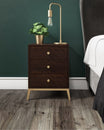
A round bedside table follows slightly different proportions than a round living room accent table, since its function centers on holding a lamp, phone, and glass of water within reach of the bed. Diameter typically runs 35 to 45 cm for a bedside application, small enough to fit beside a bed without crowding the walking space on that side of the room. Height should match the same principle as any bedside table, sitting within a few centimeters of the mattress top for comfortable reach without leaning up or down. A round shape works particularly well for a bedside table in a smaller bedroom, since its lack of corners means less risk of catching a hip while moving around the bed in a tighter space than a rectangular alternative would present in the same footprint.
Round End Table Sizing for Living Room Use
A round end table used beside a sofa or armchair follows similar sizing logic to any living room side table, with diameter typically running 35 to 50 cm depending on the space available and the surface area needed. Height should match the sofa or chair's arm height, the same principle that applies to any side table regardless of shape. One consideration specific to round end tables involves proportion relative to the seating itself: a round table with a diameter noticeably smaller than the sofa arm's width can look visually undersized next to a larger piece of furniture, while a table sized closer to or slightly exceeding the arm's width tends to read as more proportionally balanced.
Styling a Round Side Table
A round table's curved surface changes how objects read on top of it compared to a rectangular alternative, and a few adjustments help styling feel intentional rather than accidental.
- Center the primary object. Since a round surface has no defined "front" edge the way a rectangular table does, centering a lamp or the tallest object keeps the arrangement feeling balanced from every viewing angle.
- Group smaller items toward one side. A small cluster of two or three smaller objects positioned toward one side of the round surface, rather than spread evenly around the edge, creates a more considered asymmetrical balance than scattering items uniformly.
- Consider the table from multiple angles. Since people typically view a round table from more than one direction, unlike a rectangular table often pushed against a wall, styling that looks intentional from every angle matters more here than for a table with an obvious single viewing side.
- Use the shape to soften a busy vignette. A round table styled with simpler, fewer objects allows its own curved silhouette to provide visual interest, rather than competing with an elaborate styled arrangement on top.
Pairing a Round Side Table With Different Furniture Shapes
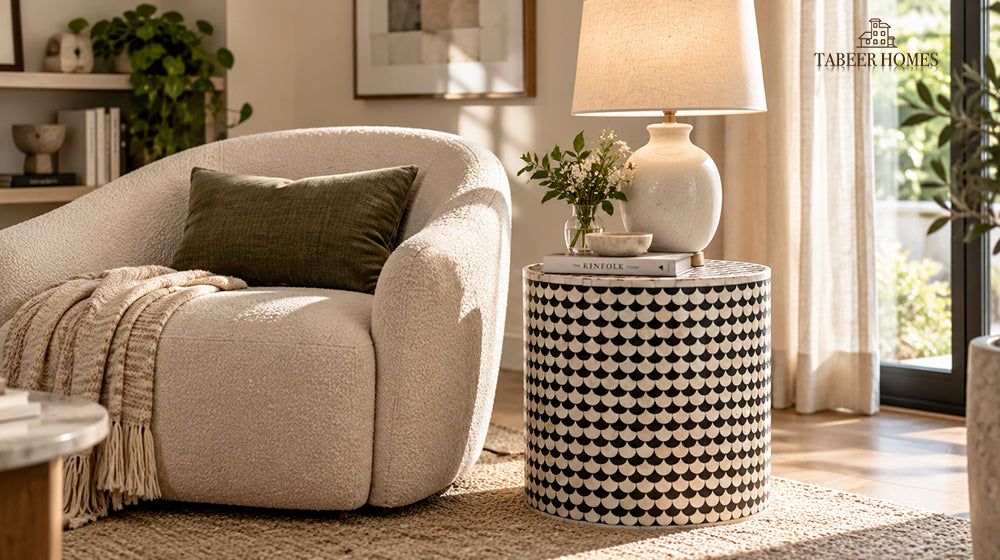
A round table's relationship to nearby furniture shapes affects how cohesive the overall room feels. Beside a sofa with squared, angular arms, a round table introduces welcome contrast, breaking up the room's straight lines without clashing with the sofa's own structure. Beside a curved or rounded armchair, a round table extends the same visual language, creating a more unified, flowing look between the two pieces. Near a rectangular coffee table, a round side table offers a deliberate shape contrast that many designers favor specifically because it prevents a room from feeling monotonously angular, provided the round table's scale does not compete awkwardly with the coffee table's own proportions.
Material Considerations for a Round Side Table
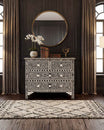
Round tables appear across every material category available in side tables, though certain materials suit the round format particularly well. Marble, with its natural veining, displays beautifully on a round surface, since the curved shape allows the stone's pattern to radiate outward in a way that echoes the table's own geometry. Bone inlay's geometric and radial patterns, sunbursts, concentric circles, checkerboards, translate naturally to a round tabletop, the same reason round bone inlay coffee tables dominate that category. Mother of pearl's floral and organic motifs also suit round surfaces well, their curved petal shapes echoing the table's own circular silhouette rather than fighting against straight edges the way a rectangular format might. Tabeer Homes' marble side tables, including the Ava Side Table and Kazi Side Table , both use round or softly curved silhouettes that showcase natural stone veining effectively at a compact, sculptural scale. Wood remains a versatile option across round tables as well, though it lacks the natural radiating pattern that marble and inlay materials display so effectively, meaning a round wood table's visual interest tends to come more from its overall silhouette and leg design than from any surface pattern, worth keeping in mind for buyers specifically drawn to the round shape for its pattern-display qualities rather than its practical space-saving benefits alone.
Round Nesting Tables: A Shape That Suits the Format Well
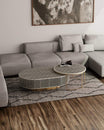
Nesting side tables, a set of two or three graduated sizes designed to tuck together, appear particularly often in round formats, and the shape suits this configuration for practical reasons. A round table's curved edge tucks beneath a slightly larger round table more cleanly than a rectangular one, since there is no corner to catch or protrude awkwardly from beneath the larger piece. This makes round nesting sets a genuinely space-efficient option for a smaller living room, since the full set collapses down to a footprint barely larger than the largest table alone, then expands to offer multiple surfaces during a gathering. Buyers drawn to a round bone inlay or mother of pearl pattern also benefit from seeing that design registered at two or three different scales within the same nesting set, adding visual variety without requiring separate purchases from different collections.
Round Side Tables in Small Apartments
Compact living spaces benefit from round side tables more consistently than larger homes do, since the shape's space-saving advantages compound in a room where every centimeter of floor space matters. In a studio or one-bedroom apartment, a round side table beside a sofa allows a slightly tighter furniture arrangement than a rectangular table would permit, since visitors and residents can navigate around the table's curved edge more comfortably than around a squared corner in the same footprint. For an apartment relying on multi-purpose furniture, a round side table also transitions more easily between roles, moving from beside a sofa to functioning as an extra seat or a plant stand elsewhere in the room, since its shape does not commit to a single obvious orientation the way a rectangular table's longer and shorter sides do. Buyers furnishing a compact apartment from scratch often find that choosing round tables throughout, rather than mixing round and rectangular shapes across different pieces, creates a more cohesive, spacious-feeling result than an inconsistent mix of geometries competing for attention in a small footprint.
Common Mistakes When Choosing a Round Side Table
A handful of recurring errors account for most of the regretted purchases in this category.
- Choosing diameter without considering surface area needs. A round table loses usable corner space compared to a rectangular table of the same width, so buyers needing to hold multiple objects simultaneously should size up slightly compared to what a rectangular equivalent would require.
- Ignoring proportion relative to nearby seating. A round table noticeably smaller than the sofa or chair arm it accompanies can look visually undersized regardless of how attractive the table is individually.
- Assuming every round table suits every room equally. A room already built around angular furniture may benefit from a round table's contrast, but a room with a strong existing circular theme, a round rug, curved furniture, may call for careful coordination rather than an unrelated round shape competing for the same visual attention.
- Overlooking clearance for foot traffic. While round tables generally allow closer passage than rectangular ones due to their lack of corners, confirming adequate clearance still matters, particularly in a genuinely tight hallway or entryway.
Bringing It All Together
A round side table earns its place through genuine practical advantages, easier passage in tight spaces, a softening counterpoint to angular furniture, and natural compatibility with radial or floral patterns in materials like bone inlay and mother of pearl. Whether used as a compact bedside piece, a living room end table, or an entryway accent, matching diameter and height to the specific spot it needs to fill, and considering how its shape relates to nearby furniture, will do more for the final result than choosing round simply for its own sake. Measuring the actual space and considering the room's existing furniture shapes before committing to round over rectangular remains the most reliable way to land on a table that feels intentional rather than accidental. Buyers still undecided between the two shapes can also consider a practical middle ground: a round table for spots requiring genuine corner clearance, paired with a rectangular table elsewhere in the same room where surface area matters more, letting each shape serve the role it suits best rather than forcing a single geometry across every side table in the space.
Frequently Asked Questions
Where does a round side table work best?
Round tables work particularly well in tight corners, entryways, beside curved seating, and in rooms with an existing circular theme, since their lack of corners eases foot traffic and softens angular spaces.
Is a round or rectangular side table better?
Neither is universally better. Round tables suit tight or irregular spaces and rooms needing a softening contrast, while rectangular tables offer more usable surface area for the same footprint.
What size should a round bedside table be?
A round bedside table typically works best at 35 to 45 cm in diameter, small enough to fit beside a bed without crowding the walking space on that side of the room.
How do I style a round side table?
Center the primary object since round surfaces have no defined front edge, group smaller items toward one side for asymmetrical balance, and keep the arrangement simple enough to look intentional from multiple viewing angles.
What materials work well for a round side table?
Marble, bone inlay, and mother of pearl all suit round tabletops particularly well, since their natural veining or radial and floral patterns complement the table's own curved geometry.
Does a round side table save space compared to a rectangular one?
It can ease foot traffic in tight areas due to the lack of corners, though a round table actually offers less usable surface area than a rectangular table of the same width.

Leave a comment
This site is protected by hCaptcha and the hCaptcha Privacy Policy and Terms of Service apply.