


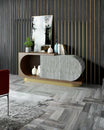
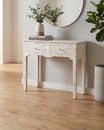


What is a sideboard? The question gets asked more frequently than most furniture retailers expect, which reflects something genuine about how the category has been marketed. The sideboard appears in dining room styling photographs and interior design guides as though its purpose is self-evident, but for a significant number of buyers, the piece sits in an ambiguous zone between furniture categories they understand clearly and one they are less certain about. Is it a storage cabinet? A serving surface? A decorative piece? A buffet alternative? The answer is all of these simultaneously, which is exactly why what is a sideboard is a question worth answering properly before a buyer dismisses the category as unnecessary for a modern home or commits to a purchase without understanding what the piece is actually designed to do. This guide covers the definition, the uses, the style directions available in 2026, and the specific reasons why a well-chosen sideboard continues to solve a problem that modern homes have not resolved through any other furniture category.
What Is a Sideboard: The Complete Definition
What is a sideboard in furniture terms? A sideboard is a long, low cabinet typically placed in a dining room, living room, or entrance hall, combining closed storage in the form of cupboards and drawers with a flat top surface suited to serving or display. Its height generally falls between 80 and 100 cm. Its width varies from compact configurations of 100 cm to generous villa-scale pieces of 220 cm and above. Its depth runs between 38 and 50 cm, keeping it close to the wall while providing adequate internal storage volume.
What is a sideboard historically? The piece originated in European dining room furniture of the eighteenth century as a dedicated serving station that allowed food and drink to be prepared adjacent to the dining table without requiring service from a separate room. The combination of a working top surface at standing height and storage below for serving ware, cutlery, table linens, and bottles made the sideboard the dining room's functional anchor alongside the table and chairs.
What is a side board in contemporary retail versus its historical version? Very little has changed in the piece's fundamental design logic. Modern sideboards in UAE and Gulf retail carry the same combination of top surface and below-surface storage that the original pieces carried. What has changed is the range of materials, finishes, surface treatments, and design directions available, and the room positions the piece now occupies beyond the dining room.
What is a buffet cabinet in relation to a sideboard ? This is the terminology question that most frequently accompanies the what is a sideboard search, and it deserves a direct answer. A buffet cabinet and a sideboard describe the same category of furniture under different labels. Both are long, low dining room storage and serving pieces. The buffet cabinet label is applied more frequently to pieces with a higher proportion of cupboard storage relative to drawers, and occasionally to taller pieces with a more substantial visual presence. The sideboard label tends to be applied more broadly across the category. In UAE and Gulf retail, both terms are used interchangeably for pieces that are functionally and structurally equivalent. A buyer searching for a buffet cabinet and a buyer searching for a sideboard are looking for the same piece.
The sideboard buffet cabinet label, which appears in some retail contexts, acknowledges this overlap directly and positions the piece as belonging to both category names simultaneously.
What Does a Sideboard Actually Do in a Modern Home
Having answered what is a sideboard , the more immediately useful question for a modern UAE homeowner is what the piece actually does and why it continues to solve a problem that other furniture categories do not address.
A sideboard performs four functions simultaneously in a dining room, and understanding all four is what makes the category's continued relevance clear.
The first function is dining room storage. A dining room accumulates items that belong in the space but have nowhere natural to go without a dedicated storage piece. Table linens, placemats, extra sets of cutlery, serving platters used for gatherings, candles, napkin rings, and the decorative accessories of a well-furnished dining room all need a home. Without a sideboard , these items migrate to kitchen cupboards, storage rooms, and wherever space exists, which means they are never quite at hand when the dining room needs them. A sideboard with a practical combination of drawers for small items and cupboards for larger pieces solves this storage problem at the scale the dining room requires.
The second function is serving surface. During a meal, particularly during gatherings common across UAE and Gulf households during the cooler months from October through April, the dining table quickly fills with the dishes and serving items of an active meal. A sideboard top at standing height provides a secondary surface where dishes can be set down between courses, where a drinks station can be established for a gathering, and where the overflow of a well-served meal can be managed without crowding the table.
The third function is visual anchoring. A dining room without a sideboard on its primary wall reads as unfinished regardless of how well the table and chairs are chosen. The wall is present, it is seen throughout every meal, and without furniture on it the room reads as a space waiting for something to happen. A well-chosen sideboard placed on that wall transforms the dining room from a room containing a table into a room with a complete visual composition.
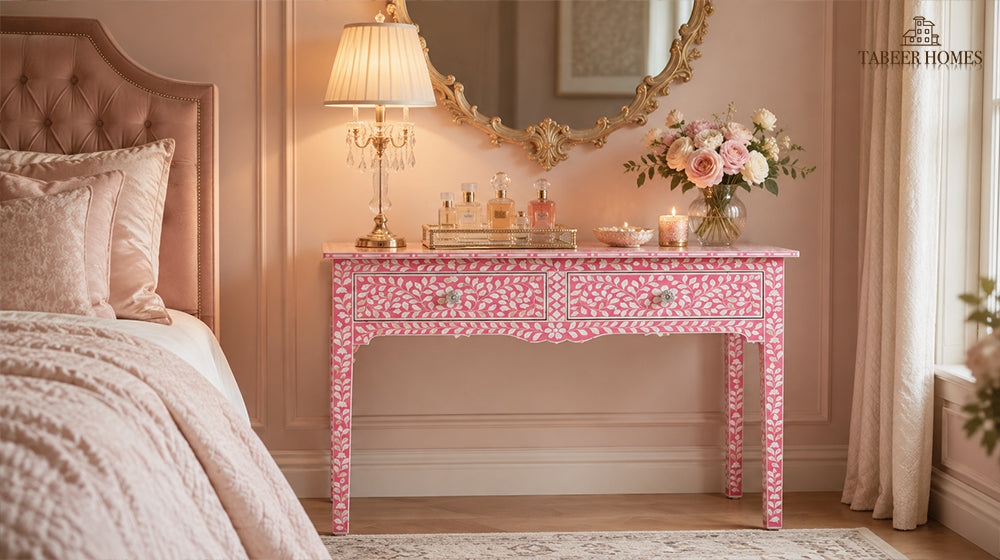
The fourth function is display. The top surface of a sideboard is one of the most visible horizontal surfaces in a dining room, observed throughout every meal and from the entrance of the space. A composed arrangement of a lamp, a tray, a plant, or a decorative object on the sideboard surface contributes to the room's atmosphere in the way that table centrepieces do during meals and decorative objects on other furniture surfaces do in adjacent rooms.
What Is a Sideboard in Different Room Positions Beyond the Dining Room
What is a sideboard when it moves beyond its traditional dining room position? In 2026, the sideboard is being specified across a wider range of room positions than at any previous point in the UAE furniture market, and understanding each position's specific requirements helps buyers evaluate which configuration suits their situation.
Living Room Position
A sideboard in a living room position, typically placed behind a sofa or on the primary wall opposite the seating arrangement, functions as a media unit alternative, a display surface at a composed height, and a visual anchor for the seating area's wall. In open-plan UAE apartment and villa layouts where the living area does not have a dedicated wall for a media unit, a sideboard with internal cable management and a surface-level position for a television or projector screen serves the media function while reading as furniture rather than as equipment housing.
Entrance Hall Position
A sideboard in an entrance hall functions as a landing surface for the objects of arrival and departure, a storage solution for items used daily including keys, sunglasses, and small bags, and a visual statement for the home's first interior impression. In this position, a sideboard of 80 to 100 cm width and 35 to 40 cm depth preserves adequate circulation clearance while providing the surface and storage the entrance position needs.
Bedroom Position
A sideboard in a bedroom position functions as an alternative to a chest of drawers in rooms where a lower, wider storage piece suits the wall configuration better than a taller, narrower one. In a UAE master bedroom with generous wall length and lower ceiling fixtures or window placements that constrain height, a sideboard at 85 to 95 cm accommodates the storage load without exceeding the height constraints that would eliminate a standard chest of drawers.
Sideboard Styles in 2026: The Directions Worth Understanding
The sideboard category in 2026 UAE and Gulf retail spans a wider range of style directions than at any previous point in the local market's recent history. The six directions below represent the configurations producing the most consistent results across the region's residential contexts.
Bone Inlay Sideboard
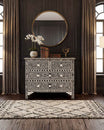
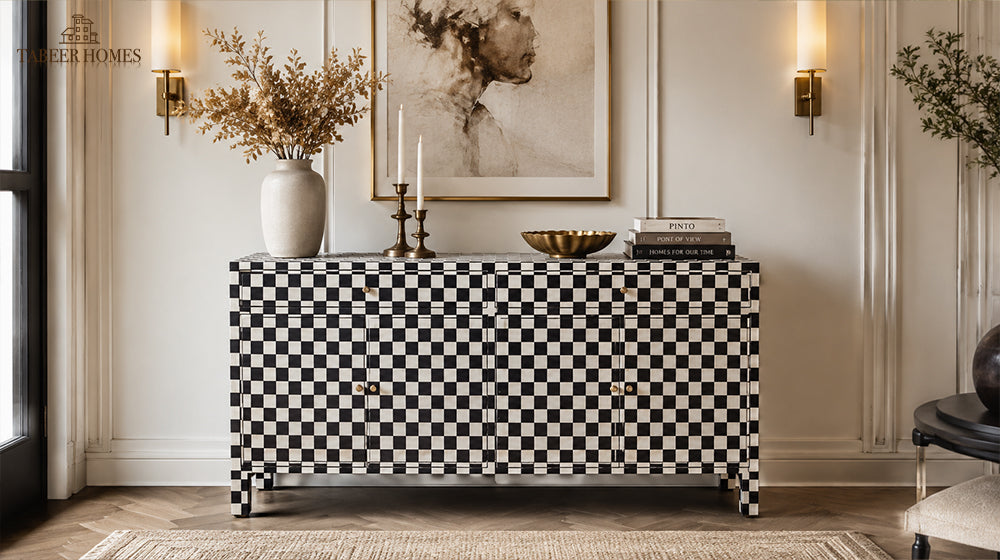
A bone inlay sideboard applies the Rajasthani craft tradition of hand-set geometric inlay patterns on a lacquered surface to the dining room's primary storage and serving piece. The craft quality visible at close range and the graphic pattern presence legible from across the dining room make a bone inlay sideboard the most visually impactful choice for UAE and Gulf dining rooms where the wall piece is intended to carry the room's design identity.
Classic configurations in teal and white, navy and ivory, and black and natural bone are the most widely available. Contemporary directions in sage green, warm terracotta, and forest green suit the natural material interior direction dominant across Gulf residential design in 2025 and 2026.
Tabeer Homes produces bone inlay sideboard and sideboard buffet cabinet pieces on lacquered hardwood frames, with delivery across UAE and GCC markets. [INTERNAL LINK: anchor text suggestion "bone inlay furniture Dubai"]
Contemporary Minimal Sideboard
A minimal sideboard in matte white, natural oak, or matte black lacquer, with flush door fronts, integrated or absent hardware, and clean proportions without ornamental detailing, suits contemporary apartment dining rooms and living rooms where the piece is asked to provide storage and surface function without carrying significant visual weight. The construction standard behind a genuinely minimal sideboard is precision at every joinery level, because the clean appearance of a minimal piece depends entirely on consistent gap lines, flush doors that do not drop or bind, and finish consistency across all surfaces.
Mirror Inlay Sideboard
A sideboard with mirror-panel door fronts reflects the dining room back into itself, amplifying light from the chandelier or pendant above the table and creating perceived depth in a room that is almost always smaller than its occupants would choose. The sideboard buffet cabinet with mirror panels is one of the most consistently searched configurations in the UAE dining room furniture category because its light-management function is practically valuable rather than decoratively incidental.
Mother of Pearl Sideboard
A sideboard with mother of pearl inlay surface treatment on a lacquered frame brings the iridescent quality of nacre shell to the dining room's primary wall piece. The surface shifts with changing light conditions, reading differently during a daytime gathering than under the warm directed light of an evening dinner. In a dining room where the chandelier or pendant creates directional overhead light that falls across the sideboard surface, this behaviour makes the piece visually alive throughout the meal.
Solid Wood Sideboard
A solid wood sideboard in sheesham, teak, mango, or oak carries the material warmth and long-term durability that the dining room's most frequently used furniture piece requires. In UAE conditions where air conditioning creates persistent indoor dryness, properly kiln-dried and sealed solid hardwood performs with dimensional stability that MDF and particle board alternatives do not match over years of daily use. A solid wood sideboard also offers the repairability that engineered alternatives cannot: a surface scratch on a hardwood piece can be addressed with oil and fine sandpaper, while the same damage on a lacquered MDF surface requires professional refinishing.
Traditional and Carved Sideboard
A traditional carved wood sideboard in warm mahogany, walnut, or dark sheesham with decorative panel detailing suits formal dining rooms, heritage-influenced interiors, and UAE and Gulf homes where the furniture language references regional craft traditions. In a dining room with ornate ceiling detailing, a patterned rug, and upholstered dining chairs in a rich fabric, a carved sideboard reads as entirely at home rather than as a decorative anachronism.
Sizing a Sideboard for UAE Dining Rooms
A sideboard or buffet cabinet that is correctly sized for the specific dining room wall produces a composed room. One that is undersized or oversized for the wall creates a proportion problem visible from every seat at the table throughout every meal.
Width should occupy between 55 and 75 percent of the wall length the piece sits against. For a dining room wall of 250 cm, a sideboard of 140 to 185 cm reads correctly. For a wall of 180 cm, a piece of 100 to 135 cm is the appropriate range.
Height follows a consistent standard across all sideboard configurations. The top surface should sit between 80 and 100 cm from the floor for the serving function to be practical at standing height and for the visual proportion to relate correctly to the dining table adjacent to it.
Depth determines the clearance between the sideboard front and the nearest dining chair back at its furthest extended position. A minimum of 90 cm of clear space between the sideboard front and the chair back is the practical requirement for a dining room that functions without restriction during a seated meal.
|
Dining Room Wall |
Sideboard Width |
Height Range |
Maximum Depth |
Chair Clearance |
|
Under 180 cm |
100 to 130 cm |
80 to 90 cm |
42 cm |
90 cm minimum |
|
180 to 250 cm |
130 to 180 cm |
85 to 95 cm |
45 cm |
90 to 100 cm |
|
250 to 350 cm |
160 to 230 cm |
85 to 100 cm |
48 cm |
100 to 110 cm |
|
Over 350 cm villa |
200 to 280 cm |
90 to 105 cm |
50 cm |
110 cm and above |
What to Check Before Buying a Sideboard or Buffet Cabinet
A sideboard or buffet cabinet purchase involves the same construction quality checks that apply to any storage furniture in a primary daily use position.
Before confirming any order, check the following:
- Carcass rigidity. Apply firm hand pressure to the side panels of the piece. A well-made sideboard does not flex or creak under reasonable pressure. Movement in the carcass indicates thin panel construction or insufficient joinery that will worsen under the weight of stored items over time.
- Door alignment and operation. Open and close every door. Doors should swing smoothly, close flush with consistent gap lines around the frame, and latch or close without requiring adjustment. A door that drops on opening or binds on closing has already developed a hinge problem that will worsen with daily use.
- Drawer runner quality. Pull each drawer fully open and push it closed. Metal undermount runners with soft-close should operate smoothly under load and engage the soft-close mechanism consistently. Drawers that wobble laterally or require guidance to close indicate runner issues.
- Back panel construction. The rear panel of the sideboard carcass should be solid or thick plywood secured into a groove. A thin hardboard panel stapled to the rear will bow under the weight of stored items and allow the carcass to rack out of square over time.
Frequently Asked Questions
What is a sideboard and how is it different from a regular cabinet?
It is a long, low cabinet combining a flat top surface at standing height with below-surface storage in the form of drawers and cupboards, typically placed in a dining room, living room, or entrance hall. A regular storage cabinet is designed primarily for contained storage with less emphasis on the top surface as an active serving or display element. The sideboard 's defining characteristic is the combination of surface function and storage function in a piece proportioned to sit against a wall at standing-use height rather than at a height designed purely for storage access.
What is the difference between a sideboard and a buffet cabinet?
In contemporary UAE and Gulf retail, both terms describe the same category of furniture: a long, low dining room storage and serving piece. The buffet cabinet label is applied more frequently to pieces with a higher proportion of cupboard storage and occasionally to taller or more substantial configurations. The sideboard label is applied more broadly across the category. The sideboard buffet cabinet label acknowledges the overlap directly. A buyer choosing between pieces described by each label should focus on the specific configuration, dimensions, and construction quality rather than on the terminology.
What is a side board versus a sideboard?
There is no functional difference. Side board and sideboard are spelling variants of the same word describing the same category of furniture. Both refer to the long, low dining room or living room cabinet with a flat top surface and below-surface storage. Some retailers use the two-word spelling in product titles for search visibility purposes, but both terms describe identical pieces evaluated by the same sizing, material, and construction criteria.
Does a modern UAE home actually need a sideboard?
A modern UAE home benefits significantly from a sideboard in any room where the combination of accessible storage and a composed display surface is needed but not provided by existing furniture. In a dining room without dedicated storage, the sideboard solves the dispersal problem of table linens, serving ware, and dining accessories across the home. In a living room without a media unit, it provides storage and a surface level for the television. In an entrance hall without a landing surface, it anchors the first interior impression of the home. The piece's continued relevance in 2026 is not nostalgic. It reflects the fact that the storage and surface problem it was designed to solve has not been resolved by any other furniture category.
What size sideboard works in a standard UAE apartment dining room?
For the most common UAE apartment dining room with a primary wall of 200 to 280 cm, a sideboard of 130 to 190 cm width sits within the correct proportioning range of 55 to 75 percent of the wall length. Height of 85 to 95 cm suits most dining room proportions and provides the serving surface at a practical standing height. Depth of 42 to 45 cm preserves adequate clearance between the sideboard front and the extended dining chair backs, which should be at least 90 cm for comfortable movement during a seated meal.
What makes a handcrafted sideboard worth the premium over a production piece in a UAE dining room?
A handcrafted sideboard in bone inlay or mother of pearl on a lacquered hardwood frame delivers craft quality visible at the surface level, in the joinery, and in the finishing process that a production piece cannot replicate at equivalent speed. The dining room is a room seen by guests and used for social occasions where the quality of the furniture is observed and assessed at close range across the full length of a meal. A sideboard that carries verifiable handcraft quality in its surface work, its frame construction, and its finish application serves the dining room's social function at the wall scale where the visual standard matters most. The investment returns through years of daily use and repeated guest gatherings rather than through any single occasion.
Ending Words
What is a sideboard ? It is the dining room's most underspecified piece and its most functionally complete one. It stores what the room accumulates, serves what the table cannot accommodate, anchors the wall that every diner faces throughout every meal, and displays the objects that give the dining room its character when the table is not in use. What is a side board compared to the broader category? The same piece under a variant spelling. What is a buffet cabinet in relation to the sideboard ? The same piece under a different label applied with a slight configuration emphasis that rarely produces a meaningful functional distinction in UAE retail. The sideboard buffet cabinet label acknowledges the overlap that any buyer comparing pieces across these labels will quickly discover. A sideboard chosen with the right width for the wall, the right height for serving function and visual proportion, the right material for UAE climate conditions and the household's daily use intensity, and the right construction standard for a piece that will be opened and closed multiple times every day deserves the same precision thinking applied to the dining table it accompanies. The wall it occupies is too visible and the functions it serves are too daily for the piece to be chosen by approximation

Leave a comment
This site is protected by hCaptcha and the hCaptcha Privacy Policy and Terms of Service apply.