


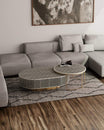
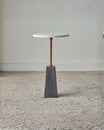
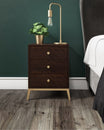
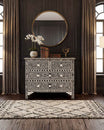
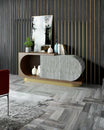
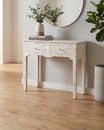


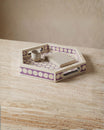

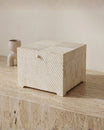
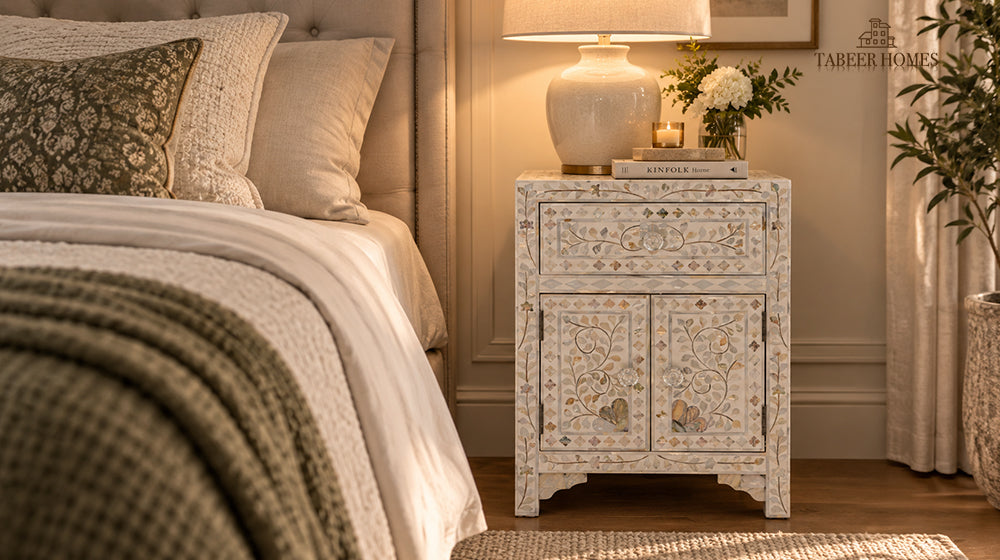
Handcrafted, richly patterned nightstands, bone inlay, mother of pearl, ornate carved wood, dominate a lot of bedroom furniture inspiration, but they represent only one design direction. Modern bedroom side tables take the opposite approach: clean lines, restrained materials, and a design language built around simplicity rather than surface pattern. This guide focuses specifically on that contemporary style, the materials, silhouettes, and construction choices that define a modern bedside table , alongside the sizing fundamentals that apply regardless of style.
What Defines a Modern Bedroom Side Table?
A modern nightstand is defined less by any single material and more by a shared design philosophy: clean geometric lines, minimal ornamentation, and a restrained material palette that prioritizes form over decorative surface detail. Where a bone inlay or mother of pearl nightstand draws attention through intricate hand-set pattern, a modern piece draws attention through proportion, negative space, and the quality of its materials themselves, matte-finished wood, brushed metal, or glass, without additional surface decoration layered on top. This does not mean modern nightstands lack character; a well-designed contemporary piece can be just as much a visual statement as an ornately patterned one, simply through a different design vocabulary.
Materials Common to Modern Nightstand Design
A modern nightstand typically draws from a narrower material palette than traditional or handcrafted alternatives, favoring finishes that read as clean and current. Matte lacquer, in black, white, or a muted neutral tone, offers a smooth, contemporary surface without the sheen of a high-gloss finish. Brushed or matte metal, particularly black or brass-toned steel, appears frequently in leg and frame construction, contributing to the airy, less visually heavy feel common in modern furniture design. Warm wood tones, especially walnut or oak with a simple, minimally treated finish, provide contrast to an otherwise all-metal or all-lacquer room without introducing the pattern complexity of carved or inlaid detail. Glass, whether as a full tabletop or a lower shelf, adds visual lightness particularly valued in smaller modern bedrooms where a solid, opaque nightstand can feel more visually heavy than the room's proportions call for. Mixed-material construction has also become increasingly common within the modern category, a wood tabletop paired with black metal legs, or a lacquered drawer front set into a metal frame, offering visual interest through material contrast rather than surface pattern, letting two simple materials do the work that a single heavily patterned surface accomplishes in more traditional inlay furniture.
Modern Nightstand Silhouettes and Formats
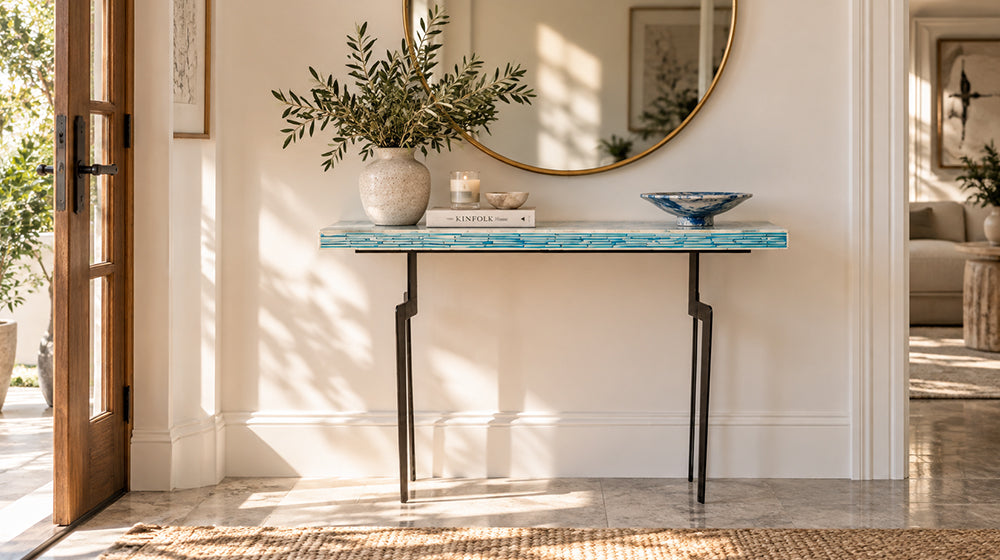
Beyond material, silhouette does much of the work in signaling a modern design language. Open-frame nightstands, using slim metal or wood legs rather than a solid enclosed base, let more floor visible beneath the piece, contributing to a lighter, less bulky feel than a traditional fully enclosed nightstand. Floating or wall-mounted nightstands eliminate legs entirely, mounting directly to the wall and leaving the floor beneath completely clear, a format especially popular in compact modern bedrooms where visual floor space matters as much as storage capacity. Single-drawer or drawerless designs, sometimes paired with an open shelf instead of enclosed storage, reflect the minimalist preference for fewer components and cleaner lines over the multiple stacked drawers common in more traditional nightstand formats. Asymmetric or sculptural designs, departing from the standard rectangular box shape entirely, represent a bolder modern direction for buyers wanting genuine visual distinctiveness within the contemporary style category. Rounded or softly curved silhouettes have also gained ground within modern design specifically, offering a gentler alternative to the sharply geometric boxes that once defined minimalist furniture almost exclusively, proof that "modern" as a category has broadened considerably beyond its original strict adherence to hard right angles and has room for softer forms that still avoid the ornamental detail associated with more traditional furniture styles.
Modern Bedroom Accent Table Sizing: The Quick Version
Sizing for a modern bedroom accent table follows the same core principles that apply to any nightstand regardless of style. Height should sit within a few centimeters of the mattress top, typically landing between 55 and 70 cm depending on the specific bed frame. Footprint generally runs 35 to 50 cm in width and depth, though modern designs, particularly floating or open-frame formats, sometimes run slightly smaller than traditional enclosed nightstands given their more minimal storage ambitions. The one modern-specific sizing consideration worth flagging: floating nightstands require confirming the wall can support the mounting hardware and intended weight load, a structural check traditional floor-standing nightstands do not require.
Pairing Modern Nightstands With Contemporary Bed Frames
A modern nightstand's clean lines generally pair most naturally with an equally restrained bed frame, an upholstered platform bed, a simple wood frame, or a minimalist metal frame without heavy ornamentation. Matching material logic between the two pieces, a brushed metal-legged nightstand beside a bed frame with similar metal accents, or a matte wood nightstand echoing a wood headboard's tone, reinforces the room's overall design coherence more effectively than choosing pieces from entirely unrelated material families. For a bedroom mixing a more traditional or upholstered headboard with modern nightstands, the contrast can work well deliberately, provided at least one shared element, a color note, a similar leg style, ties the two together rather than leaving them feeling like they belong to different rooms entirely. Headboard height also deserves consideration alongside material matching, since a very low-profile modern nightstand beside a tall, substantial headboard can create an awkward visual gap in scale, while a nightstand proportioned closer to the headboard's own visual weight, even within the modern style's generally slimmer silhouettes, tends to produce a more balanced overall composition on either side of the bed.
Modern Vs Traditional Nightstands: When Each Suits the Room
Choosing between a modern nightstand and a more traditional, handcrafted alternative depends heavily on the bedroom's broader design direction rather than the nightstand decision existing in isolation. A bedroom built around a minimalist palette, neutral bedding, simple window treatments, uncluttered surfaces, generally calls for a modern nightstand that reinforces rather than disrupts that restraint. A bedroom already embracing richer pattern and texture, layered textiles, an ornate headboard, warm jewel tones, often suits a handcrafted bone inlay or mother of pearl nightstand better, letting the furniture echo the room's existing decorative language rather than introducing a starkly different modern silhouette. Buyers uncertain which direction suits their space benefit from starting with the bed frame and overall color palette first, since the nightstand should generally follow the room's established design direction rather than lead it. A hybrid approach also works for some bedrooms, pairing a genuinely modern bed frame and lighting scheme with one or two handcrafted accent pieces, a single bone inlay tray on an otherwise modern nightstand, for instance, letting the room read as primarily contemporary while still incorporating a touch of the pattern and craft found in more traditional inlay furniture, without committing the entire nightstand itself to either style exclusively.
Storage Configuration in Modern Nightstand Design
Modern nightstands often prioritize a simpler storage configuration than traditional multi-drawer designs, reflecting the style's broader preference for restraint. A single drawer, sized for smaller items like a phone charger, reading glasses, or a journal, suits buyers who want minimal storage without the visual bulk of multiple stacked compartments. An open shelf, whether instead of or alongside a single drawer, offers quick-access storage for a book or a stack of magazines without requiring a drawer to be opened for daily use. Drawerless designs, relying purely on the tabletop surface, suit the most minimal modern aesthetic, though they offer no enclosed storage at all, a genuine tradeoff worth weighing against actual nightstand habits before committing to a purely open format.
Lighting Considerations for a Modern Nightstand Setup
Because modern nightstand designs often run visually lighter and lower-profile than traditional pieces, lighting choices deserve particular attention to avoid an imbalanced result. A slim, minimalist table lamp generally suits a modern nightstand's proportions better than a large, ornate lamp base that could visually overwhelm a lighter-weight piece. Wall-mounted sconces positioned above or beside a floating nightstand free up the surface entirely, reinforcing the clean, uncluttered look central to the modern aesthetic while still providing genuine reading light. LED strip lighting, sometimes integrated beneath a floating nightstand's mounting bracket, has become a distinctly modern lighting choice, adding a soft ambient glow without requiring a separate lamp on the surface at all.
Color Palettes in Modern Nightstand Design
Modern nightstands tend to draw from a more restrained color range than traditional handcrafted pieces, and understanding the common palettes helps when coordinating a full bedroom scheme. Black and white remain the most common combination in modern furniture broadly, whether as a single matte black or white finish or a deliberate two-tone pairing across the frame and tabletop. Warm neutrals, taupe, greige, soft sand tones, have grown increasingly common in modern nightstand finishes as the broader design world has moved away from stark black-and-white minimalism toward a softer, more livable neutral palette. Bold accent colors, a deep green, a muted terracotta, or navy lacquer, appear less frequently but offer a genuine style statement for buyers wanting their nightstand to serve as a color anchor within an otherwise neutral bedroom. Metal tones, brass, black, chrome, or brushed nickel, function almost as a color choice in their own right within modern design, since the specific metal finish chosen for a nightstand's legs or hardware often does more to define the piece's overall temperature, warm versus cool, than the primary material color itself.
Modern Nightstands for Small Bedrooms
Compact bedrooms benefit from modern nightstand design more consistently than larger rooms do, since the style's core principles, visual lightness, minimal footprint, restrained ornamentation, directly address the challenges a small space presents. A floating nightstand eliminates floor-level visual clutter entirely, making a compact bedroom feel less cramped than the same room would with a traditional floor-standing piece occupying visible square footage. An open-frame design with slim metal legs allows more visible floor beneath the piece than a solid enclosed nightstand, contributing to a sense of spaciousness even within genuinely limited square footage. For a small bedroom shared between two people, choosing a slimmer nightstand profile on both sides of the bed, rather than a single larger piece on one side only, generally preserves more usable walking space around the bed than an asymmetric arrangement with one oversized and one minimal table. Buyers furnishing a compact modern bedroom from scratch also benefit from considering multi-functional nightstand designs, a piece with a built-in charging station or a small integrated shelf, since a smaller room offers less room for separate accessories that a more spacious bedroom could accommodate without difficulty.
Common Buying Mistakes to Avoid
A handful of recurring errors account for most of the regretted modern nightstand purchases.
- Choosing a floating design without confirming wall construction. Not every wall type supports the weight and mounting hardware a floating nightstand requires, making this confirmation step essential before ordering rather than after installation attempts.
- Underestimating storage needs in favor of pure minimalism. A drawerless or single-drawer design that looks striking in a showroom can prove frustrating in daily use for someone with genuine nightstand storage habits.
- Ignoring proportion relative to a heavier bed frame. A very slim, light modern nightstand can look visually undersized beside a substantial, heavily upholstered bed frame, worth weighing before committing to the most minimal option available.
- Mixing too many unrelated modern finishes in one room. Combining black metal, brass, and glass all within the same small bedroom without any unifying element can read as visually busy despite each individual piece being minimalist on its own.
Bringing It All Together
Modern bedroom side tables earn their place through restraint rather than surface pattern, clean silhouettes, considered material choices, and proportions that let the room's overall design breathe rather than compete for attention. Whether you choose an open-frame metal nightstand, a floating wall-mounted design, or a simple matte wood piece, matching the table's material and silhouette to your bed frame and the room's broader design direction will do more for a cohesive result than choosing on style alone. The choice between modern and traditional ultimately says more about the bedroom as a whole than about the nightstand in isolation, since a single furniture piece rarely overrides the design direction already established by the bed, bedding, and wall treatments surrounding it. For bedrooms that ultimately suit a richer, more handcrafted direction instead, the bone inlay and mother of pearl dressing table and dresser guides elsewhere in our furniture collection cover the traditional, pattern-forward alternative to the modern style covered here.
Frequently Asked Questions
What makes a nightstand "modern" in style?
A modern nightstand is defined by clean geometric lines, minimal ornamentation, and a restrained material palette, matte lacquer, brushed metal, or simple wood, rather than intricate surface pattern or heavy ornamentation.
What size should a modern bedroom side table be?
Height should sit within a few centimeters of your mattress top, typically 55 to 70 cm, with a footprint generally running 35 to 50 cm in width and depth regardless of style.
Is a floating nightstand a good choice for every bedroom?
Not necessarily. Floating nightstands require wall construction capable of supporting the mounting hardware and weight load, a structural check that should happen before ordering rather than after.
Should a modern nightstand match my bed frame exactly?
Not exactly, but sharing at least one element, a similar leg style, material, or color note, helps a modern nightstand feel cohesive with the bed frame rather than mismatched.
Do modern nightstands offer less storage than traditional designs?
Often yes. Many modern designs prioritize a single drawer, an open shelf, or no enclosed storage at all, favoring visual restraint over the multiple stacked drawers common in traditional nightstands.
When should I choose a traditional nightstand instead of a modern one?
A bedroom already built around rich pattern and texture, layered textiles, an ornate headboard, warm tones, generally suits a handcrafted bone inlay or mother of pearl

Leave a comment
This site is protected by hCaptcha and the hCaptcha Privacy Policy and Terms of Service apply.