


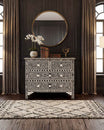
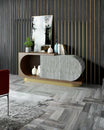
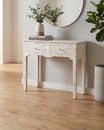


Most chests of drawers in most homes look the same: a rectangular box in white or oak veneer, bought because it fit the space and nothing more. Then you walk into a bedroom with a hand-inlaid chest in deep green and bone white sitting against a plain wall, and the whole room suddenly has a focal point it never had before. That is the gap a unique chest of drawers fills, and it explains why more homeowners across the UAE and wider GCC are choosing statement storage pieces over generic ones this year.
This guide covers what actually makes a chest of drawers stand out, how to judge craftsmanship before buying, where a bold piece works best in a home, and how to size and style it so it elevates a room rather than overwhelming it.
Why Storage Furniture Is Finally Getting Design Attention
For years, storage furniture was treated as purely functional, chosen last and thought about least. That is changing, and the market data backs it up.
According to Mordor Intelligence's 2026 UAE home furniture market report, bedroom furniture, which includes chests of drawers, held 27.95% of the total UAE home furniture market share in 2025, and premium furniture is projected to grow at a 5.78% compound annual growth rate through 2031, outpacing the mid-range segment. That shift toward premium, design-forward bedroom pieces reflects a broader change in how buyers think about storage: not as an afterthought, but as an opportunity.
A designer chest of drawers placed thoughtfully in a bedroom, hallway, or living room does two jobs at once. It holds clothing, linens, or everyday items out of sight, and it gives the room a visual anchor that ties the rest of the decor together.
What Makes a Chest of Drawers "Unique" in the First Place
The word gets used loosely, so it helps to define it. An unusual chest of drawers typically differs from standard furniture in at least one of three ways: the material, the construction method, or the surface finish.
Standard chests use engineered wood, machine-cut joints, and a single flat paint or veneer finish. A standout piece instead uses solid wood joinery, hand-applied inlay or carved detailing, or a finish that shifts under different light, such as mother of pearl or metallic leaf accents.
Materials and Techniques Behind Standout Designs
Not every unusual chest is built the same way, and the construction method affects both durability and price. Understanding these differences helps buyers avoid paying premium prices for a piece that will not hold up.
A genuinely handcrafted chest starts with a solid wood frame, most commonly mango wood or sheesham, both of which resist warping better than engineered board in humid, air-conditioned interiors. From there, artisans apply one of several decorative techniques by hand.
Common Techniques Used in Standout Chests
Buyers researching statement furniture will typically encounter these construction approaches, each with a different look and price point.
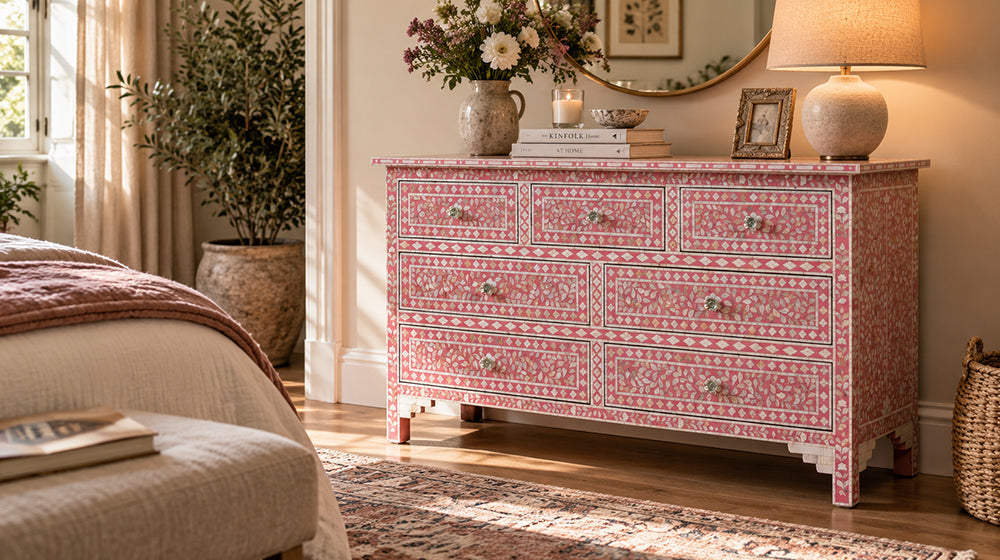
- Bone inlay: individually cut bone pieces set into carved wood grooves, often in geometric or floral patterns
- Mother of pearl inlay: similar process using shell fragments, producing a subtle shimmer
- Hand-carved relief work: raised or recessed carving directly into the wood surface, left natural or lightly stained
- Mixed metal and wood accents: brass or antique metal hardware and trim combined with a solid wood body
A piece combining two of these techniques, such as bone inlay panels with brass drawer pulls, tends to sit at a higher price point but also holds visual interest from multiple angles, which matters in rooms where the chest is viewed from more than one side.
Comparing Chest of Drawers Styles by Room Fit
Not every standout chest suits every room. The table below compares common styles against the spaces where they tend to work best, based on scale, finish, and typical drawer configuration.
|
Style |
Typical Width |
Drawer Count |
Best Room Fit |
|
Bone inlay chest, geometric pattern |
80 cm to 100 cm |
4 to 6 |
Bedroom, as a focal storage piece |
|
Mother of pearl inlay chest |
80 cm to 110 cm |
4 to 5 |
Bedroom or dressing area |
|
Hand-carved wood chest |
90 cm to 120 cm |
3 to 5 |
Living room or hallway |
|
Mixed wood and metal chest |
70 cm to 100 cm |
3 to 4 |
Entryway or narrow hallway |
A chest with more drawers generally needs more wall width to look proportionate, so matching drawer count to available space matters as much as matching the finish to the room's color palette.
Sizing a Statement Chest to Fit the Room
A chest that is too tall for a low-ceilinged bedroom feels top-heavy. One that is too shallow gets lost against a large wall. Getting the proportions right takes a few minutes of measuring before shopping.
Steps to Confirm the Right Size
Measure the intended wall space carefully, since a bold inlay pattern only reads as a statement piece if it has enough visual breathing room around it.
- Measure the total wall length available for the chest
- Leave at least 60 cm of clearance on either side if the chest sits between two features, such as windows or doors
- Check that drawer fronts have at least 70 cm of clearance in front to open fully
- Confirm ceiling height allows for a mirror or artwork above without feeling cramped
- Match chest height to the room's existing furniture line, ideally within 15 cm of a nearby dresser or sideboard
A narrow bedroom under 12 square metres generally suits a chest between 80 cm and 100 cm wide, while larger primary bedrooms or hallways can accommodate a piece from 100 cm to 120 cm without crowding the space.
Styling a Bold Chest Without Cluttering It
A chest with strong inlay or carving does not need heavy styling on top. The most common mistake is treating the surface as a shelf and covering the detail with too many objects.
Leave at least half the top surface visible. A single lamp, a small tray, and one or two personal objects is usually enough. Anything more distracts from the construction detail that justified choosing this piece over a plain one.
Coordinating Colors and Finishes Nearby
The finish on a statement chest sets a tone that the rest of the room should support rather than compete with.
- Choose wall colors in muted, neutral tones so the inlay or carving remains the visual focus
- Use warm metal accents nearby, such as brass lamp bases or mirror frames, to complement bone inlay and carved wood
- Avoid placing more than one heavily patterned piece in the same sightline
- Add a plain textile, such as a solid-color throw or rug, to balance a highly detailed chest
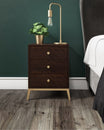
Tabeer Homes, a Dubai-based brand producing handcrafted bone inlay and mother of pearl furniture, points out that a statement chest of drawers pairs particularly well with a simpler bedside table in the same wood tone, since matching materials without matching patterns keeps a room cohesive without looking mismatched.
Caring for a Handcrafted Chest Over Time
A well-made chest should last decades with basic, consistent care rather than infrequent deep cleaning.
Dust the surface with a dry, soft cloth regularly, paying particular attention to inlay grooves and carved recesses where dust settles first. Keep the piece out of direct, prolonged sunlight, since UV exposure fades dyed bone inlay and can dry out wood finishes faster than normal indoor wear. For deeper cleaning, use a barely damp cloth followed immediately by a dry one, since standing moisture can loosen inlay seams over time.
When to Call in Professional Restoration
A few signs indicate a piece needs professional attention rather than routine home care.
Loose inlay fragments usually mean the resin seal at that spot has dried and cracked, which a furniture restorer can typically repair without replacing the whole panel. Drawers that stick or no longer glide smoothly often point to humidity swings affecting the wood frame, particularly in homes where air conditioning cycles unevenly through the day.
A chest of drawers rarely gets the same design attention as a sofa or dining table, yet it sits in view every day in a bedroom or hallway. Choosing a piece with genuine handcrafted detail, sized correctly for the room, and styled with restraint turns a purely functional item into one of the more memorable details in a home.
Frequently Asked Questions
What makes a chest of drawers "handcrafted" rather than factory-made?
A handcrafted chest is built with individually applied inlay, carving, or joinery work done by hand rather than machine-cut and printed finishes. This is why hand-inlaid pieces show slight natural variation and take longer to produce than standard factory furniture.
How wide should a statement chest of drawers be for a small bedroom?
For bedrooms under 12 square metres, a chest between 80 cm and 100 cm wide generally fits without crowding the room. Leave at least 70 cm of clearance in front for drawers to open fully.
Does bone inlay on a chest of drawers fade over time?
Dyed bone inlay can fade gradually with prolonged direct sunlight exposure, similar to other dyed natural materials. Positioning the chest away from direct window light helps preserve the color over the years.
Can a mother of pearl inlay chest be used in a humid bathroom or laundry area?
These pieces are built for standard indoor living and bedroom use, not high-humidity environments like bathrooms or laundry rooms. Prolonged moisture exposure can loosen the inlay seams and damage the wood frame over time.
How is a hand-carved chest different from an inlay chest?
Hand-carved chests feature raised or recessed patterns cut directly into the wood surface, while inlay chests use separate material, such as bone or shell, set into the wood. Carved pieces tend to have a more textured, tactile surface, while inlay pieces offer a smoother, more colorful finish.
What is a reasonable lead time for ordering a custom handcrafted chest of drawers? Because hand-applied inlay and carving take time, production for a custom piece typically runs several weeks longer than standard factory furniture. Ordering at least two to three months ahead of a planned move or renovation is a reasonable buffer.

Leave a comment
This site is protected by hCaptcha and the hCaptcha Privacy Policy and Terms of Service apply.