





A mirror is one of the only objects in a home that does two jobs at once without asking anything extra of the room. It reflects light and depth, making a space feel larger and brighter than it actually is, and it decorates the wall it hangs on, the way a piece of art would. Most mirrors sold today only do the first job well. Unique decorative wall mirrors, particularly those made with hand-set bone inlay or mother of pearl, do both, and this guide covers how to choose one, where to place it, and how to style it once it's on the wall.
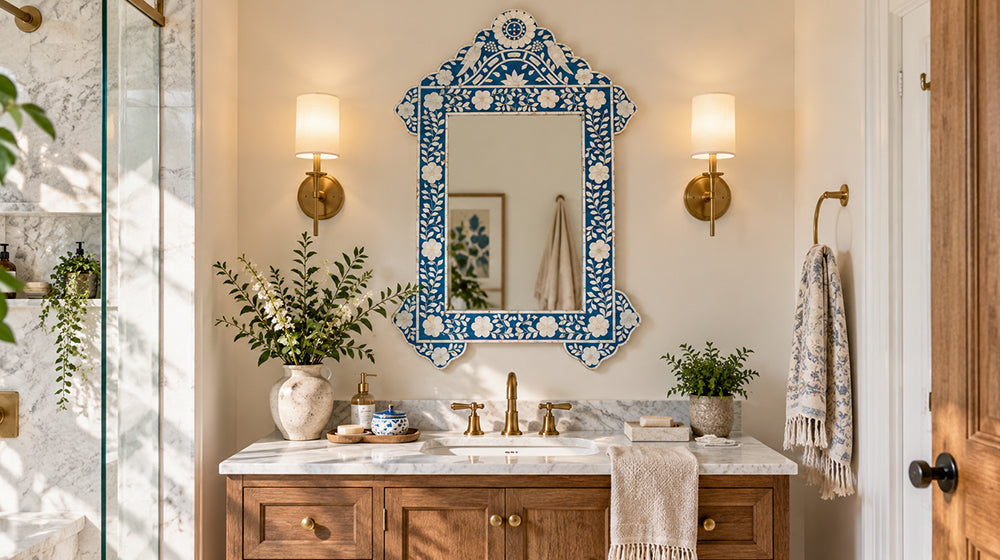
This guide focuses on living room, entryway, and bedroom placement. If you're specifically shopping for a bathroom mirror, sizing and humidity considerations differ enough that they deserve their own treatment rather than a section here.
What Separates a Decorative Wall Mirror From a Plain One
A plain, frameless mirror or a thin metal-framed one disappears into the wall. It reflects the room but contributes nothing of its own, which is exactly the point for some spaces, a hallway that needs light bounced down its length without visual competition, for instance. A decorative wall mirror does the opposite. The frame is treated as a design object in its own right, meant to be looked at as much as looked into.
This distinction matters because it changes how you should shop for one. A plain mirror is chosen almost entirely by size and shape. A decorative mirror needs to be chosen the way you'd choose a piece of furniture: for its material, its craftsmanship, and how it will sit alongside the room's existing colours and textures.
Bone Inlay and Mother of Pearl: The Two Defining Materials
Bone Inlay Mirrors
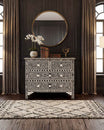
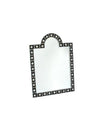
Bone inlay mirrors are built by hand-setting individually cut and polished pieces of bone into a resin bed over a wood frame, arranged into a pattern, geometric, floral, or striped, before the surface is sanded flush and polished. The result is a matte, ivory-toned finish that reads as warm and textural rather than glossy.
The Ameerah Mirror, in a cream bone inlay finish, is a straightforward example of this warmth. The Maze Mirror takes a more graphic approach, available in brown, blue, and black colourways with a bolder inlay pattern, while the Yasmine Mirror, Trikon Mirror, and Inayat Mirror offer smaller-scale options in black, grey, and blue for buyers wanting a more restrained accent piece rather than a large statement mirror. The Jade Mirror, in a blue bone inlay finish, rounds out the range with a more compact profile suited to a narrower wall.
Mother of Pearl Mirrors
Mother of pearl inlay uses the same hand-setting technique as bone inlay but replaces the bone with cut pieces of iridescent shell, which catch and shift light depending on the angle you view them from. This gives a mother of pearl frame a subtle sense of movement that a matte bone inlay frame doesn't have, and it tends to suit rooms with a more glamorous or maximalist palette, gold accents, velvet upholstery, warm ambient lighting.
The Iris Mirror is the primary line in this material, offered in a full-length 90 by 200 cm rectangular format across white, pink, black and white, grey, and black colourways. Because of its scale, the Iris Mirror suits an entryway, dressing area, or bedroom wall where a mirror this size has room to breathe. For a more compact option, the Vitara Mirror offers the same mother of pearl technique in a black and white finish at a scale suited to a single accent wall rather than a full-length placement.
Comparing the Two Materials
|
Consideration |
Bone Inlay |
Mother of Pearl |
|
Visual effect |
Matte, warm, textural |
Iridescent, shifts with light |
|
Best suited rooms |
Eclectic, heritage-influenced, warm-toned interiors |
Glamorous, maximalist, gold-accented interiors |
|
Typical price range |
Lower to mid, depending on size |
Mid to upper, reflecting longer set time |
|
Pattern style |
Geometric, floral, striped |
Solid inlay panels, less pattern-heavy |
|
Works well against |
Wood tones, warm neutrals, natural textures |
Velvet, brass, dark or jewel-toned walls |
Neither material is objectively better than the other. The decision comes down to what the rest of the room is already doing, and whether you want the mirror to blend into a warm, textural scheme or stand out as a brighter, more reflective focal point. A useful test is to look at the room's existing metal tones. A space with brass or gold hardware, lamp bases, or picture frames tends to pair more naturally with mother of pearl, since both share that same warm-metallic reflectiveness, while a room built around matte black or bronze fixtures tends to sit better with a bone inlay frame's more subdued finish.
How the Inlay Process Shapes the Price and the Pattern
It helps to understand what's actually happening in the frame before comparing prices across pieces, since the construction process explains both the cost and the visual character of a hand-inlaid mirror. Each bone or shell piece is cut and shaped individually, then set by hand into a resin bed that has been applied over a wood substrate frame. Once the inlay pieces are placed and the resin cures, the surface is sanded flat so the inlay sits flush with the surrounding material, then polished to bring out its finish.
This is inherently slower than machine-printed or moulded frame production, which is the main reason hand-inlaid mirrors sit at a different price point than a plain painted or metal frame of similar size. It's also why no two pieces are perfectly identical, even within the same product line and colourway. Slight variation in spacing or how individual pieces catch light is a normal outcome of hand-set work, not an inconsistency to flag as a defect. If a matched pair is important to you, for instance flanking a fireplace or a bed, ask whether both pieces can be sourced from the same production batch to keep the variation as minimal as possible.
Where a Statement Mirror Belongs in Each Room
Entryway
The entryway is arguably the single best place in a home for a decorative wall mirror, because it's a transition space with limited furniture competing for attention, and it's the first thing a guest sees on arrival. A full-length or near-full-length piece, such as the Iris Mirror, works particularly well here, since it doubles as a practical last-look mirror on the way out the door while anchoring the space visually. Position it where it catches light from a nearby window or an entryway fixture rather than a dim corner, since a mirror in low light loses most of its decorative value.
Living Room
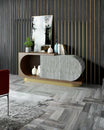
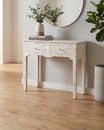
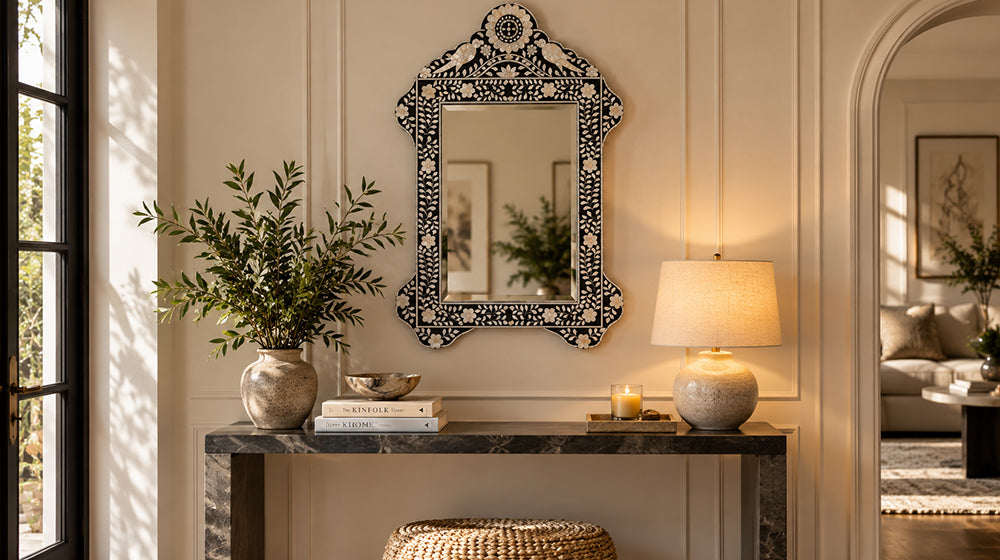
In a living room, a decorative mirror is most effective placed opposite or adjacent to the main seating area, where it reflects either a window's natural light or a feature of the room worth doubling, such as an interesting ceiling fixture or a piece of art on the opposite wall. Above a console table or sideboard is the most common placement, and it's a reliable one: the mirror and the console read as a coordinated pairing rather than two unrelated pieces competing for wall space.
Bedroom
A bedroom mirror carries more day-to-day function than an entryway or living room piece, since it's used for dressing and grooming as well as decoration. A mid-sized bone inlay or mother of pearl mirror above a chest of drawers or dressing table works well for this dual purpose. For a bedroom with the space to accommodate it, a full-length piece such as the Iris Mirror placed on a clear wall, rather than behind the door, gives a genuine dressing mirror while still functioning as the room's decorative anchor.
Sizing a Wall Mirror Correctly
Getting the proportions right is what separates a mirror that looks intentional from one that looks like it was chosen without much thought. As a general rule, a decorative mirror hung above a console, sideboard, or dresser should measure roughly two-thirds to three-quarters of the furniture piece's width. Going wider than the furniture beneath it can make the whole arrangement look top-heavy, while going much narrower can make the mirror look like an afterthought rather than a deliberate pairing.
Height above the furniture matters just as much as width. Leave roughly 15 to 20 cm of clear wall space between the top of the console or dresser and the bottom edge of the mirror. Too little space crowds the pairing, while too much creates an awkward visual gap that neither piece anchors.
For a standalone mirror not paired with a piece of furniture beneath it, such as a full-length Iris Mirror placed on an open wall, the main sizing consideration is ceiling height and surrounding wall space rather than a furniture reference point. A 200 cm mirror needs a wall with enough clear height above and below it that the piece doesn't read as crammed into the available space.
For a smaller accent mirror, such as the Yasmine, Trikon, or Inayat, sized more for a hallway nook or a gap between two windows than a full furniture pairing, the sizing logic flips: rather than matching a piece of furniture, match the available wall gap, leaving a visible margin of at least 10 to 15 cm on every side so the mirror reads as a deliberate placement rather than a piece wedged into the only available space.
Shape and What It Changes
Rectangular mirrors are the most common shape for a reason: they're the most straightforward to size against furniture with straight edges, and a full-length rectangular mirror like the Iris does double duty as both a decorative piece and a genuinely useful dressing mirror. But shape is worth considering deliberately rather than defaulting to rectangular.
A round mirror softens a room that's otherwise dominated by straight lines, square furniture, rectangular art frames, a grid-patterned rug, and this contrast is often what makes a round mirror feel more considered than a rectangular one in the same spot. Round mirrors also tend to work well as a smaller accent piece in a gallery-style wall arrangement, where their shape breaks up a run of rectangular frames.
An oval or arched mirror sits between the two, offering a softened silhouette with more surface area than a fully round mirror of similar width. This shape suits a narrower wall where a full rectangle would feel boxy but a round mirror would leave too much unused wall space around it.
How to Style a Statement Mirror Once It's Hung
A mirror doesn't need much additional styling around it, since the frame itself is the decorative element, but a few placement decisions determine whether it reads as intentional or accidental.
Avoid hanging a decorative mirror directly opposite another mirror, since this creates a repeated reflection of the frame's pattern that reads as visually busy rather than considered. If the room has more than one reflective surface, position the decorative piece on a wall perpendicular to the other mirror rather than facing it.
Lighting placement matters more for an inlay mirror than a plain one. Mother of pearl in particular needs light hitting the frame from an angle, whether from a window, a wall sconce, or a table lamp positioned beside rather than only above the mirror, to show its iridescent quality properly. A mirror placed under a single downlight with no side light will still function as a mirror but won't show its frame at its best.
Resist the instinct to hang additional decoration directly around the mirror. A frame with a hand-set pattern is already carrying visual interest, and stacking smaller art pieces or shelving directly beside it tends to compete with rather than complement the mirror's own detail. A single console beneath it, or a pair of wall sconces flanking it, gives the frame room to be the focal point without the arrangement feeling cluttered.
Maintaining a Hand-Inlaid Mirror Long Term
Care for these pieces is straightforward but worth knowing before you buy, since it differs slightly from maintaining a plain glass or metal-framed mirror. Regular dusting with a soft, dry microfiber cloth is enough for most upkeep. For occasional deeper cleaning, a lightly damp cloth can be used on the frame as long as it's dried immediately afterward, since leaving moisture sitting on the inlay surface for any length of time isn't good practice regardless of the material.
Avoid harsh chemical cleaners, abrasive pads, and acidic cleaning products on the frame specifically. These won't damage the mirror glass itself, but they can dull the inlay's natural sheen over time in a way that wouldn't show on a plain frame. If the piece will hang somewhere it's likely to be bumped or brushed against, such as a narrow hallway, consider that the raised inlay surface, particularly on bone inlay pieces with a more textured pattern, is slightly more exposed to incidental contact than a flat, glass-fronted mirror would be, and position it accordingly.
Final Thoughts
A decorative wall mirror earns its wall space by doing more than reflecting the room back at you. Choosing one in hand-set bone inlay or mother of pearl, sized correctly against the furniture or wall it will occupy and positioned to catch available light, turns a functional object into one of the more distinctive pieces in the room. The frame carries the design weight; getting the size, shape, and placement right is what lets it actually do that job.
Frequently Asked Questions
What is the difference between a bone inlay and a mother of pearl wall mirror?
Both use the same hand-inlay technique, setting small material pieces into a resin bed over a wood frame, but bone inlay produces a matte, ivory-toned finish while mother of pearl uses iridescent shell that shifts colour and shine with the light and viewing angle. Bone inlay tends to read as warmer and more understated, while mother of pearl reads as more overtly glamorous.
How big should a decorative mirror be above a console table?
A mirror roughly two-thirds to three-quarters of the console's width tends to look proportional, with about 15 to 20 cm of clear wall space between the top of the console and the bottom of the mirror. Going significantly wider than the console beneath it makes the pairing look top-heavy.
Can a handcrafted mirror be hung in a hallway or narrow space?
Yes, and a hallway is often one of the best places for one, since it's a transition space with less furniture competing for attention. A narrower or oval-shaped mirror suits a tighter hallway better than a wide rectangular piece, which needs more clear wall width to avoid feeling cramped.
Is it normal for a hand-inlaid mirror to look slightly different from the product photo?
Yes. Because each piece is set by hand, individual bone or shell segments vary slightly in size and spacing from one mirror to the next, even within the same colourway. This is a feature of genuine handcraft rather than a defect, though it's worth factoring in if you're ordering two pieces expecting an identical match.
Should a decorative wall mirror match the room's existing metal or wood tones exactly?
Not necessarily, and an exact match often looks flatter than a deliberate contrast. A cream or white bone inlay frame works well against warm wood tones without matching them precisely, while a black and white mother of pearl frame can add contrast to a room with lighter walls rather than needing to echo the existing palette.


Leave a comment
This site is protected by hCaptcha and the hCaptcha Privacy Policy and Terms of Service apply.