




You have picked the perfect wall in your living room, and now you are trying to figure out whether the piece of furniture you need is called a sideboard, a cabinet, or something else entirely. Every listing site seems to use the terms differently, and half the search results answer a slightly different question than the one you actually asked. If you are wondering what is a sideboard and whether it is the right fit for a UAE or GCC home, the short answer is that it is one of the most flexible storage pieces you can buy, provided you understand what actually separates it from the broader category of cabinets.
What Is a Sideboard, Exactly?
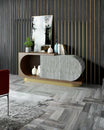
A sideboard is a long, low storage piece, typically standing between 71 and 91 cm tall, built with a flat top surface and a mix of cabinet doors, drawers, or open shelving underneath. The sideboard meaning traces back to 18th-century England, where a plain board or table was placed to the side of a dining room and used to hold dishes during a meal. Over time, that plain board grew drawers, cabinet doors, and decorative legs, and the name stuck even as the piece evolved into full storage furniture.
Unlike a dedicated dining piece, a sideboard was never confined to one room. Its horizontal shape and moderate height make it just as functional in a living room, hallway, or bedroom as it is beside a dining table, which is a large part of why the term shows up across so many different furniture categories online.
A Brief History of the Sideboard
The earliest sideboards were closer to furniture in name only. In Georgian England, a plain wooden plank set on trestles was placed against a dining room wall so that servants had somewhere to rest dishes between courses, keeping the main table clear for the meal itself. As dining etiquette grew more formal through the Georgian and Victorian periods, that plank gained drawers for cutlery, cupboards for linens, and eventually decorative legs and carved detailing that reflected the household's status as much as its practical needs.
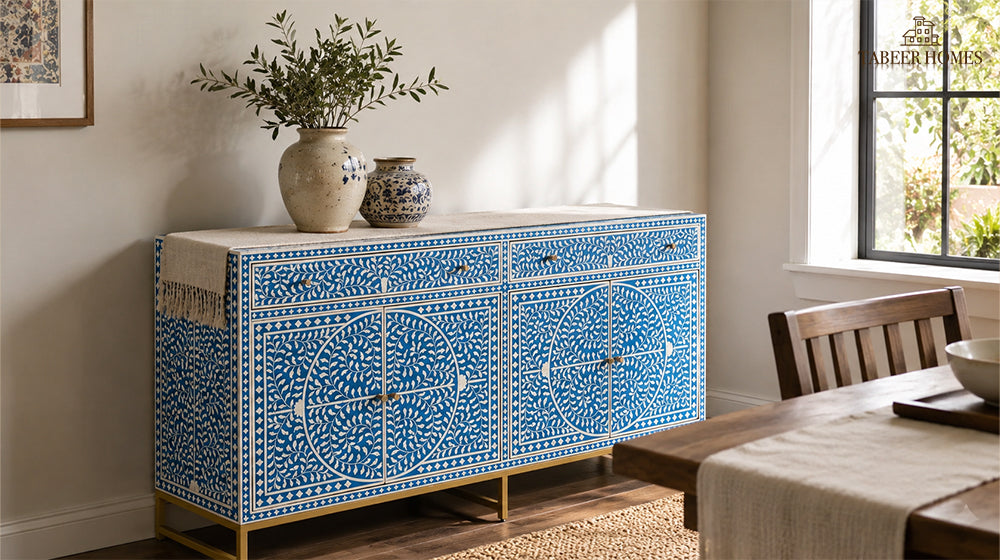
By the 20th century, the sideboard had migrated well beyond the dining room. Mid-century design movements reworked the piece with cleaner lines, tapered legs, and sliding doors, making it equally at home in a living room or a hallway. That shift is part of why the sideboard sold today looks so different depending on the style era it borrows from, ranging from ornate bone inlay pieces rooted in centuries-old Rajasthani inlay techniques to minimalist lacquered versions built for compact, modern apartments. The function stayed remarkably stable across all of these changes: a long, low surface with enclosed storage underneath, built to sit quietly against a wall until it is needed.
Sideboard Vs Cabinet: Why the Terms Get Mixed Up
The confusion between these two terms comes down to specificity rather than any real disagreement about what a sideboard looks like. A cabinet is the broad, general term for any piece of storage furniture enclosed by doors, and it covers everything from a tall bathroom cabinet to a low media cabinet. A sideboard is a specific type of cabinet: long, low, and horizontal, with a defined proportion that a generic cabinet does not share.
The table below lays out the practical sideboard vs cabinet distinction in terms you can actually use while shopping.
|
Feature |
Sideboard |
Cabinet (General Term) |
|
Height |
71 to 91 cm |
Ranges from 60 cm to over 200 cm |
|
Shape |
Long, low, horizontal |
Varies widely, tall or short |
|
Legs |
Short legs or floor-level base |
Varies by design |
|
Room association |
Dining room, living room, hallway |
Any room, no fixed association |
|
Typical contents |
Tableware, linens, display items |
General storage of any kind |
In practice, every sideboard is a cabinet, but not every cabinet is a sideboard. If a listing calls a tall, narrow storage unit a cabinet, that is accurate use of the broader term. If it calls a long, low, waist-height piece a cabinet instead of a sideboard, it is still technically correct, just less specific than it could be.
What Is a Sideboard Cabinet Used For?
A sideboard cabinet earns its place in a home through a wider range of jobs than most buyers expect when they first start shopping for one. Understanding the full list of sideboard uses helps you decide which internal layout, drawers versus open shelving versus a mix, actually fits how you plan to use the piece.
- Dining room storage and serving. The most traditional use, holding plates, glassware, cutlery, and table linens while doubling as a serving surface during meals and gatherings.
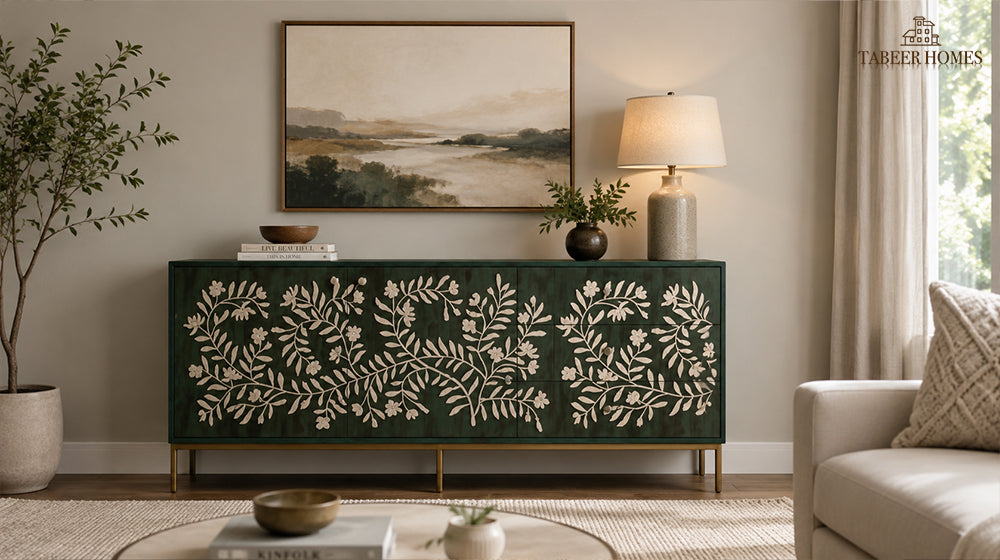
- Living room organization. A sideboard hides remote controls, board games, spare cables, and seasonal décor behind closed doors, while the top surface displays lamps, art, or a plant.
- Entryway catch-all. Placed near the front door, a sideboard becomes a landing spot for keys, mail, and outdoor accessories, keeping the entrance tidy without looking like obvious storage.
- Bedroom storage. A shallower sideboard can substitute for a low dresser, holding folded clothing or accessories while providing a surface for a mirror, tray, or lamp.
- Home office support. In smaller apartments where a dedicated study is not available, a sideboard along one wall holds files, stationery, and printer supplies while doubling as a credenza-style desk surface.
Common Sideboard Sizes and How to Choose
Sideboard dimensions vary more than buffet dimensions do, since sideboards serve so many different rooms. Knowing the typical ranges helps you shop by measurement rather than by category label alone.
- Height : 71 to 91 cm is standard, with pieces at the lower end feeling more casual and pieces closer to 90 cm reading as more formal, dining-oriented pieces.
- Depth : Most sideboards run 40 to 50 cm deep, though slimmer entryway or hallway versions can go as shallow as 35 cm.
- Width : Sideboards range widely, from compact 120 cm units for smaller rooms to statement pieces well over 180 cm for large dining or living room walls.
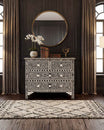
Tabeer Homes' Eve Cabinet measures 160 cm wide, 40 cm deep, and 90 cm tall, built with a black bone inlay geometric pattern on a mango wood frame with brass-finish metal legs, and its depth sits toward the shallower end of the standard range, making it a workable option for rooms where floor space is tighter. The Jade Sideboard Buffet runs 175 cm wide in a white bone inlay pattern with a spacious interior cabinet and single shelf, suited to a larger dining or living room wall that can accommodate a wider footprint.
Matching Sideboard Depth to Room Type
A dining room sideboard can comfortably run toward the deeper end of the range, since the room is built around the piece being used actively during meals. A living room or hallway sideboard often benefits from a shallower profile, since these spaces tend to have more foot traffic passing directly beside the piece rather than in front of it.
Sideboard Sizes for Apartments Versus Villas
Room scale changes what "standard" should mean in practice. In a Dubai or Abu Dhabi apartment with a compact dining nook, a sideboard closer to 120 to 140 cm wide keeps the room feeling proportional and leaves enough clearance around a smaller table. In a villa with a larger, more formal dining or living space, a sideboard in the 160 to 200 cm range reads as appropriately scaled rather than lost against a longer wall. Depth should scale down slightly in the apartment scenario as well, favoring the 35 to 40 cm range over the fuller 50 cm depth that a villa dining room can accommodate without feeling tight.
Storage Configurations: Drawers, Doors, and Open Shelving
The internal layout of a sideboard matters as much as its exterior dimensions, since it determines what the piece can actually hold day to day.
- Drawers work best for smaller, loose items like cutlery, table linens, or coasters, since they keep contents visible and easy to sort compared to a deep cabinet.
- Enclosed cabinet doors suit bulkier items such as serving platters, table runners, or seasonal decor that does not need frequent access, and they keep the front of the piece visually clean.
- Open shelving works well when the sideboard doubles as a display piece, letting you show off glassware, books, or ceramics without opening a door, though it does require more regular dusting than enclosed storage.
- Mixed configurations , a combination of one or two drawers over cabinet doors, tend to be the most versatile choice for a household that needs both quick-access storage and larger enclosed space in the same piece.
A three or four door sideboard cabinet generally offers the deepest enclosed storage, useful for households that entertain often and need to keep a full dinner service, extra linens, and serving trays all in one place. A two door design with a drawer above tends to suit smaller households or rooms where the sideboard serves a lighter, more decorative role.
Styling a Sideboard: Design Principles That Actually Work
A sideboard's flat top is one of its biggest design assets, and a handful of simple principles separate a styled surface from a cluttered one.
Symmetry and Height Variation
Anchoring the space above a sideboard with a large mirror or a piece of art creates an instant visual center, especially when paired with a lamp or candle stand on either side for balance. On the surface itself, grouping objects of different heights, a tall vase next to a lower dish or a stack of books, keeps the arrangement from looking flat, while placing the tallest pieces toward the outer edges and slightly lower items toward the center creates a natural sense of flow across the length of the piece.
Layering Objects in Groups of Three
Odd numbers tend to read as more intentional than even ones when arranging décor, so grouping three objects, a candle, a small sculpture, and a low bowl, generally looks more considered than lining up two or four items evenly. This applies whether the sideboard sits in a dining room, living room, or entryway.
Seasonal and Occasion Styling
A sideboard is also one of the easiest pieces of furniture to restyle for a specific occasion without committing to permanent decor changes. For a Ramadan or Eid gathering, this might mean clearing the surface back to a clean base layer, then building the arrangement back up with lanterns, a runner, and a small crescent moon or star accent, always keeping the tallest pieces toward the ends so the display does not feel top-heavy in the middle. The same layering principle works for any seasonal refresh, only the specific accessories change.
Choosing the Right Finish for a Sideboard Cabinet
Finish affects both the visual weight of a sideboard and how much upkeep it needs over time.
- Solid wood with a natural or lacquered finish offers a warm, classic look and is generally the lowest-maintenance option, needing only regular dusting and occasional polishing.
- Bone inlay and mother of pearl finishes bring intricate, handcrafted patterns using bone or shell set into resin on a wood base, and they require gentler cleaning, a soft dry cloth for dusting and a slightly damp cloth for deeper cleaning, along with placement away from direct sunlight and high humidity.
- Mirrored panel finishes use beveled glass instead of solid inlay, which reflects light and works well in rooms that need to feel brighter or larger, at the cost of some of the tactile warmth of wood or inlay.
- Marble-topped sideboards pair a wood or inlay base with a marble surface, adding a cool, durable serving area that resists heat marks better than lacquered wood, though it needs quick cleanup of acidic spills to avoid surface etching.
Sideboard Placement Mistakes to Avoid
Getting the piece right on paper does not always translate to getting the placement right in the room, and a few recurring mistakes account for most regretted purchases.
- Placing a sideboard directly under a low window. This limits how tall a piece you can choose and often forces a compromise on storage capacity that a slightly different wall would have avoided.
- Blocking a doorway swing or walkway. Even a well-proportioned sideboard can make a room feel cramped if its depth eats into the clearance needed for door swings or foot traffic.
- Choosing a finish that clashes with the room's existing wood tones. A heavily patterned bone inlay piece can compete with an already busy room, while a plain finish can underwhelm a room built around statement furniture.
- Ignoring humidity exposure for inlay pieces. Placing a bone inlay or mother of pearl sideboard directly beside an AC vent or a frequently opened balcony door accelerates wear on the resin and inlay over time.
- Underestimating how much surface styling space is needed. A sideboard packed edge to edge with decor items loses the clean, layered look that makes styling effective in the first place.
Sideboard Vs Buffet Vs Console: A Fast Decision Guide
Since sideboards sit at the center of a wider family of similar furniture, a quick comparison helps place them relative to their closest relatives.
- Sideboard vs buffet : A buffet is typically taller (86 to 97 cm) and built specifically for standing food service, while a sideboard sits lower and serves a broader, more general storage role. For the full breakdown, see our guide on what a buffet table actually is and how it differs from a sideboard .
- Sideboard vs console : A console table is typically shallower and narrower, designed for entryways and hallways where floor space is limited, and it usually offers less enclosed storage than a sideboard. Our comparison of sideboard buffet cabinets against console tables covers this in more depth for living room use specifically.
- Sideboard vs cabinet : As covered above, every sideboard is a cabinet, but the term cabinet on its own does not tell you the shape, height, or room association the way sideboard does.
Bringing It All Together
A sideboard earns its place in a home precisely because it refuses to be pinned to one room or one job. It stores dinnerware in a dining room, hides clutter in a living room, and catches keys and mail in an entryway, all without changing its basic shape. The piece that actually works for your space is the one sized correctly for the room it sits in, finished in a material that matches how much upkeep you are willing to do, and styled with enough restraint that the top surface reads as curated rather than crowded. Whether you land on a bone inlay piece, a plain lacquered finish, or a mirrored panel design, checking the stated dimensions against your actual wall and room type will do more for the final result than choosing based on the category label alone.
Frequently Asked Questions
What is a sideboard used for?
A sideboard stores tableware, linens, and household items behind closed doors or drawers, while its flat top surface works as a display area or a serving station during meals and gatherings.
What is the difference between a sideboard and a cabinet?
A cabinet is the general term for any enclosed storage furniture, while a sideboard is a specific type of cabinet defined by its long, low, horizontal shape and typical height of 71 to 91 cm.
Is a sideboard the same as a buffet?
Not quite. A buffet is generally taller, standing 86 to 97 cm, and built for standing food service, while a sideboard sits lower and serves a more general storage and display role across multiple rooms.
Can a sideboard be used outside the dining room?
Yes. Sideboards work well in living rooms for hiding clutter, in entryways as a catch-all for keys and mail, and in bedrooms as a lower alternative to a dresser.
What is the standard height of a sideboard cabinet?
Most sideboards measure between 71 and 91 cm tall, sitting lower than a true buffet, which is typically built a few centimeters taller for standing service.
How do you style the top of a sideboard?
Group objects in odd numbers with varied heights, anchor the wall above with a mirror or art, and leave enough open surface so the arrangement reads as intentional rather than cluttered.

Leave a comment
This site is protected by hCaptcha and the hCaptcha Privacy Policy and Terms of Service apply.