


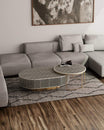
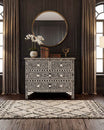
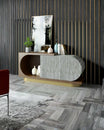
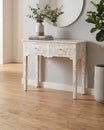
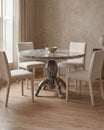

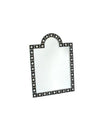

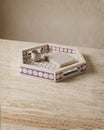
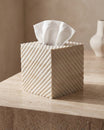
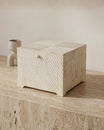


Looking at a photograph will not tell you whether bone inlay furniture is the real thing. A printed surface can reproduce a pattern convincingly on screen, and a well-made piece can look plain in a bad photograph. That is why the checks below rely on construction, surface behaviour and clear answers from the seller, and they give little weight to how impressive the pattern looks.
This guide explains how real bone inlay is made, what imitations tend to be, ten checks you can run in a showroom or from photographs and video, questions to put to any seller, and tests you should avoid. It is written for UAE buyers comparing luxury furniture brands and shopping for luxury furniture online , where you often decide before you can touch the piece.
How Authentic Bone Inlay Furniture Is Made
Craft guides and makers describe the process in similar steps, though details vary by workshop.
- The wood body. A frame is built from seasoned hardwood. Mango, sheesham and teak are commonly mentioned. Tabeer's product pages name mango wood on many pieces.
- Preparing the bone. Bone is cleaned, bleached and sliced into thin sheets.
- Laying out the pattern. The design is marked on the wood.
- Cutting. Individual bone pieces are cut to shape by hand.
- Setting. Each piece is fixed into the wood in its position.
- Filling. Coloured resin fills the gaps between the pieces.
- Sanding. The surface is sanded until bone and resin are flush.
- Finishing. A protective finish is applied.
Two points surprise buyers. The first is that resin is part of the genuine process. Its presence does not mean a piece is fake. The second is that sources disagree on the type of bone. Some makers and retailers describe buffalo bone, others camel bone and others cow bone. Tabeer's pages list the material as bone and do not state the animal for each piece, so if the source matters to you, ask the seller directly.
What Imitations Usually Are
An imitation is a piece that looks like inlay without being made the same way. These are the common types, described in general terms and not about any particular seller.
Printed or laminated surfaces. A photographic pattern is applied to a flat board, often MDF or particleboard, and sealed. It can look sharp, but the surface is uniform because nothing was set into it.
Moulded or cast faux inlay. Pieces are cast from plastic or resin to resemble bone and fixed or moulded into a panel. The result can be regular and repetitive.
Inlay on weak construction. Real bone inlay on a poorly built body is a separate problem. The surface may be real while the frame, joints and drawers are weak, so the piece disappoints anyway.
Vague "inlay finish" labels. Some listings use the language of inlay with no mention of the actual materials.
The categories overlap, and you can often only tell by looking closely, which is why the checks below matter.
Ten Checks for Authentic Bone Inlay Furniture
1. Run Your Fingertip Across the Surface
Move a fingertip slowly across the top. In genuine inlay, the bone and resin are sanded flush, so the surface feels smooth, but you may notice very slight differences where materials meet. A printed surface feels uniformly flat and often slightly glossy, like a laminate.
2. Look Under Raking Light
Hold the piece at an angle to a window or a phone torch. Bone and resin reflect light differently, so the edges of each piece usually show as fine lines or subtle shifts in sheen. A printed surface reflects evenly across the pattern.
3. Study the Pattern Closely
Hand-cut bone shows small differences in the shape, thickness and tone of each piece. Look at repeated motifs. Slight variation between repeats is expected in handcrafted work. A pattern that repeats with perfect, identical precision across a large surface may be machine-made.
4. Check the Edges and Corners
Where the pattern meets the edge of a table top, a drawer front or a door, handcrafted inlay is usually trimmed neatly, with the pattern continuing or ending cleanly. Look for printed patterns that wrap awkwardly around edges, or a visible seam where a sheet has been applied.
5. Feel the Weight
A solid wood body with inlay is heavy for its size. A piece that feels surprisingly light for its dimensions may be built on thin board. If you are in a showroom, lift one corner. If you are buying online, ask for the weight.
6. Knock on a Panel
Knock on a side panel with your knuckle. Solid wood sounds dense. Hollow or thin board sounds hollow. This is a rough guide only, since some solid pieces use panelled construction, but it helps in comparison between two pieces.
7. Open a Drawer and Inspect the Joints
Pull out a drawer and look at the corners. Interlocking joints such as dovetails suggest traditional construction. Staples, visible glue lines and butt joints suggest quicker production. Also check how smoothly the drawer runs and whether the interior is finished.
8. Look at the Back and Underside
Mass-produced pieces often have a rough or plain back panel. Handcrafted pieces are usually finished more evenly. Ask for a photograph of the underside and the back if you buy online.
9. Check the Hardware and Finish
Look at the handles, knobs and legs. Tabeer's pages mention carved bone knobs on some pieces and brass-finish metal legs on others. Poor hardware, thin plating and uneven lacquer suggest corners were cut.
10. Read the Price and Lead Time Together
A very low price on a large, fully inlaid piece deserves questions, because the work is labour-intensive. A long lead time, such as the 6 to 10 weeks Tabeer's policy states for pre-orders, is consistent with made-to-order handcraft. Neither is proof, but both are clues.
Authentic vs Imitation: Quick Comparison
|
Check |
Authentic bone inlay |
Likely imitation |
|
Surface |
Smooth, with slight differences between materials |
Uniformly flat, often glossy |
|
Raking light |
Fine edges visible between pieces |
Even sheen across the pattern |
|
Pattern |
Small variations between repeats |
Identical repeats |
|
Edges |
Neat trimming, pattern continues or ends cleanly |
Visible seams, awkward wrapping |
|
Weight |
Heavy for its size |
Light for its size |
|
Knock test |
Dense sound |
Hollow sound |
|
Drawers |
Joinery visible and tidy |
Staples, butt joints |
|
Back and base |
Finished evenly |
Rough or plain |
|
Materials listed |
Bone, resin, named wood |
"Inlay finish" with no details |
|
Price |
Consistent with labour |
Far below similar pieces |
No single row is conclusive. Look for a pattern across several.
Tests to Avoid
You may read advice online recommending that you test a piece with heat, a pin or a solvent. Avoid these on any furniture you own or plan to buy.
Heat tests. Pressing a hot pin into the surface can burn the finish and leave a permanent mark.
Scratch tests. Scratching with a key damages the surface.
Solvent tests. Acetone or other solvents can strip finishes and discolour resin.
Tabeer's care guidance advises against harsh chemicals, abrasive cleaners and acidic substances, and all sales are final under its refund policy, so a damaging test on a delivered piece is risky. The non-destructive checks above are enough to separate most imitations from real work. For confirmation beyond that, ask the seller for documentation.
A Ten-Minute Showroom Routine
If you can visit a showroom, a short routine covers most of the checks without damaging anything.
Minute one to two. Stand back and look at the whole piece in the showroom light. Note whether the pattern looks too perfect or too flat.
Minute three to four. Walk up and run a fingertip across the top and along an edge. Notice whether the surface feels set and whether the edge is trimmed neatly.
Minute five. Tilt your head or move so the light rakes across the surface. Look for fine lines where the pieces meet.
Minute six. Lift one corner or push the piece gently. Judge the weight against its size.
Minute seven. Knock on a side panel and listen.
Minute eight to nine. Open a drawer or door, check the joints and look at the interior finish. Look underneath and behind if you can.
Minute ten. Ask the questions below and write down the answers.
Do the same routine on two or three pieces from different sellers. Comparison teaches you far more than a single inspection, because you learn what your own eyes and hands register as normal.
What to Ask the Seller
Whether you buy in a showroom or from luxury furniture online stores, put these questions in writing and keep the answers.
- What exactly is the surface made of? Ask for the inlay material to be named.
- What is the frame made of? Ask whether it is solid wood or engineered board, and which species.
- Where was it made, and is the work done by hand?
- What are the exact dimensions?
- How many drawers and doors does it have, and how are the drawers constructed?
- Can you send close-up photographs of the edges, corners, back and drawer interiors?
- What is the lead time, and is the price for the exact piece shown?
- What are the delivery, assembly and return terms?
- Can you tell me the source of the bone, if that matters to me?
A seller who answers clearly and consistently earns more trust than one who answers with adjectives.
What Tabeer's Product Pages State
Tabeer's product pages list materials as bone, resin, wood and, on some models, metal. Several pages say the pieces use mango wood, and some describe a solid wood frame. Pages describe the work as handcrafted, and the policy treats slight variation in pattern and tone as part of that craft.
Pages do not state the animal source of the bone for each piece, and they do not publish the wood species for every piece. A few pages also contradict themselves on details such as materials, colours or stock status, so confirm specifics with the team before ordering. If you want the bone source, the wood species or a close-up photograph of a specific piece, ask Tabeer, and apply the same questions to any other seller.
Buying Luxury Furniture Online Without Touching It
You cannot knock on a panel through a screen, but you can still verify a lot.
Request photographs. Close-ups of the edges, corners, drawer interiors and the back.
Request a short video. Ask for the piece to be moved in the light so you can see the inlay reflect.
Compare dimensions. Check them against your space and against the weight.
Read the policy. Delivery times, returns and damage reporting. Tabeer's policy states all sales are final, with returns only for verified damage reported within 24 hours of delivery, so inspect the piece promptly on arrival.
Check the page for contradictions. If the stock label, price or size varies on the same page, ask for clarification.
Our guide to buying luxury furniture online in the UAE walks through the process in full, and our guide to judging handcrafted furniture quality covers delivery-day checks.
What to Look for in Luxury Furniture Brands
When you shortlist luxury furniture brands , authenticity signals sit in the way a brand communicates as well as in the product.
Named materials. The brand states the inlay material, the frame and the wood.
Real dimensions. Every page lists them.
Clear policies. Delivery, lead time, returns and damage terms are stated.
Consistent pages. Prices, sizes and stock labels agree across the page.
Willingness to answer. The team replies to specific questions with specific answers.
Our guide to luxury furniture brands in the UAE lists the criteria in detail, and our price guide explains how to read discounts and compare costs.
Reading Listings and Photographs Critically
Most buyers meet a piece through a listing first, so train your eye on what the listing shows and leaves out.
Look at how many photographs there are and what they show. A listing with only one studio shot of the front is harder to judge than one with close-ups of the edges, the drawers and the legs. Look for a mix of styled room photographs and plain product photographs, since styled images flatter and plain ones inform.
Read the description for specifics. Phrases such as "handcrafted" and "premium" carry no information on their own. Named materials, stated dimensions and described construction do. If a description repeats adjectives without naming a single material, treat that as a gap.
Compare the page against itself. The title, the colour, the size, the stock label and the delivery window should agree. When they do not, ask which version is correct before you pay.
Authentic Does Not Mean Well Made
Even the best bone inlay furniture can disappoint if the construction is weak. A piece can use real bone and still let you down if the frame is weak, the joints are poor or the finish is thin. Check the construction as carefully as the surface. Look at how the legs attach, whether the top is flat, whether drawers run squarely and whether doors close without gaps. The best bone inlay furniture combines a genuine inlay surface with a solid body and careful finishing.
Caring for Authentic Inlay
Tabeer's care guidance applies to most inlay pieces. Dust regularly with a soft, dry microfiber cloth. If a spill occurs, wipe with a slightly damp cloth and dry immediately. Avoid harsh chemicals, abrasive cleaners and acidic substances. Use coasters, placemats or protective pads to prevent scratches, heat marks and stains. Keep the piece away from long, direct sun and air conditioning vents.
Common Mistakes
Trusting the photograph. Printed patterns can look convincing on screen.
Treating resin as a red flag. Resin is part of authentic inlay.
Relying on a single test. Look for a pattern across several checks.
Using destructive tests. Heat, scratching and solvents can damage a piece for good.
Skipping the questions. Put the questions in writing and keep the replies.
Ignoring the frame. A real surface on a weak body is a poor purchase.
Final Thoughts
Authentic bone inlay furniture shows itself in small things: a surface that feels set rather than printed, edges that catch the light, patterns with the slight variation of handwork, a heavy frame and drawers with real joinery. Combine those checks with specific answers from the seller and a clear policy, and you can buy with confidence from luxury furniture brands or luxury furniture online sellers alike. When in doubt about any bone inlay furniture listing, ask for close-up photographs, put your questions in writing and inspect the piece promptly on delivery.
Frequently Asked Questions
How can I tell if bone inlay furniture is real?
Combine several checks: the feel of the surface, raking light, small variations in the pattern, neat edges, weight, the sound of a panel, drawer joints and a clear materials list from the seller.
Is resin in bone inlay a sign of a fake?
No. Coloured resin fills the gaps between bone pieces in genuine inlay. A piece described as inlay with no mention of bone is a more reliable warning.
What kind of bone is used?
Sources differ. Makers and retailers describe buffalo, camel and cow bone. Tabeer's pages list bone without naming the animal, so ask if it matters to you.
Is handmade bone inlay perfect?
No. Small variations in the pieces are expected. Tabeer's policy treats slight variation in pattern and tone as part of handcrafted work.
Should I test a piece with a hot pin?
No. It can burn the finish and leave a permanent mark. Use the non-destructive checks and ask the seller for documentation.
Can I verify bone inlay furniture online?
Partly. Ask for close-up photographs and a short video, request the dimensions and weight, read the policy and put your questions to the seller in writing.
What is the delivery time?
Tabeer's policy states 2 to 4 working days for in-stock pieces in the UAE and an estimated 6 to 10 weeks for pre-orders. Some product pages state 8 to 12 weeks, so confirm the date for your piece.

Leave a comment
This site is protected by hCaptcha and the hCaptcha Privacy Policy and Terms of Service apply.