









You measure your living room twice, order a coffee table you love in photos, and it arrives either swallowed by your sectional or towering over your sofa arms like an afterthought. This happens more often than most homeowners expect, and it rarely comes down to taste. It comes down to proportion. A coffee table is one of the few pieces of furniture that sits in direct visual and physical conversation with everything around it, so getting the size wrong throws off an entire room, no matter how well-chosen the piece itself is.
This guide breaks down exactly how to choose coffee table size based on your sofa, your room dimensions, and how you actually use the space, whether you're furnishing a Dubai apartment, a majlis-style living area in Riyadh, or a family home in Kuwait City.
Why Coffee Table Size Matters More Than Style
A coffee table that fits the room does two jobs at once: it anchors the seating arrangement and it stays out of the way of daily movement. Get the size wrong in either direction and both jobs suffer.
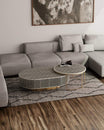
Undersized tables tend to look lost, especially against larger sofas or sectionals common in GCC living rooms designed for extended family gatherings. Oversized tables crowd walkways, make it hard to reach a cup of coffee without leaning awkwardly, and can make an otherwise spacious room feel tight. The right coffee table size guide isn't about a single ideal number. It's about a set of proportional relationships between the table, the sofa, and the room.
The Core Rule: Two-Thirds of Your Sofa Length
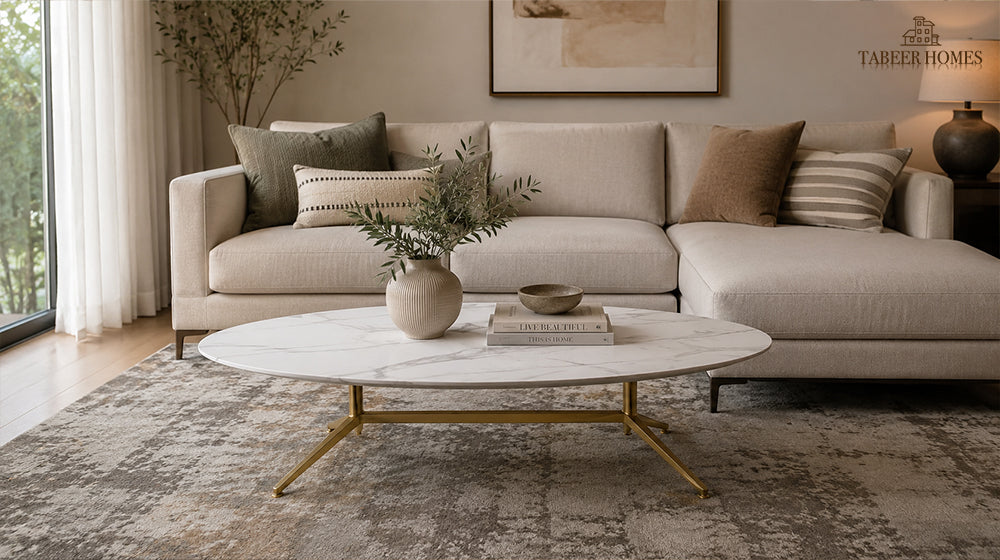
The most reliable starting point for how to choose coffee table size is the two-thirds rule. Your coffee table's length should measure roughly two-thirds the length of your sofa.
- A 200 cm sofa pairs well with a coffee table between 120 and 135 cm long
- A 240 cm sectional section facing the table works best with a table around 150 to 160 cm
- A compact 160 cm loveseat suits a smaller table in the 90 to 100 cm range
This ratio keeps the table visually balanced. Go much shorter and the table reads as an accessory rather than a centerpiece. Go much longer and it competes with the sofa instead of complementing it.
When the Two-Thirds Rule Bends
Open-plan living rooms in newer UAE developments often have wider sofas paired with sectionals or additional armchairs. In these layouts, the two-thirds rule still applies to the primary seating line facing the table, not the full combined seating width. Measure the sofa section the table will sit directly in front of, not every seat in the room.
Getting the Height Right
Coffee table height matters just as much as length, and it's the detail most people overlook until the table is already in the room.
The standard guideline is that your coffee table should sit within 5 cm of your sofa seat height, either slightly lower or level with it. Most sofas in the UAE and wider GCC market sit between 40 and 45 cm from the floor to the seat cushion, which puts most coffee tables in a comfortable 40 to 45 cm height range.
A table that sits noticeably lower than the sofa seat forces an awkward reach downward every time you set something down. A table that sits higher than the seat blocks sightlines across the room and can make the seating area feel closed in. This is a common issue with taller, more sculptural pieces such as certain marble or bone inlay designs, which is worth checking before you commit to a striking silhouette over a functional one.
How Much Clearance Space You Actually Need
Clearance is the distance between the edge of the coffee table and the surrounding furniture, and it determines whether a room feels comfortable to move through or constantly obstructed.
|
Clearance Zone |
Recommended Distance |
Why It Matters |
|
Table to sofa edge |
35 to 45 cm |
Close enough to reach items, far enough to walk past knees comfortably |
|
Table to walkway path |
At least 75 cm |
Standard width for a person to pass through without turning sideways |
|
Table to TV console |
200 to 250 cm |
Comfortable viewing distance for most screen sizes used in living rooms |
|
Table to side chairs |
30 to 40 cm |
Allows drinks and plates to be reached without leaning far forward |
A transition worth noting here: these figures shift slightly depending on whether the room is used mainly for daily lounging or for hosting, which is the next thing to think through before finalizing a size.
Matching Table Size to How You Use the Room
Not every living room serves the same purpose, and coffee table sizing should reflect actual use rather than a generic template.
- Daily lounging rooms benefit from a slightly larger, lower table that can hold a laptop, a tray, and a stack of books without feeling crowded. A rectangular or oval table between 120 and 150 cm works well here.
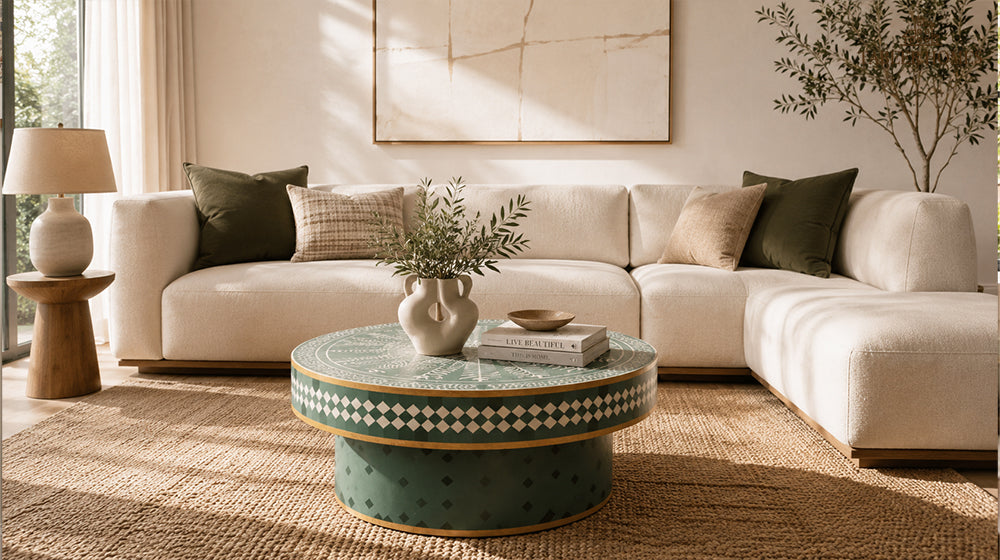
- Formal or hosting-focused majlis and living areas often do better with a round or square table, since guests approach seating from multiple sides and a table without sharp corners suits a circular seating arrangement.
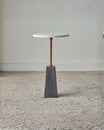
- Compact apartments and smaller sitting rooms call for a nesting set or a single table under 90 cm, which keeps the floor plan open while still offering a functional surface.
- Family rooms with children are usually safer with rounded edges and a slightly lower profile, reducing impact risk during everyday movement through the space.
Shape and Room Proportion
Coffee table for sofa pairings aren't only about length. Shape plays a role in how the table reads within the room's overall footprint.
Rectangular tables suit long, narrow rooms and straight sofa arrangements. Round and oval tables soften rooms with sharp architectural lines or L-shaped sectionals, since they reduce the number of hard corners in the walking path. Square tables work best when paired with square or symmetrical seating layouts, such as two facing sofas or a sofa paired with matching armchairs.
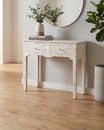
Material also affects how a table's size is perceived in a room. A marble-topped coffee table, for instance, tends to visually anchor a space more strongly than a lighter wood piece of the same footprint, simply because of its density and reflectivity. A bone inlay coffee table with intricate detailing draws the eye toward the surface pattern, which can make even a modestly sized piece feel like a focal point rather than just a functional surface. Tabeer Homes works with both marble and bone inlay coffee tables, and buyers choosing between the two often find that the material itself, not just the dimensions, changes how "right" a given size feels in the room.
A Quick Measuring Method Before You Buy
Before finalizing any coffee table size guide recommendation for your specific room, it helps to test the proportions physically rather than relying on numbers alone.
- Use painter's tape or newspaper to mark the table's footprint directly on the floor in front of your sofa
- Walk around the taped outline for a day to see whether it interferes with normal movement
- Sit on the sofa and check whether the outline sits at a comfortable arm's reach
- Adjust the taped size up or down by 10 to 15 cm until the proportions feel balanced against the sofa and room
This low-cost test catches sizing mistakes that measurements on paper sometimes miss, particularly in rooms with irregular layouts or multiple entry points.
Bringing It All Together
Choosing the right coffee table size comes down to three checks working together: the two-thirds length rule against your sofa, a height within 5 cm of your seat cushion, and enough clearance to move through the room without obstruction. Once those three proportions align, style and material become a matter of preference rather than guesswork. Whether you're furnishing a compact Dubai apartment or a spacious family majlis in Riyadh, getting the size right first makes every other design decision easier.
Frequently Asked Questions
1. What is the standard coffee table size for a living room?
Most living room coffee tables measure between 100 and 140 cm in length. The right size depends on your sofa's length, using the two-thirds rule as a starting benchmark for proportion.
2. How do I choose coffee table size for a small apartment?
For compact spaces, choose a table under 90 cm or a nesting set. This keeps walkways clear while still providing a functional surface for daily use.
3. What coffee table height works best with a standard sofa?
Aim for a table within 5 cm of your sofa's seat height, typically 40 to 45 cm. This keeps the surface easy to reach without blocking sightlines across the room.
4. How much space should be left between a coffee table and sofa?
Leave 35 to 45 cm of clearance between the table edge and the sofa. This distance allows comfortable reach while still leaving room to walk past without bumping knees.
5. Should a coffee table be higher or lower than the sofa seat?
A coffee table should sit level with or slightly lower than the sofa seat. Tables noticeably taller than seat height block views and can make the room feel closed in.
6. What shape coffee table works best for an L-shaped sectional?
Round or oval tables work best with L-shaped sectionals. They reduce sharp corners along the walking path, which matters more with sectionals that create multiple approach angles.
7. How do I pick a coffee table size for a large sofa?
Measure your sofa's length and target a table roughly two-thirds that size. A 240 cm sectional, for example, pairs well with a table around 150 to 160 cm long.
8. Is a round or rectangular coffee table better for small rooms?
Round tables often suit small rooms better since they eliminate corners that narrow the walking path. Rectangular tables work if the room itself is long and narrow.
9. How much walkway space should I leave around a coffee table?
Leave at least 75 cm between the table and any main walkway. This is the standard width needed for a person to pass through comfortably without turning sideways.
10. Does coffee table material affect how big it should be?
Material affects perceived size more than actual measurement. Dense materials like marble visually anchor a room more strongly, so a marble table can feel proportionate at a slightly smaller footprint than a lighter wood piece.

Leave a comment
This site is protected by hCaptcha and the hCaptcha Privacy Policy and Terms of Service apply.