


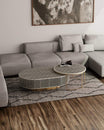
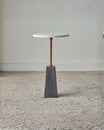
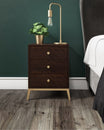
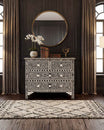


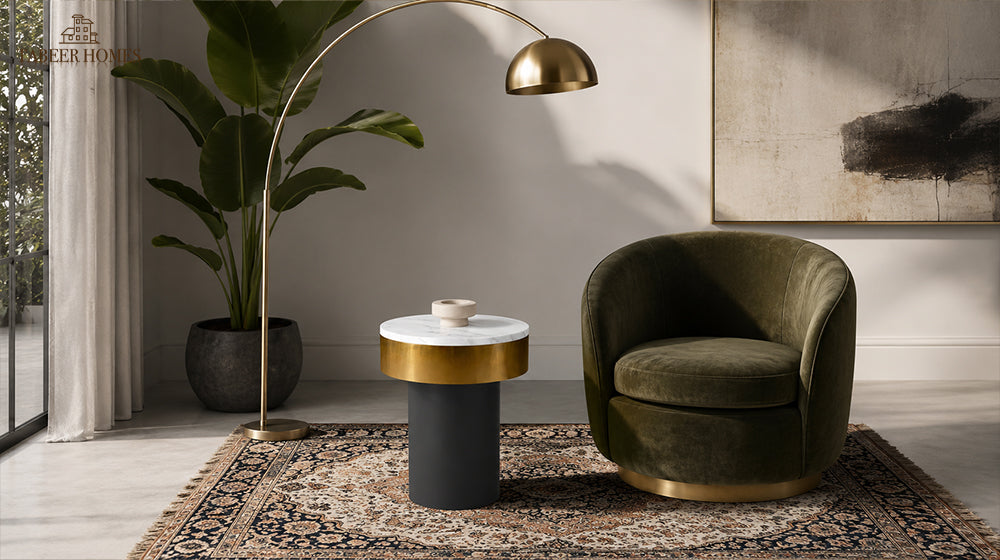
A round side table is the piece that solves a specific set of living room and bedroom problems better than any rectangular alternative: it fits into tight gaps without projecting corners into circulation paths, it suits curved sofas and L-shaped arrangements naturally, and it introduces a soft form into rooms full of hard edges. All of this is true. What is also true is that a round side table is harder to style well than a rectangular one, and most buyers discover this only after the piece is already in the room. The circular surface has no corners to anchor objects against, no defined front or back, and no natural division between the decorative zone and the functional zone. Everything placed on a round surface sits in equal visual exposure from every angle. Get the styling right and the piece looks composed and intentional from every direction. Get it wrong and it looks cluttered from three steps away. This guide covers how to get it right, alongside all the sizing, placement, and material decisions that determine whether a round side table works in a specific room before the styling question even arises.
Why a Round Side Table Presents a Specific Styling Challenge
The styling challenge of a round side table originates in its geometry. On a rectangular side table , objects placed at the back of the surface are visually separated from objects placed at the front. The corners of a rectangular surface create natural anchor points that give arrangements a sense of structure. The defined front edge closest to the seating and the back edge closest to the wall create a front-to-back visual hierarchy that organises the surface even when objects are placed informally.
A round side table has none of these built-in organising structures. Every edge is the front edge. There is no natural back. Objects placed anywhere on the surface are equally visible from the sofa, from the adjacent seating, and from the room entrance. This equal exposure is what creates the cluttered appearance when objects are placed without a clear compositional logic: because every item on the surface is equally prominent, a collection of casually placed objects reads as a cluster rather than an arrangement.
The solution is not fewer objects. It is a compositional approach that creates structure on the surface rather than relying on the surface's geometry to provide it. The tray method, the height variation rule, and the clear perimeter principle covered in the styling sections below impose that structure consistently across all round side table configurations, materials, and positions.
What Is a Round Coffee Table and How Does It Differ From a Round Side Table
What is a round coffee table and how does it differ from a round side table ? This question comes up consistently in UAE furniture searches and the answer affects which piece a buyer needs for their specific position.
A round side table is a small table intended to sit beside a sofa, armchair, or bed, positioned within arm's reach of a seated or reclined person. Its height targets the sofa arm or the mattress top, typically between 55 and 70 cm depending on the adjacent furniture. Its surface diameter is generally between 35 and 55 cm, which gives enough area to hold a lamp and one or two additional items. It serves one primary seating position rather than a full arrangement.
What is a round coffee table in contrast? A round coffee table is a larger piece intended to sit at the centre of a seating arrangement and serve every seated position around it. Its height targets the sofa cushion level rather than the arm height, typically between 40 and 50 cm. Its surface diameter is generally between 70 and 120 cm depending on the sofa length and arrangement scale. It serves the entire seating arrangement rather than one end position.
The functional distinction between the two is therefore height and scale. A round side table at 65 cm height placed at the centre of a seating arrangement is too tall for comfortable forward reach from a seated position. A large round coffee table at 45 cm height placed beside a sofa arm creates an awkward downward reach from the arm level. Each piece is designed for a specific position and the two are not interchangeable without checking whether the height works in the alternative position.
Where Do You Place a Round Coffee Table and Where Does a Round Side Table Go
Where do you place a round coffee table versus a round side table is a placement question that clarifies both pieces' roles in the room simultaneously.
Where do you place a round coffee table in a living room seating arrangement? At the centre of the arrangement, positioned so that every primary seating position, every sofa section and armchair, has equivalent reach to the nearest table edge. The gap between the sofa front and the table edge should be 35 to 45 cm. The table should sit fully within the rug beneath the seating arrangement, with at least the front sofa legs also on the rug. In an L-shaped arrangement, the round coffee table sits slightly toward the inner corner of the L rather than at the geometric centre of the rug, because the inner corner is the position where the table edge is closest to the greatest number of seated positions.
A round side table goes beside the sofa arm or beside the bed, not at the centre of the arrangement. The placement rule for a living room round side table is a gap of 10 to 25 cm between the sofa arm and the nearest edge of the table. This keeps the surface within natural arm's reach from a fully reclined sofa position without the table projecting further into the room than necessary. In a bedroom, a round side table used as a bedside piece sits 5 to 15 cm from the bed frame, with its surface level at or within 3 cm below the mattress top.
Bed Frame vs End Table: Understanding Where a Round Side Table Fits
The bed frame vs end table terminology question arises frequently in UAE furniture searches and causes unnecessary confusion when buyers are looking for side tables for specific positions. Clarifying the terminology before beginning any search makes the shortlisting process significantly more efficient.
A side table and an end table are the same category of furniture described by different regional retail terms. End table is the North American retail convention. Side table is the term used more broadly across UAE and Gulf markets as well as UK-influenced retail. Both describe a small table placed beside a sofa, chair, or bed. The buying criteria are identical regardless of the label.
The bed frame vs end table question in the context of a round piece specifically is whether a round side table designed for a bedside position will also work in a living room sofa position, or vice versa. The answer depends entirely on the height. A bedside round side table typically targets a height of 50 to 65 cm, which suits a mattress top at 47 to 68 cm. A living room round side table targeting the sofa arm height needs to fall within 5 cm of the specific sofa arm, which in most UAE sofas falls between 55 and 68 cm. These ranges overlap considerably, which means many side tables marketed as bedside pieces work equally well beside a sofa, provided the height falls within the sofa arm range. Measure both the sofa arm and the bedside height before assuming a piece designed for one position will not transfer to the other.
Sizing a Round Side Table: The Numbers That Matter
The height rule is the most important dimension for a round side table and the one most frequently ignored in favour of visual preference. A side table should sit within 5 cm of the sofa arm height in a living room position, or within 3 cm of the mattress top in a bedside position. These are not decorative guidelines. They are the measurements that determine whether the surface is reached naturally or awkwardly from the adjacent furniture, which in turn determines whether the piece gets used or starts being replaced by the floor and the sofa arm as the actual surfaces of daily habit.
Surface diameter is the second critical dimension. A round side table of less than 35 cm diameter is a decorative piece rather than a functional one in a living room sofa position. It cannot hold a lamp and a drink simultaneously without one item hanging over the edge. A diameter of 40 to 50 cm is the practical minimum for a sofa position that will hold a lamp alongside regular daily use items. A diameter of 50 to 60 cm suits a reading chair position where more items are consistently on the surface.
The base spread of a round side table is the dimension buyers least frequently check and most frequently regret not checking. A narrow base under a wide top, common in certain contemporary designs, creates a top-heavy piece that is susceptible to tipping when a drink is set down with any lateral motion. A base spread of at least 70 to 75 percent of the top diameter gives adequate stability on the tile and stone floors standard across UAE residential properties.
|
Position |
Ideal Height |
Minimum Diameter |
Recommended Diameter |
Minimum Base Spread |
|
Sofa arm side, single use |
Within 5 cm of sofa arm |
35 cm |
40 to 50 cm |
70% of diameter |
|
Sofa arm side, with lamp |
Within 5 cm of sofa arm |
45 cm |
45 to 55 cm |
70% of diameter |
|
Reading chair position |
Within 5 cm of chair arm |
45 cm |
50 to 60 cm |
75% of diameter |
|
Bedside position |
Within 3 cm of mattress top |
40 cm |
42 to 55 cm |
70% of diameter |
|
Corner lamp table |
65 to 80 cm |
30 cm |
35 to 45 cm |
65% of diameter |
The Three Styling Principles That Prevent Clutter on a Round Surface
The styling challenge of a round side table is solved by three principles applied consistently regardless of the piece's material, size, or position. These principles create structure on the surface that the round geometry does not provide on its own.
The Tray Method
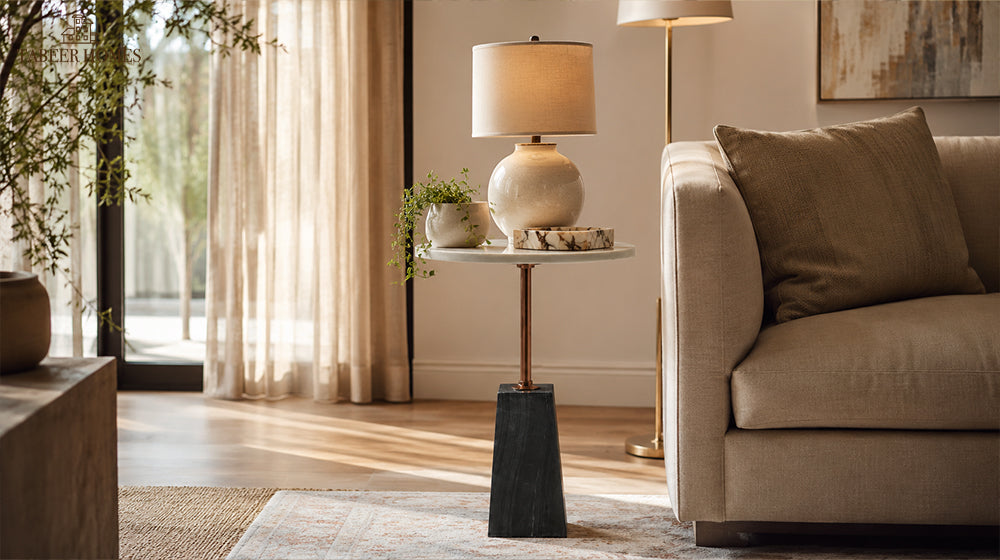
A tray placed on a round side table surface is the most effective single styling tool available in this context. The tray's rectangular or circular form creates a defined zone within the surface area, giving the objects placed within it a contained arrangement with visible boundaries. From every viewing angle, the tray reads as a composed grouping rather than a collection of separate items.
The tray should cover approximately one third to one half of the table's surface area, leaving the remaining surface visibly clear. A tray that covers most of the round surface produces the same cluttered reading as objects placed directly on the surface without any organisational logic. The clear zone outside the tray is as important as the tray itself.
Choose a tray in a material that contrasts with the table surface. A brass tray on a white side table creates visible material contrast that defines the zone clearly. A dark lacquered tray on a marble side table creates tonal contrast against the stone. A natural wood tray on a modern side table in matte black creates warm-against-cool contrast. The contrast is what makes the tray visible as a compositional element rather than as part of the surface it sits on.
Height Variation
Objects on a round side table should be placed at a minimum of two different heights to give the arrangement a vertical dimension that prevents the surface from reading as flat. The most reliable configuration is one tall element and one low element rather than multiple items at the same height competing for visual prominence at the same level.
The tall element can be a lamp, a vase of 25 to 35 cm height, a sculptural object, or a tall candle in a holder. It should sit toward the back of the surface, or more precisely, toward the side of the surface that faces away from the primary seating position, which creates a visual receding depth to the arrangement rather than a flat frontal presentation.
The low element sits at the front of the arrangement or within the tray grouping: a small candle, a coaster, a single stem in a low vessel, or a decorative object under 15 cm. This low element completes the arrangement without adding visual height that competes with the tall element.
The Clear Perimeter
The outer edge of a round side table surface should remain as clear as possible. Objects placed at the outer perimeter of a round surface look as though they are about to fall off, regardless of whether they actually will, because the eye reads the circular edge as having no containment in the way that the inner edge of a tray or the corner of a rectangular surface does.
Keeping objects toward the centre and back of the round surface and maintaining a clear perimeter of at least 8 to 10 cm around the edge gives the arrangement visual stability and makes the surface read as composed from every angle. This clear perimeter is also the practical functional zone where a drink can be set down without disturbing the arrangement.
Material Choices: White, Marble, and Modern Side Tables
The material of a round side table affects both how it reads in the room and what styling approach will work on its surface. Three material directions deserve specific treatment.
White Side Table
A white side table in a round form creates the lightest visual weight of any material direction and suits rooms where the priority is spatial openness. The white surface reflects light from the sofa end position and contributes to the room's brightness rather than anchoring the floor plane. On a white side table , the tray used as the styling anchor should be in a contrasting material, brass, natural wood, or dark stone, because a white tray on a white surface creates no visible definition between the tray zone and the table surface.
The maintenance consideration for a white side table in a sofa side position where it is touched multiple times daily is more significant than for side tables in lower-contact positions. White lacquer shows fingerprint marks and edge contact evidence more visibly than natural or darker finishes, which requires more frequent wiping to maintain the clean appearance that is central to the white direction's appeal.
Marble Side Table
A marble side table in a round form carries the highest material presence per surface area of any side table configuration. The stone's veining pattern on a circular surface reads as a natural composition rather than as a feature of a specific edge orientation, which suits the round form particularly well.
For a marble side table in a primary sofa side position where drinks are placed directly on the surface regularly, darker stone varieties including Nero Marquina and Emperador Brown are more practical than white or light Carrara marble. Darker stone shows condensation rings and handling marks far less visibly than light stone and requires the same annual sealing commitment with significantly lower daily maintenance anxiety.
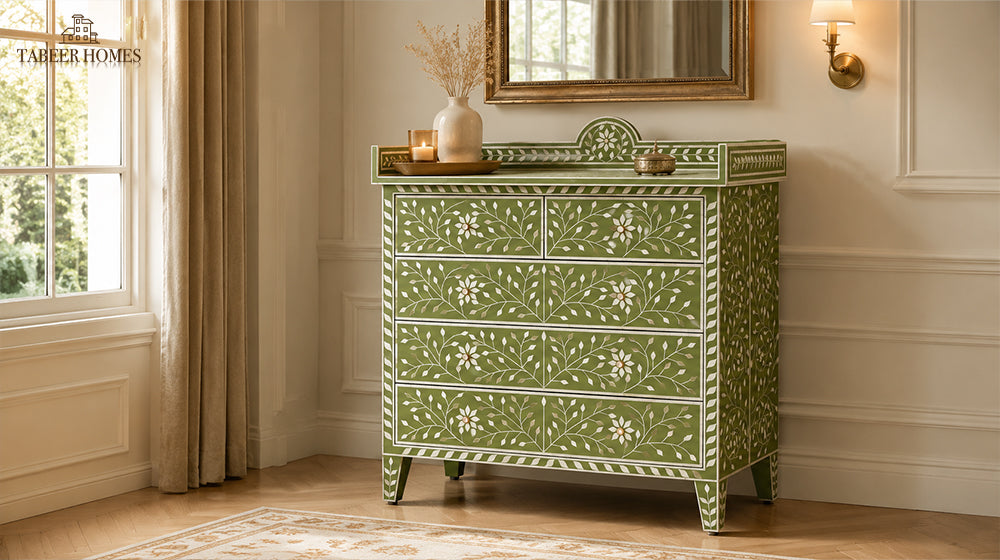
Tabeer Homes produces round side table pieces with stone surface treatments and handcrafted bone inlay and mother of pearl configurations in round and oval forms suited to living room and bedroom positions across UAE and Gulf interiors.
Modern Side Table
A modern side table in a round form combines the geometric simplicity of the modern direction with the soft form of the round, producing a piece that reads as contemporary without the hard-edged quality that rectangular modern pieces carry. The most compelling modern side table directions in 2026 UAE and Gulf retail pair a matte black or natural oak frame with a contrasting top surface in stone, glass, or lacquer, where the frame's precision is the design quality and the top surface provides material contrast.
On a modern side table , the styling approach should match the piece's design intention: restrained. One object on the surface, a lamp or a single decorative item, with the rest of the surface clear, suits the modern direction better than a tray grouping with multiple objects, which introduces the visual complexity that a minimal piece is designed to reduce.
Placing a Round Side Table in Different Room Positions
The placement logic for a round side table differs by room and by position within that room.
In a living room beside a sofa, the round side table should sit 10 to 25 cm from the sofa arm edge, surface level within 5 cm of the arm height, and far enough from the wall behind it that the table base does not create a tripping hazard in the passage between the sofa and the wall. The round form means no corners project into that passage, which is one of the practical advantages of the round choice in this position.
In a reading corner beside an armchair, the round side table surface should align with the chair arm height and sit within 20 cm of the chair arm to remain within natural reach from a fully reclined reading position. A side table in this position with a lower shelf adds storage for the books currently being read without increasing the floor footprint of the piece.
In a bedroom beside the bed, the round side table surface should be level with or within 3 cm below the mattress top. The gap between the table and the bed frame should be 5 to 15 cm. Less than 5 cm makes bed-making difficult. More than 15 cm puts the surface outside the natural reaching arc from a lying position.
Practical placement considerations that apply across all positions for a round side table in UAE homes:
- Check the base's floor contact points before placement. Unprotected metal or wood legs on the polished tile or marble floors standard across UAE residences will mark the floor surface within days. Felt pads or rubber caps at the base contact points are the minimum protection required.
- Confirm that the piece is stable on the specific floor surface before loading it with objects. Polished tile floors create less friction than carpet, and a narrow-based round side table that is stable in a showroom on a textured floor may show instability on the polished surfaces common in UAE homes.
- Keep the piece away from direct air conditioning vent airflow. For wood-framed side tables , localised drying from a vent positioned above or adjacent to the piece accelerates finish degradation over time.
Frequently Asked Questions
What is the correct height for a round side table beside a sofa?
A round side table beside a sofa should sit within 5 cm of the sofa arm height, which in most UAE residential sofas falls between 55 and 68 cm from the floor. Measure the specific sofa arm before shortlisting any piece rather than relying on a standard estimate. A table more than 5 cm below the arm height creates a downward reaching arc that becomes uncomfortable in daily use. A table above the arm height creates an upward reach and reads as visually mismatched from anywhere in the room.
What is a round coffee table and how is it different from a round side table?
It is a larger piece, typically 70 to 120 cm in diameter and 40 to 50 cm in height, positioned at the centre of a seating arrangement to serve every seated position. A round side table is smaller, typically 35 to 55 cm in diameter and 55 to 70 cm in height, positioned beside a single sofa arm or chair to serve one primary seated position. The functional distinction is height and scale: a round coffee table is sized for forward reach from a seated sofa position, while a round side table is sized for lateral reach from a sofa arm position.
Where do you place a round coffee table versus a round side table?
At the centre of the seating arrangement, 35 to 45 cm from the sofa front, at cushion height level. A round side table goes beside the sofa arm, 10 to 25 cm from the sofa arm edge, at arm height level. The two pieces occupy different positions with different height targets and different surface scale requirements. A round side table placed at the centre of the arrangement is too tall and too small for that position. A round coffee table placed at the sofa end is too low and too large.
How do I style a round side table without it looking cluttered?
The three principles that consistently prevent clutter on a round side table surface are the tray method, height variation, and the clear perimeter rule. Place a tray covering one third to one half of the surface area to create a defined compositional zone. Within or beside the tray, place objects at two different heights: one tall element toward the back and one low element at the front. Keep the outer perimeter of the round surface clear of objects by at least 8 to 10 cm. These three principles create structure on a surface that the circular geometry does not provide on its own.
Is a marble side table practical in a round form for daily use in a UAE home?
A marble side table in a round form is practical for daily use in a UAE home when darker stone varieties are chosen for high-contact sofa side positions. Nero Marquina and Emperador Brown marble show condensation rings and surface contact evidence far less visibly than white or light Carrara marble and require the same annual sealing commitment. For buyers unwilling to establish an annual sealing routine, a sintered stone alternative in a marble appearance provides the visual quality with no sealing requirement and better resistance to the acidic liquids that etch genuine marble surfaces.
What is the difference between a side table and an end table in the bed frame vs end table question?
In the bed frame vs end table and side table terminology question, the terms describe the same category of furniture across different regional retail conventions. End table is the North American retail term. Side table is the broader term across UAE and Gulf markets. Both describe a small table placed beside a sofa, chair, or bed. The side tables buying criteria, height relative to the adjacent furniture arm or mattress, surface diameter, and material, apply identically regardless of which label a specific retailer applies to the piece.
Final Thoughts
A round side table styled with the tray method, height variation, and a clear perimeter reads as composed and intentional from every angle in the room because the styling creates the structure that the circular surface does not provide on its own. A white side table in a round form with a brass tray grouping and a single tall lamp contributes light and warmth to the sofa end without adding visual weight. A marble side table in a dark stone variety holds its appearance under daily contact without the maintenance anxiety that light marble creates in the same position. A modern side table in a round form with a restrained single-object surface suits the contemporary UAE apartment living room where visual simplicity is the design intention. Understanding what is a round coffee table versus a round side table prevents the sizing and height mistakes that come from treating the two pieces as interchangeable. Knowing where do you place a round coffee table and where a round side table goes gives each piece its correct position in the room. Resolving the bed frame vs end table terminology question confirms that side tables and end tables are the same category under different names, with the same height and sizing criteria applying regardless of the label. The framework across all of these decisions is consistent: measure the adjacent furniture first, size the surface for the actual daily use, choose the material for the room's specific conditions, and style the surface with the three principles that make a round surface look considered rather than cluttered.

Leave a comment
This site is protected by hCaptcha and the hCaptcha Privacy Policy and Terms of Service apply.