


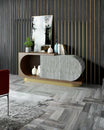
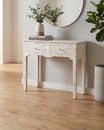
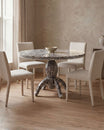

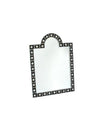


The side tables for living room purchase is the one that most buyers treat as a secondary decision and most designers treat as a critical one. The sofa gets measured. The coffee table gets proportioned. The rug gets sized to the arrangement. Then the side tables get chosen quickly because they looked right alongside a sofa in a product photograph or because they were available in the right finish. Three months later the table sits too low for comfortable reach, or the surface is too small to hold a lamp and a glass simultaneously, or the piece reads as visually disconnected from everything around it because no one measured the sofa arm height before ordering. This guide closes that gap entirely. It covers the sizing logic, the height rules, the material choices, and the placement principles that make a side table in a living room function as well as it looks, with specific attention to the UAE and Gulf residential context where the living room is one of the most socially visible rooms in the home.
Why Side Tables Matter More Than Most Buyers Realise
A side table in a living room is reached for more frequently than almost any other furniture surface in the home. The person seated at the end of the sofa reaches for the surface beside them multiple times every evening: to set down a drink, to pick up a phone, to rest a book, to find the remote. A surface that is at the wrong height, too far from the sofa arm, or too small to hold everything being placed on it creates a daily friction that becomes background frustration before it is consciously identified as a furniture problem.
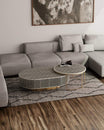
Side tables for living room positions also carry a visual responsibility that their size underrepresents. The end of a sofa is one of the most consistently viewed points in a living room because it frames the seating arrangement's boundary. A side table that reads as considered in this position, in the right material, at the right height, with appropriate visual weight, completes the seating arrangement's visual logic. One that reads as an afterthought undermines the quality of every other furniture decision around it.
Getting side tables for living room placements right is not a complex process when the right measurements are taken before any piece is shortlisted. The measurements, rules, and material guidance that make those decisions straightforward are covered in full below.
The Height Rule: The Most Important Measurement Nobody Takes
The single most important dimension for any side table in a living room is its height relative to the sofa arm it sits beside. This measurement is taken less often than any other in the furniture buying process and accounts for the majority of side table regret across UAE buyers who have placed their order based on a product photograph rather than a room measurement.
A side tables for living room piece placed beside a sofa should sit within 5 cm of the sofa arm height. Most UAE residential sofas carry arm heights between 55 and 68 cm from the floor, but this varies enough between manufacturers, styles, and configurations that measuring the specific sofa arm before shortlisting any table is the only reliable approach.
A table that sits more than 5 cm below the arm height creates a downward reaching arc every time something is set down or picked up. This feels natural the first few times and becomes progressively more obvious as the daily total of those reaches accumulates across weeks and months of use. A table that sits above the arm height creates an upward reach and a visual mismatch that reads as poorly proportioned from anywhere in the room.
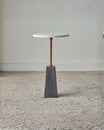
The height rule applies equally to a white side table , a marble side table , a modern side table , and every other material or style direction. The proportional relationship between the sofa arm and the table surface is a functional requirement that does not change with aesthetic preference.
Surface Size: How Much Table You Actually Need
After height, surface area is the dimension most frequently underestimated in a side tables for living room purchase. Buyers often choose a side table based on how it looks beside a sofa rather than on whether the surface can hold everything it will be asked to carry.
A side table in a primary living room sofa position needs to hold a minimum of two items simultaneously: a drink and one additional item, which in most UAE households is a phone, a remote control, or a small decorative piece. This minimum requires a surface diameter or width of at least 35 cm.
A side table that also holds a lamp requires a surface of at least 45 to 50 cm in diameter or width, because the lamp base occupies a significant portion of the surface area and the remaining space for functional items shrinks accordingly. A lamp base of standard size, approximately 15 to 20 cm in diameter, placed on a 35 cm surface leaves approximately 15 cm of free edge, which holds a glass with little additional room and creates a precarious daily situation rather than a comfortable one.
For a side tables for living room position where the table serves a reading chair or a position where one person uses the surface consistently for books, a drink, a phone, and potentially a lamp simultaneously, a surface of 50 to 60 cm is the practical minimum that accommodates all of these without daily rearrangement.
|
Position Type |
Minimum Surface Diameter or Width |
Recommended Range |
Holds Lamp Comfortably |
|
Sofa end, drink and phone only |
35 cm |
35 to 45 cm |
No |
|
Sofa end, drink plus lamp |
45 cm |
45 to 55 cm |
Yes |
|
Reading chair, full daily use |
50 cm |
50 to 65 cm |
Yes |
|
Corner lamp table |
30 cm |
30 to 45 cm |
Yes, lamp only |
|
Between two armchairs |
45 cm |
45 to 60 cm |
Optional |
Bed Frame vs End Table: Understanding the Terminology Before Buying
The bed frame vs end table question comes up consistently when buyers search for side table options and encounter terminology used interchangeably across UAE and Gulf furniture retail. Understanding the distinction, and the lack of distinction in most cases, prevents confusion at the shortlisting stage.
An end table is a term used primarily in North American retail to describe a small table placed at the end of a sofa or beside a chair. A side table is the term used more broadly across UK-influenced and UAE retail markets for the same category of furniture. Both terms describe the same type of piece: a small table intended to sit beside seating furniture and provide a surface within arm's reach.
The bed frame vs end table confusion arises when buyers search for side tables and encounter results describing end tables, assuming the two are different categories requiring different buying criteria. They are not. The height rule, the surface size logic, the material considerations, and the placement principles in this guide apply equally to pieces described as side tables, end tables, sofa tables in the side position, accent tables, and lamp tables, all of which are names for functionally equivalent pieces.
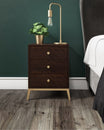
Side tables specifically described as bedside or bedroom pieces carry the same structural design but are sized to the mattress top height rather than the sofa arm height, which is why a bedside table should not be assumed to work in a living room sofa position without checking whether the height falls within the sofa arm range. A bedside table at 55 cm height suits a bed with a mattress top at 52 to 58 cm but may sit below the arm of a higher sofa in a living room. Measuring both references before repurposing a bedside piece as a side table for living room use confirms whether the height works in the new position.
White Side Table: When the Lightest Option Is the Right One
A white side table is the most widely specified finish direction for living room side tables across UAE apartment interiors, and the reasons are rooted in how white surfaces function in rooms rather than in aesthetic fashion.
White reflects light rather than absorbing it, which means a white side table contributes to the brightness of the room from its position beside the sofa rather than creating a dark anchor at the sofa's end. In UAE apartment living rooms where ceiling fixtures are often the primary light source and natural light enters from one direction, every surface that reflects rather than absorbs light makes a practical difference to how the room reads during the evening.
White also carries the lowest visual weight of any finish direction, which makes a white side table the least likely to compete with the sofa, the rug, or other furniture elements for visual prominence. It sits beside the sofa and allows the room's primary furniture to carry its intended visual weight without sharing that responsibility with the side table.
The maintenance reality of a white side table in a living room position where it is touched multiple times daily is more demanding than most product descriptions acknowledge. White lacquered surfaces show fingerprints at pull positions and handling marks at edge contact points more visibly than any other finish direction. In a household where the side table is in intensive daily use, white requires more frequent wiping than a natural wood or darker finish alternative to maintain a consistently clean appearance.
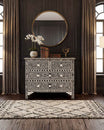
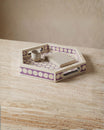
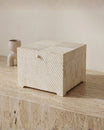
A white side table in a bone inlay or mother of pearl surface treatment on a white lacquered frame carries the light, clean reading of white alongside the material depth of handcraft. Tabeer Homes produces side tables for living room positions in white lacquered bone inlay and mother of pearl configurations that give the white direction a surface richness a plain lacquered piece does not provide.
Marble Side Table: Material Quality and What It Demands
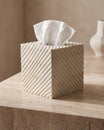
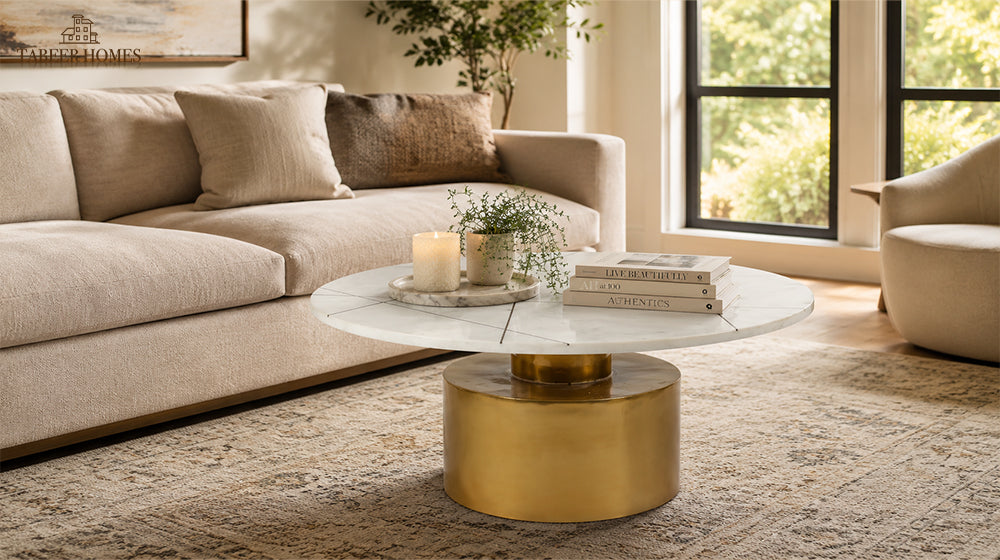
A marble side table delivers material presence and surface luminosity that no alternative material at an equivalent size replicates convincingly. The calcite crystal structure of genuine marble refracts light through the material rather than reflecting it from the surface, producing the optical depth and tonal variation that makes a marble side table read as genuinely material-rich rather than decoratively attractive.
The practical considerations for a marble side table in a UAE living room sofa position deserve direct attention. White and light marble varieties including Carrara absorb acidic liquids rapidly if the surface is unsealed or if the sealer has degraded. A cold glass placed on an unsealed light marble surface without a coaster leaves a condensation ring within minutes. Darker marble varieties including Nero Marquina and Emperador Brown are significantly more forgiving in a position where drinks are placed directly on the surface regularly, showing condensation marks and handling evidence far less visibly than their light counterparts.
The maintenance commitment for any genuine marble side table in a high-contact sofa side position is annual sealing with a penetrating stone sealer and consistent coaster use for all cold and hot drinks. For buyers unwilling to commit to this maintenance rhythm, a sintered stone alternative in a marble appearance, produced under trade names including Dekton and Neolith, delivers a comparable visual result with no sealing requirement and significantly better resistance to acidic liquids and surface scratching.
A marble side table paired with a bone inlay or mother of pearl coffee table in the same living room requires careful material coordination. Both materials carry significant visual complexity in their own right. Positioning the marble side table as the quieter material reference, in a darker stone that recedes slightly, while the inlay piece carries the pattern and craft statement, gives each piece its correct visual role within the seating arrangement.
Modern Side Table: What the Style Actually Requires
A modern side table is a specific design proposition that requires more precision than the label suggests across UAE and Gulf retail, where modern is applied to pieces ranging from genuinely resolved contemporary designs to pieces that are simply recent in production.
A genuine modern side table is characterised by resolved proportions, minimal or integrated hardware, clean geometric forms without ornamental detailing, and a finish applied consistently across all surfaces without variation between the top and the frame. The construction standard that supports the modern aesthetic is precision at every joinery level, because the clean appearance of a minimalist or contemporary piece depends on drawer fronts that align exactly, gap lines that are consistent, and surfaces that read as the same colour and sheen from every angle.
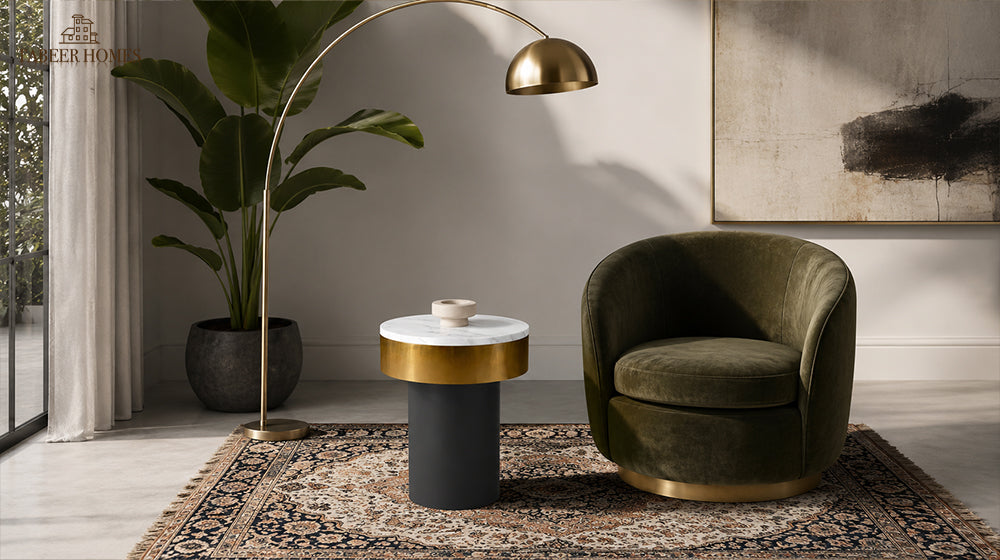
The most compelling modern side table directions in UAE and Gulf living rooms in 2026 combine clean structural forms with surface materials that carry genuine richness: a matte black frame under a honed marble top, a natural oak frame under a smoked glass surface, or a clean white lacquered frame under a bone inlay or mother of pearl panel. These combinations deliver the visual restraint of a modern form alongside the material depth that a plain painted surface does not achieve.
A modern side table for a living room sofa position should carry a base spread that prevents tipping in daily use. Narrow-leg designs in contemporary profiles can look resolved in a product photograph and behave unpredictably when a drink is placed on the surface with any lateral motion. Check the base spread relative to the top diameter before purchasing: a base spread of at least 75 percent of the top diameter gives adequate stability on the tile or stone floors standard across UAE residential properties.
Side Tables as a Set: Why Buying in Pairs Works Better
A side tables for living room purchase in a pair delivers a specific advantage over two individually sourced tables that goes beyond matching aesthetics. Purpose-designed pairs are resolved at the proportion level, meaning the relationship between height, surface size, frame weight, and base spread is designed as a coordinated unit.
In a symmetrical living room arrangement where matching side tables sit at either end of a straight sofa, this proportion coordination is visible every time someone looks at the seating area. Two tables that are close in height but subtly different in frame weight, surface edge profile, or base spread read as almost-right rather than considered. A purpose-designed pair eliminates this entirely.
Finish consistency is the second argument for buying side tables as a matched set rather than sourcing individually. Furniture finishes vary between production runs, and two pieces described as matching, even from the same brand, can read as slightly different tones when placed within a metre of each other under the specific natural and artificial light of a particular room. A set produced in the same run guarantees finish consistency that individual sourcing cannot.
For UAE living rooms where the seating arrangement carries an L-shaped sofa and the two side table positions are at different ends of the L rather than symmetrically placed, a matched set is still the correct choice because the visual relationship between the two pieces is seen across the room simultaneously and the proportional consistency of a designed pair reads more composed than two individually sourced pieces that approximate each other.
Frequently Asked Questions
What height should side tables for living room use be relative to the sofa?
Side tables for living room positions should sit within 5 cm of the sofa arm height, which in most UAE residential sofas falls between 55 and 68 cm from the floor. Measure the specific sofa arm before shortlisting any side table rather than using a standard estimate. A table more than 5 cm below the arm height creates a downward reach that becomes uncomfortable in daily use. A table above the arm height creates an upward reach and a visual mismatch that reads as poorly proportioned from anywhere in the room.
What is the difference between a side table and an end table?
In the bed frame vs end table and side table terminology question, both terms describe the same category of furniture: a small table placed beside a sofa, chair, or bed to provide a surface within arm's reach. End table is the North American retail term. Side table is the broader term used across UK-influenced and UAE markets for the same piece. The buying criteria, height relative to sofa arm, surface size, material, and placement gap, apply identically regardless of which term a specific retailer uses.
Is a white side table practical for daily use in a UAE living room?
A white side table is practical for daily use in a UAE living room when the finish is a quality sprayed lacquer rather than a painted or film-wrapped surface, which holds up to wiping and daily handling significantly better. The practical consideration specific to white is that it shows fingerprints and handling marks at contact points more visibly than natural wood or darker finishes. In a household where the side table is in intensive daily use, factoring in more frequent cleaning as part of the maintenance expectation is realistic rather than excessive.
What should I look for in a marble side table for a UAE living room?
A marble side table for a high-contact UAE living room sofa position should specify a darker marble variety including Nero Marquina or Emperador Brown rather than light Carrara if the surface will hold drinks regularly, because dark stones show condensation marks and handling evidence far less visibly. Confirm that the surface is sealed before delivery and establish an annual resealing routine. For buyers unwilling to commit to this maintenance rhythm, a sintered stone alternative in a marble appearance performs significantly better in high-contact positions with no sealing requirement.
What defines a modern side table versus a standard decorative table?
A modern side table is characterised by resolved geometric proportions, minimal or integrated hardware, clean surfaces without ornamental detailing, and finish consistency across all faces of the piece. The construction standard that supports this aesthetic is precision at every joinery level: consistent gap lines around drawer fronts, no tonal variation between the top and the frame surfaces, and a base spread sufficient to prevent tipping in daily use. A piece that photographs as modern but shows misaligned drawer fronts, inconsistent finish, or a narrow unstable base has not delivered the construction standard that the modern aesthetic requires.
How many side tables does a UAE living room need?
Most UAE living rooms benefit from two side tables for living room use: one at each end of the primary sofa. If the arrangement includes an armchair or reading chair, a third side table in that position completes the functional coverage of the seating area. The coffee table handles the central zone of the arrangement. Side tables at the ends handle the seating positions where forward reach to the coffee table is longest and a closer surface is most functionally valuable. In a large open-plan UAE living area where the seating arrangement wraps across a substantial floor area, a fourth side table at the inner corner of an L-shaped configuration ensures every seated position has an adjacent surface.
Bottom Line
Side tables for living room positions reward the same level of measurement precision applied to the sofa and the coffee table, and return that investment in a seating arrangement that functions consistently well at every position rather than one that works at the centre and frustrates at the ends. A white side table creates visual lightness and reflects room light from the sofa's end position in UAE apartments where every surface that contributes to brightness matters. A marble side table in a dark stone variety carries material presence at the sofa end without the maintenance demands that light marble creates in a high-contact position. A modern side table with a resolved geometric form and a consistent finish delivers the clean aesthetic it promises when the construction standard behind it matches the visual intention. A side table sized with the sofa arm height as the primary dimension, surfaced with enough area to hold a lamp and a drink simultaneously, and placed 35 to 45 cm from the sofa front serves the room daily without requiring any adjustment or accommodation. Side tables chosen as a matched pair eliminate the finish consistency and proportion coordination problems that individually sourced pieces introduce. The framework is consistent across all of these decisions: measure first, size for the function, choose the material for the daily use, and let the style follow from a shortlist that already works on the dimensions that matter.

Leave a comment
This site is protected by hCaptcha and the hCaptcha Privacy Policy and Terms of Service apply.