


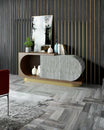
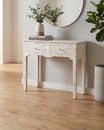

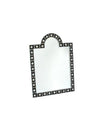

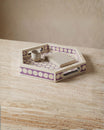
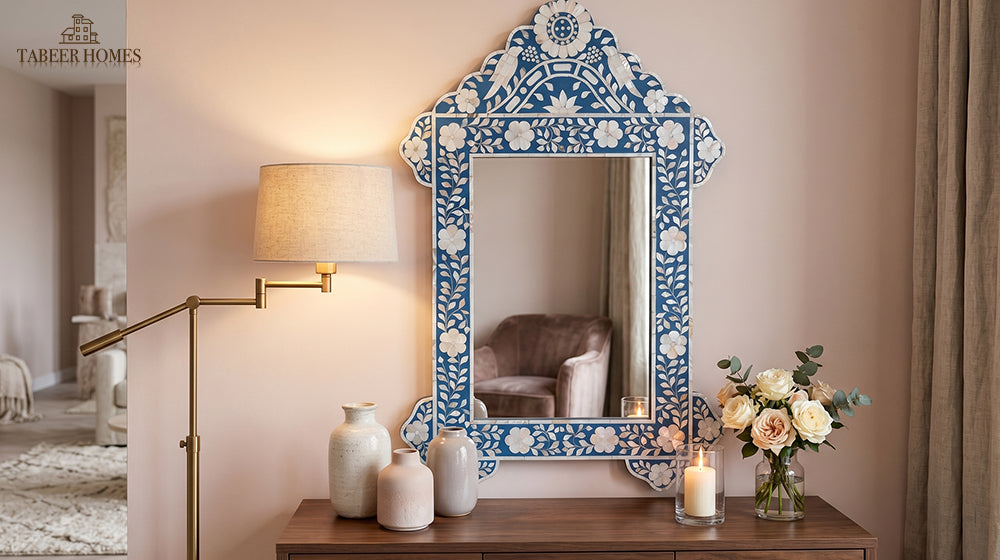
A wall without a mirror is a wall doing one job. A wall with the right mirror does three things: it reflects light, creates perceived depth, and anchors the room's visual composition at a scale that artwork rarely matches. Most mirrors do the first adequately and the other two poorly, because most mirrors are chosen for their glass rather than their frame. A mother of pearl mirror reverses that priority entirely. The frame is the piece. The hand-applied nacre shell surrounding the glass carries an iridescent quality that shifts with every change in light, turning a wall that was previously background into a focal point that earns its position in the room. In UAE and Gulf homes where entrance halls, living rooms, and master bedrooms are furnished to a high standard, the wall above a console table, beside a bed, or opposite a window is often the space that still needs something. This guide covers what that something looks like, how to choose it, and how to place it correctly.
Why a Mother of Pearl Mirror Is a Different Category of Wall Piece
The difference between a mother of pearl mirror and a standard decorative mirror is the difference between a frame that is decorated and one that is crafted. A standard decorative mirror uses a frame in a fixed colour, a uniform finish, and a material that looks the same from every angle and under every light condition. The frame serves as a border. It defines the glass and keeps the eye inside the reflective surface.
A mother of pearl mirror UAE frame does something different. The nacre shell applied across its surface carries interference colour, an optical property produced by the microstructure of the shell itself, not by any applied pigment. As the viewer moves or as the light source changes across the day, the frame shifts through pale creams, soft greens, warm golds, and cool blues in a sequence that no fixed-colour material replicates.
This means a mother of pearl mirror placed on a wall is never visually static. It responds to morning light differently from evening lamplight. It reads differently when viewed straight on versus from an angle across the room. In an entrance hall, a living room, or a bedroom where the mirror is seen multiple times daily from different positions and under changing conditions, this behaviour produces an experience of the space that a flat, fixed-colour frame simply cannot generate.
The craft investment behind this quality is also visible at close range in a way that manufactured alternatives are not. Each shell fragment is cut and set by hand. The pattern is built piece by piece, resolved at corners and junctions through individual placement decisions rather than mechanical repetition. A buyer examining a genuine mother of pearl wall mirror Dubai piece up close can see the slight natural variation in shell fragment size and the precision of the gap lines between pieces that confirms handcraft rather than machine production.
Styles of Mother of Pearl Mirror Available in UAE and Gulf Markets
The mother of pearl mirror category spans a wider style range than buyers often anticipate before beginning their search. Understanding the main style directions available across UAE and Gulf retail helps narrow the decision before visiting showrooms or placing orders.
Full-Frame Mother of Pearl Coverage
The most traditional and visually immersive configuration covers the entire frame surface in nacre shell inlay, from the inner edge adjacent to the glass to the outer profile of the frame. This approach produces a frame with maximum iridescent presence and suits entrance halls, formal reception rooms, and master bedrooms where the mirror is intended to carry the wall entirely without competing decor alongside it.
A full-coverage mother of pearl mirror UAE frame in a classic geometric pattern references the historical inlay traditions of Rajasthan and the Levant and suits interiors with a heritage-influenced or maximalist direction. In a marble-floored villa entrance with warm lighting, a full-coverage mother of pearl frame reads as entirely at home.
Panel Inlay on a Lacquered Frame
A more contemporary approach applies mother of pearl inlay to defined panel sections within a lacquered frame, covering specific zones of the frame while leaving the lacquered ground visible between them. This configuration gives the mirror the handcrafted surface quality of nacre inlay while maintaining the clean geometric lines that suit contemporary and transitional interior styles.
Mother of pearl wall mirror Dubai buyers furnishing apartments in Downtown Dubai, Dubai Marina, or newer Abu Dhabi residential developments frequently specify this configuration for its versatility across neutral contemporary palettes.
Mother of Pearl Round Mirror
A mother of pearl round mirror is among the most searched configurations in this category, and the reasons are practical as well as aesthetic. A round frame has no corners, which gives it a softer, less architectural presence on the wall than a rectangular frame of comparable size. In rooms where the existing furniture is predominantly rectilinear, a mother of pearl round mirror introduces a curved form that the eye reads as a deliberate counterpoint rather than an additional hard edge.
Bone Inlay Mirror
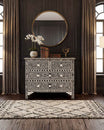
A bone inlay mirror uses dyed camel or buffalo bone set in geometric patterns on the frame rather than nacre shell, producing a graphic, pattern-forward result in a specific colour direction. A bone inlay mirror in teal and white or in black and ivory delivers a bold, precise decorative statement that bone inlay achieves particularly well. Where a mother of pearl mirror shifts and changes with the light, a bone inlay mirror reads consistently and strongly from every angle, which suits rooms where graphic visual presence is the priority over material subtlety.
Tabeer Homes produces mirror frames across all of these configurations, including bespoke sizing for entrance halls and feature walls where standard catalogue dimensions do not suit the specific wall proportion.
Sizing a Mother of Pearl Mirror for Every Wall Position
Getting the size right is the most avoidable mistake in the mirror buying process, and it happens almost entirely because buyers estimate rather than measure.
A mother of pearl mirror hung above a console table should be between 70 and 90 percent of the console table width. A console of 120 cm suits a mirror of 85 to 105 cm in width. A mirror narrower than 70 percent of the table width looks pinched and disconnected from the furniture below it.
Height positioning above a console table follows a consistent standard. The bottom edge of the mirror frame should sit 15 to 25 cm above the table surface.
For a mother of pearl round mirror hung as a standalone wall object without furniture below it, the centre of the mirror should sit at approximately 150 to 160 cm from the floor, which places it at eye level for a standing adult of average height. This is the same hanging principle applied to artwork and applies equally to circular mirror forms.
|
Wall Position |
Mirror Width |
Bottom Edge Height |
Frame to Wall Ratio |
|
Above console, 90 to 110 cm wide |
65 to 90 cm |
15 to 25 cm above surface |
70 to 85 percent of console width |
|
Above console, 110 to 140 cm wide |
85 to 115 cm |
15 to 25 cm above surface |
75 to 90 percent of console width |
|
Standalone on feature wall |
60 to 120 cm diameter or width |
Centre at 150 to 160 cm from floor |
Determined by wall width |
|
Above fireplace or mantel |
Match or slightly exceed mantel width |
10 to 20 cm above mantel edge |
85 to 100 percent of mantel width |
|
Bedside wall position |
40 to 70 cm |
Top edge below ceiling line by 30 cm |
Proportional to bedhead height |
For a decorative mirror Saudi Arabia or UAE villa entrance hall where ceiling heights reach 300 to 350 cm, a taller mirror frame of 120 to 160 cm height commands the wall in proportion to the space. In a standard apartment entrance with a ceiling of 260 cm, the same mirror height would read as over-scaled and would crowd the vertical space between the console surface and the ceiling.
Placement Logic Across Different Rooms
A mother of pearl mirror earns its position differently depending on where in the home it sits. The placement logic differs room by room, and applying the same approach regardless of context produces results that work in some rooms and fail in others.
Entrance Hall
The entrance is the highest-value position for a mother of pearl wall mirror Dubai or UAE placement. The mirror is the first interior object a visitor focuses on after registering the overall space, and it is seen daily by residents as both the last surface checked before leaving and the first object of orientation on returning. In an entrance, the mirror does not need to be large to carry significant visual weight. A mother of pearl round mirror of 70 to 90 cm diameter above a console table of matching proportions creates a complete entrance composition that defines the home's character immediately.
The iridescence of the nacre frame is also particularly effective in entrance halls because entrances typically receive light from multiple directions simultaneously, the ceiling fixture above, the light from an adjacent room, and any natural light from a nearby window.
Living Room
In a living room, a mother of pearl mirror placed above a console or sideboard on the primary wall creates a vertical anchor for the seating area. It reflects the room back into itself, amplifying natural light from windows and making the space read as larger and more open without structural change.
The living room placement that delivers the most impact positions the mirror on a wall that receives light from the room's primary window. The reflected light from the window doubles the natural illumination in the space and activates the nacre frame throughout the day.
Master Bedroom
A mother of pearl mirror in a master bedroom works best in two positions: above the chest of drawers or dressing table as a functional and decorative combined element, or as a standalone feature on the wall facing the bed where it is seen from the primary sleeping position each morning. In both positions, the warm light of bedside lamps in the evening creates oblique illumination across the nacre frame that makes the piece particularly compelling as the last visual impression before sleep.
What to Check Before Buying a Mother of Pearl Mirror in the UAE or Gulf
Commercial investigation buyers comparing pieces across UAE, Dubai, Saudi Arabia, and Kuwait retail face a specific challenge in this category. Mother of pearl mirror UAE pieces available across the market range from genuinely handcrafted frames with quality nacre inlay to machine-produced approximations sold at similar price points in some retail contexts.
Before confirming any purchase, check the following:
- Surface levelling at the frame. Run a finger across the nacre surface on the frame. Shell pieces and the filler between them should be level with each other and with the lacquered ground. Raised shell edges indicate rushed setting work and will collect dust at the recessed points, creating a texture that reads as unfinished rather than handcrafted.
- Pattern resolution at corners. The most demanding point of any geometric inlay pattern is where two pattern lines meet at a corner or junction. On a well-made mother of pearl mirror , the pattern resolves cleanly at these points. Gaps, misalignment, or pattern interruption at corners are the most reliable indicators of production shortcuts.
- Frame construction depth. A mirror frame needs structural rigidity to hold the glass securely and to be hung safely. Confirm that the frame is solid wood or high-density board rather than a lightweight hollow construction. A frame that flexes when held at one edge does not have the structural integrity to hang safely over time.
- Glass quality. Check the reflective quality of the glass specifically. Distortion, inconsistent reflection, or visible blemishes in the glass surface indicate a low-grade mirror panel that undermines the quality of the frame around it.
- Hanging hardware included. Confirm whether wall-mounting hardware is included and whether the hanging system is appropriate for the weight of the piece. A large decorative mirror Saudi Arabia or UAE villa piece in solid wood with full nacre coverage can weigh significantly more than a buyer anticipates from the product photograph.
For mother of pearl wall mirror Dubai online purchases, requesting close-up photographs of the frame surface at an oblique angle, the corner pattern resolution, and the back panel construction provides the same information a physical inspection delivers.
Caring for a Mother of Pearl Mirror in a UAE or Gulf Home
A mother of pearl mirror requires the same basic care as other lacquered nacre surface pieces in UAE and Gulf indoor conditions, with the additional consideration of the glass panel maintenance alongside the frame.
For the nacre frame:
- Dust the frame weekly with a soft, dry microfibre cloth. Avoid abrasive cloths that produce micro-scratches on the lacquered ground and reduce the surface's reflective depth over time.
- For marks or fingerprints on the frame, use a very slightly dampened microfibre cloth and dry the surface immediately. Do not use multi-surface sprays or glass cleaners on the nacre frame, as these products are formulated for non-porous surfaces and can leave residue in the gaps between shell pieces.
- Apply a furniture wax formulated for lacquered surfaces to the frame two to three times per year to maintain the protective layer over the lacquer ground.
For the mirror glass:
- Use a dedicated glass cleaner applied to a cloth rather than directly to the mirror surface. Spraying cleaner directly onto the glass risks liquid running onto the nacre frame and sitting in the shell-to-filler gaps.
- Dry the glass immediately after cleaning with a clean dry cloth to prevent streaking.
Frequently Asked Questions
What size mother of pearl mirror works above a console table in a UAE entrance?
A mother of pearl mirror above a console table should be between 70 and 90 percent of the console width, with the bottom edge sitting 15 to 25 cm above the table surface. For a standard UAE apartment entrance console of 100 to 120 cm, a mirror of 75 to 100 cm width proportions correctly to the furniture below it.
What is the difference between a mother of pearl mirror and a bone inlay mirror?
A mother of pearl mirror uses nacre shell on the frame, producing an iridescent surface that shifts in colour and luminosity with changing light angles. A bone inlay mirror uses dyed bone set in geometric patterns on the frame, producing an opaque, fixed-colour, graphic result that reads consistently from every angle.
Is a mother of pearl round mirror suitable for all room types?
A mother of pearl round mirror suits all room types because the absence of corners gives it a proportionally flexible form that works above a console, above a fireplace, beside a bed, and as a standalone wall object. In rooms with predominantly rectilinear furniture, a round mirror introduces a curved counterpoint that the eye reads as deliberate.
How do I find a quality mother of pearl wall mirror in Dubai or UAE retail?
A genuine mother of pearl wall mirror Dubai or UAE purchase can be found through specialty furniture retailers with showroom presence in Al Quoz, City Walk, and the Design District, through direct-to-consumer handcraft brands with verified production provenance, and through makers including Tabeer Homes who produce and deliver across the UAE.
What wall position makes a mother of pearl mirror most effective?
A mother of pearl mirror UAE placement performs best on a wall that receives light from at least one oblique source, natural window light during the day or directional artificial light in the evening. The iridescent quality of the nacre frame is activated most strongly by oblique light rather than flat overhead illumination.
Is a decorative mirror with mother of pearl frame practical in a high-humidity coastal UAE location?
A decorative mirror Saudi Arabia and UAE coastal location piece, in Dubai, Sharjah, or Abu Dhabi, performs reliably indoors when the room is air-conditioned as standard. The lacquered base beneath the nacre inlay provides protection from ambient indoor humidity. The risk is placement in unconditioned spaces, such as a covered outdoor area or a room where air conditioning is used infrequently, where persistent humidity can soften the lacquer base over time and cause inlay pieces to loosen at their edges.
Final Thoughts
A mother of pearl mirror gives a wall something that most decorative objects cannot: a surface that participates in the room's light rather than simply occupying space on the wall. The nacre frame shifts across the day, responds to evening lamps, and reads differently from across the room than it does at close range. Hung in the right position with the right proportions relative to the furniture below it and the wall around it, a mother of pearl wall mirror Dubai or UAE piece transforms the wall from background to composition. A mother of pearl round mirror resolves the entrance or bedroom wall without the hard architectural framing that a rectangular piece demands. A bone inlay mirror delivers graphic pattern presence for rooms where colour and precision are the priority over luminous material complexity.

Leave a comment
This site is protected by hCaptcha and the hCaptcha Privacy Policy and Terms of Service apply.